Episode Transcript
[00:00:00] Speaker A: Obviously, conservation is wise use, and there's no better form of conservation than legal hunting or trapping.
[00:00:07] Speaker B: There's something to be said about a trapper when you can get your target animal to step on that little pan.
[00:00:14] Speaker A: Always stick to the basics and don't quit. Those are the two things you know.
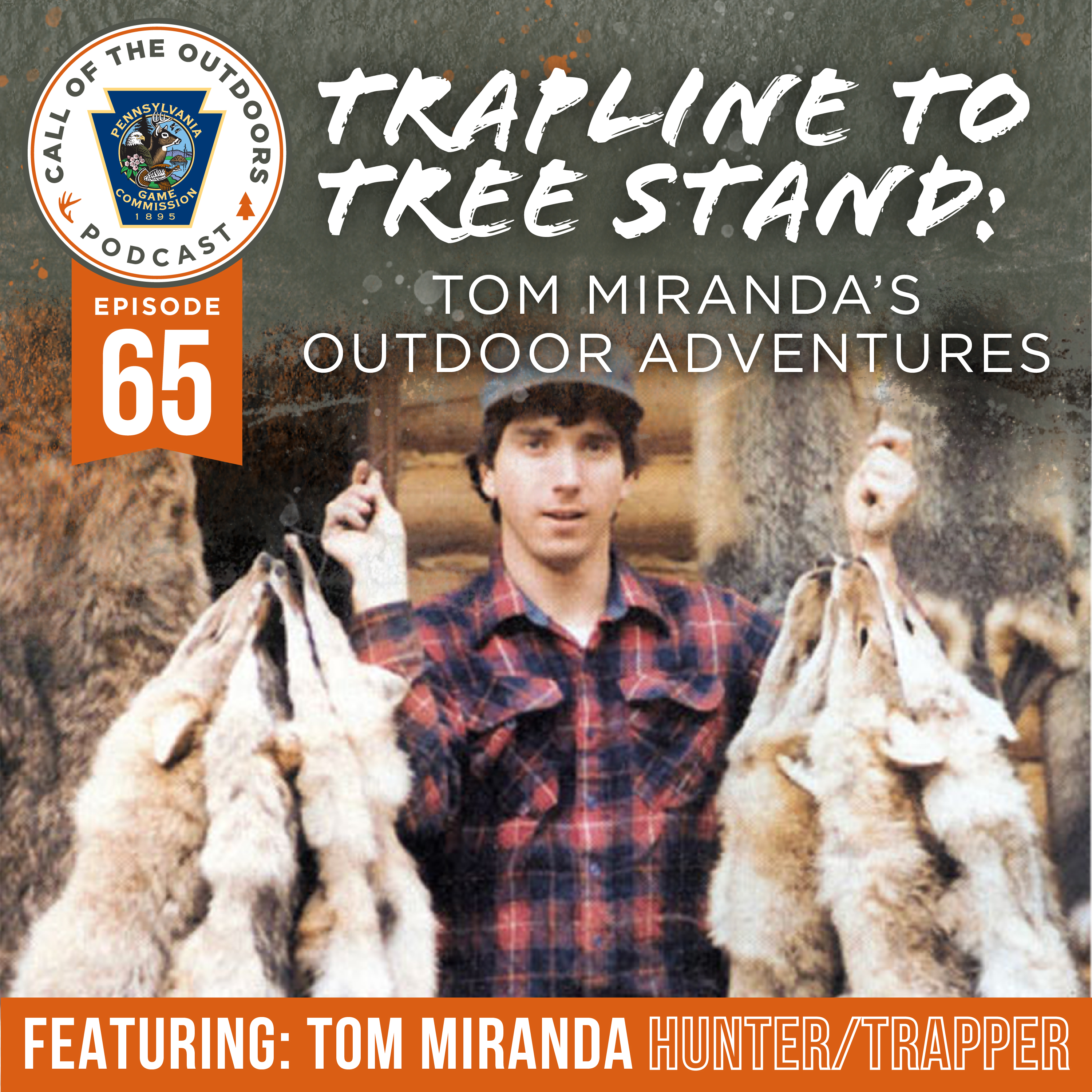
[00:00:23] Speaker B: Hello, and welcome to Call of the Outdoors, the podcast of the Pennsylvania Game Commission 2026 is here. It's kind of crazy. Lots going on here at the agency. We got a board meeting coming up at the end of the month and you know where the board is going to look at suggestions for seasons and bags and in the year ahead in 26, 27. And, you know, be sure to tune in. That's live stream on on our YouTube channel for sure. You can check that out. But we have a really special guest today to start the year off, an old friend of mine from back in the probably late 80s, early 90s, the person that, like, really helped us start in video and television in my career back at Hunter Specialties, a gentleman by the name of Tom Miranda. Tom was instrumental in starting outdoor television on espn. And his roots go back into trapping is how it got started. And we're just going to have a conversation with Tom and start the new year off right. So thank you for joining us here on Call of the Outdoors. Well, Tom, thanks so much for joining us here in Call of the Outdoors. You know, you and I go way back. I was trying to think this morning, it's over 30 years ago that that I met you and spent some time in Florida. I still have that Osceola that we we got with Jim Conley down there in central Florida. It sits in my office. It's one of my most favorite mounts that I have because we finished that grand slam on turkeys. But all that aside, I think that our audience out there here in Pennsylvania, trapping is still so big. And I want to talk about you and how you got started, because it's been a heck of a ride for you and you're back to your roots, as they say.
What I've been watching on social media this fall, absolutely.
[00:02:01] Speaker A: You know, I grew up trapping. I started trapping when I was 11 years old, and that was in 1969. So, you know, if you do the math, I'm getting up there. But the reality of it is is that's how I learned about the woods. Trapping was what I did. It was the first muskrats and then raccoons, and I even caught a weasel or two. And then there's the mink that shows up, and pretty soon you're into the foxes, and then coyotes move into Ohio. And it just grew and grew and grew. And I trapped all through school, and I loved it. I loved everything about it. And it's what got me into the outdoors, really.
[00:02:37] Speaker B: There's something to be said about a trapper when you can get your target animal to step on that little pan. I mean, it's, you know, when you. When you look at hunting in general, you know, that's what it's all about is putting yourself in those places to make it happen. And that's why, you know, I've always respected you, you know, ever since I met you when I was in my 20s. You know, you. You've taught so many people throughout this country. I mean, you were probably one of the first to do videos on. On trapping and how tos that you still sell today, right?
[00:03:06] Speaker A: Absolutely. Yeah, I was pretty much a pioneer in the how to video side of it, especially on the trapping end.
Yeah, it was, it was interesting. I was kind of hated by a lot of trappers back then because a lot of guys would give lessons, you know, and this video realm was kind of new. And it's like, why is this guy giving away his secrets for a $40 video?
In reality, they're getting four or five hundred dollars to get somebody to come for a week, you know, or a couple days and get lessons. So it was. That's kind of what I went through with that. But, you know, it was always about giving back. You know, I've always kind of come from that side of it where, you know, my dad taught me not to trap, but just to be a better person.
When I learned how to trap, I tried to give back to others. And that's what I did with my books and videos. And you just kind of grow with it. I remember early on I told my dad I wanted to be a trapper. And he looked at me like he was gut shot, man. You know, like you can't get to make a living trapping. But it's not about just catching the furs, you know, it's making the lures, writing the books, doing the videos, giving the lessons, you know, doing the seminars. And it's all that wrapped together that allowed me to make a living and trapping and. And eventually became a government trapper. Eventually, you know, I. I tell everybody I bought my first jeep with trapping money. I bought my first house with trapping money. I bought my first airplane with trapping money. I used to fly my trap line in South Dakota. Why? Because I Needed to fly? No, it was a novelty. And it helped my sell a lot of videos because people would watch me fly my trap line. And it was on the video. So, you know, it's some of its marketing. A lot of it, it was just enjoying the outdoors and being a trapper.
[00:04:41] Speaker B: Well, it was Tom Miranda's outdoor adventure magazine. There wasn't too many things you weren't scared to do. I actually dug my old shirt out.
You know, my dad, who's still with us, he saves everything that I've ever did in my life. And I still have the ESPN Tom Miranda shirt that I'll pass on to my daughter when I'm gone, because it was pretty special time in my life. But, you know, talk about, you know, flying your trap line and doing all that stuff in government trap. I'd like to talk a little bit about that because I know, you know, just from our discussions, like when you got out of high school, didn't you move to the UP of Michigan just to trap?
[00:05:16] Speaker A: Absolutely.
It was kind of a dream, you know, to do a. Be a wilderness trapper. To go somewhere where there's just, you know, woods and no electric and the river and, you know, be a trapper like you'd read in the Fur Fish Game magazine, you know. And after high school, that's what I did, actually. I had a buddy, he was a trapping partner, and we had that dream together. And what it ended up was he decided to stay and work, and I decided to quit my job and go north. North. And I spent three years in the Upper Peninsula of Michigan trapping and honing my skills. The fur prices went down, you know, so I really couldn't make a living just on the furs. And I started writing, doing some of the other things, making lures, and eventually figured out that maybe I needed to get a government trapper job. And I found a place in South Dakota that was hiring. I got. I got hired and actually a guy named Pete Askins, who was the research and development professional for Woodstream Corporation, which is right there in Pennsylvania, back in the.
You know, he lives around Harrisburg. Anyways, he helped me get that job. And when I became a government trapper, then I was able to hone my skills even more on especially coyotes and beaver. And so, yeah, it was just a building process all the way through. I eventually quit that job, made my trapping videos, fur fishing game. Saw what I was doing. So I started making videos for the Furfish Game magazine. Trapper Predator Caller magazine saw what I was doing. They wanted some videos. And you Know, eventually I made five videos for myself, eight videos for Furfish Game magazine and two videos for Trapper Predator Caller, all about trapping.
[00:06:49] Speaker B: That's amazing. And really when you look at it, it wasn't that long ago that this has happened. I remember sitting with you in your studio in South Dakota when we put our first turkey video together and you know, clip by clip by, you know, linear at that time and to today's digital world, it's unbelievable. But you talked about your buddy that you were going to move to just personally. Was that Paul Vaz?
[00:07:11] Speaker A: It was Paul Vaz, absolutely.
[00:07:13] Speaker B: I remember Paul very well. But when you went to South Dakota, let's talk about your responsibilities, you know, as a government trapper in South Dakota. What, what was your exactly your job up there?
[00:07:24] Speaker A: Well, I, you know, I basically caught coyotes that were killing sheep or trapped beaver that were doing damage or skunk under the house. I had a 10 county area in central South Dakota. I lived in Chamberlain, which was I90 in the Missouri River. And so, yeah, that's what I did. I had a secretary. You know, the game warden's office was right across from mine so I could keep an eye on him, you know, you know how those game warden guys are.
Anyway, yeah, you know, I'm the trapper, so, you know, like I'm the guy out at night, you know, I'm the guy that's out there in the dark running traps. But anyway, yeah, it was, it was great. And you know, I got damage complaints, so I went and did them and I had that 10 county area, so that's how I did it. And you know, a lot of guys had their own snowmobiles, they had their own quads. But I got an opportunity to do a little aerial gunning early on because out in South Dakota you can, you can denim den the coyotes, you can M44 cyanide the coyotes, you can snare the coyotes, you can trap the coyotes or you can shoot them out of an airplane any way you can get rid of them that, especially if they're killing calves or killing sheep. That's what you did.
And that was just part of the job. And you know, out west, it's a totally different world. The landowners are, have large, huge tracts of land and they control a lot of what goes on, you know, and they, they affect politically what happens a lot in those states like Montana and South Dakota, North Dakota, Wyoming, all those areas have government trappers or state trappers or both. And that's what I did and I really enjoyed it. It was a Great. I don't know, kind of a.
It was kind of a resume builder for me because I had done the wilderness trapping, I'd done the farmland trapping, and now I'm doing the government trapping. So it's just one more, you know, resume, one more box ticked off on the trapping.
[00:09:09] Speaker B: Right. And you know, obviously being in the industry as long as you have, you got to probably rub elbows with some famous people from our part of the world in Pennsylvania. You know, when you look at some of the names and do you have any fond memories of any of the, you know, folks from around Pennsylvania that you've got to spend some time with in the trapping world?
[00:09:29] Speaker A: Well, I mean, trapper wise, Pennsylvania is, you know, it's the place the very first trappers association started in Pennsylvania. Okay. And you know, when you start talking about Stanley Hallbacher, you know, these guys are somewhat before my time, but you know, that guy was the king of the cottage industry trappers. You know, I mean, he has a lure line, he sold books, he did whatever it took to get people interested in trapping. And so, you know, a lot of the trappers, I mean, I was a really good friend of Bob Folkrod and he's a Pennsylvania guy and he was a trapper growing up and he ended up being a big game hunter. You know, so there's a lot of trappers. And we had mentioned earlier in this cast that, you know, I think trappers make the best bow hunters. And I think that because of the attention to detail, the fact that, well, not only the fact that we got to go out there every day, rain sleet or shine, and run our traps, there's a lot of work ethic involved. But the attention to detail, to see those little kitten mink tracks or to know which tracks are which, what trails are which, where you set your traps and how all that goes about.
And yeah, you learn a lot. And that was the cool thing about doing the TV show. You know, I had got to have Bob Folk right on my TV show and you know, I learned a lot from him because he was at the time, he was very well known bow hunter, he was a trapper. So, you know, he dotted the eyes and crossed the T's on his bow hunting. And the opportunity to have Bob Folkrod on my TV show on ESPN was really great.
[00:10:53] Speaker B: Yeah, I remember those days well. And you know, when you, when you look at, I just happened to catch the Rogan podcast the other day and obviously, you know, he called you or him and Cameron Haynes, they called you an OG or You know, you did lay a lot of groundwork back then. I still consider you, you know, the person that's still out there doing it. Like, I watched this fall. You spent all fall in some new territory.
Let's talk about that a little bit. It looked like you had a good time up there.
[00:11:20] Speaker A: Well, you know, I've done almost everything you can do with a bow and arrow in the last 34 years. You know, I finished the North American Super Slam and, you know, then I finished the Safari Club World Hunting Award and then the World Conservation and Hunting Award. Those are all very difficult things to get with a bow and arrow and film all the hunts. But I got to the point where, you know, I wanted to do something a little bit different. I wanted to not hang up my bow. I'm not hanging up my bow for any way, shape or form, but I wanted to do something different. And I kept coming back to my roots. It's like, man, wouldn't it be great to run a trap line again? And I had an opportunity to go to Maine several times to do seminars and other things about hunting and trapping. And I thought, you know, this is kind of really nice up here. You know, it's an easy flight from Florida, where I live. And, you know, it's really woodsy. And there's lots of different species of animals there because there's martin and there's fisher and there's bobcat and there's coyote and fox and beaver and otter. There's just everything you want to trap.
And so I decided that I wanted to get a cabin up there. And I really spent a whole year looking for just the right cabin that I could get in a good trapping area on a lake. I wanted power. You know, there was just. I had a long tick list of things that I really wanted. I wanted a historical cabin and ended up buying a 1909 cabin on a. On a lake that had power. And really, it's in the middle of nowhere, but it has power and just really cool. Really cool. And I enjoyed it. The trapping is awesome.
[00:12:47] Speaker B: And I love catching up with you. Caught up with your viewers every day and showed them what was going on. And like you said, you kind of led to the how to's of it. And, you know, we're here in January and still in the heart of a lot of trapping seasons here in Pennsylvania. And, you know, we still have a lot of red fox and a lot of folks that are after him and obviously coyotes. Do you have any solid one tip that could help people? Especially people just Starting out on a canine line like fox or coyotes. And I know you probably have a hundred of them, but what would be one thing that you would not leave home without knowing?
[00:13:21] Speaker A: Well, always stick to the basics and don't quit. Those are the two things, you know, And I mean, when I used to teach a lot of trapping, I always talked about, you know, doing it this way and if you change something you're doing right, you're not going to help yourself. So a lot of times when someone's having trouble, they start changing things they're doing right and then it just gets worse from there. So when you're not catching them, it doesn't necessarily mean that you're doing something wrong with your set or you got the bad lure, you got this or that. It might be just the bad spot, you know, might not be the best location. Because like we said earlier, it's all about location. It's, it's, it's location, location, location. For deer hunting in a tree stand, if you're sneaking up on a moose, whatever you're doing, if they're not around, you're not going to find them, they're not going to catch them.
[00:14:04] Speaker B: That's right, that's anything. If there's no 10 pound bass in the lake, you're not going to catch a 10 pound bass. That's, you know, so many times whether, like you said, deer, turkeys, whatever. And you know, when you flipping back to Pennsylvania, I just, something just hit me like you're no stranger to Pennsylvania. You and I got to share the turkey woods. If you remember that hunt up in Northeast PA years ago, we got to chase a turkey together. And also this coming June, you're coming to Pennsylvania for the trapping rendezvous, the 18th through the 20th of June in Meadville, Pennsylvania at the Crawford County Fairgrounds. For folks that are in here or just want to come talk to you, you're going to spend some time out in our, our way this June, which we're excited to have you back.
[00:14:42] Speaker A: Absolutely. Well, the first time I went to Maine to trap, I went with a Pennsylvania guy named Steve Lynn, you know, and spent some time with him and learned a lot about Pennsylvania. And also Charlie Sykes is another Pennsylvania guy who was trapping up there. And anyways, I ended up joining the Pennsylvania Trappers association as a life member and then started a little dialogue and one thing led to another and yeah, I'm going to be coming and speaking and meeting and greeting everybody at the, at the end. That's coming up In June, about June 18, I think it is.
[00:15:13] Speaker B: Yep.
[00:15:14] Speaker A: That'll be fun. Yeah. Come and see me. For sure.
[00:15:16] Speaker B: We're definitely going to do that. And, you know, we work with the trappers association here at the agency.
We meet with them every year. And, you know, it's so important that we try to pass this on, too, no matter if it's hunting or trapping, because, like you, so many kids like myself, like, we got started, we couldn't hunt till we were 12. So you went out there and you trapped and you, you know, I remember my first muskrat, my first raccoon. And, you know, back then, fur prices were good and like you said, I mean, you bought everything to an airplane with fur prices in the, you know, late 80s and early 90s. But, you know, today there's so many more things. And I wanted to ask you this question because I asked this to a lot of folks and you've been all over the world.
Obviously, when you think of the word conservation, it's such a big word and we all use it every day. If you would, Tom, in your words, tell us what conservation means to you.
[00:16:05] Speaker A: Well, obviously, conservation is wise use, and there's no better form of conservation than legal hunting or trapping. And so conservation is a person who goes out and enjoys the fruits of the natural resources.
He learns about the tracks and trails and has the opportunity to eat venison or to skin pelts.
And so to me, it's one with nature. To be a conservationist is to be one with nature. And for people who aren't conservationists, they don't understand wildlife or wildlife itself. You know, there's almost, I wouldn't say a Disney attitude, but a lot of times people feel like, you know, the animals are more like pets than they are wild creatures. And as the population expands, we need more and more conservationists to try to keep the animals in check. Otherwise they get disease and die off. And those big swings in population aren't good for anything thing. And right every, you know, go back to where I grew up in Columbus, Ohio, where I trapped as a kid. There ain't no trapping there anymore. And all the animals that used to live there are gone. They're somewhere else.
[00:17:16] Speaker B: Well, that's, you know, that's a fact. And, you know, Tom, I've been over here at the Game Commission here in Pennsylvania since 2019, and. And I'm. I'm ashamed. Coming from the industry, the hunting industry, I'm ashamed. What. I didn't know what, what a state agency does when I first got here, and it is so important that, that, you know, when you need to work together as hunters and trappers and conservationists to maintain those. Those balances. And that's why trapping is. Is, to me, is crucial, because predators need that balance as well. And, you know, when you look at today's fur prices, they aren't what they were a long time ago, but we need trappers out there to make sure that the future is bright when you and I are going, that our kids and grandkids can enjoy wildlife like we do. And I appreciate you weighing in on that. Some folks, you know, you hit them with that conservation question and they kind of stonewall because we've always said it our whole lives. But when you get deep about it, conservation is so important. And, you know, when you look at, like you said, Columbus, Ohio, you know, and the urban sprawl, you know, there's places that we all grew up, used to see deer, turkeys, raccoons, foxes, whatever. They're not there anymore, but they're moving to those other areas and making new homes. And that's why, you know, fishers.
I saw that, you know, that was. That was your prize up there in Maine when you finally got your fisher. Fisher in fishers in the past, probably 10, 15 years here in Pennsylvania, that population, we've reintroduced them, have been successful, and they're moving all over the state, and we can trap one fisher per year on a permit system. And there's a lot of people that have been out there this year going after them. And it's really a prize here in Pennsylvania. And they're an incredible creature.
[00:18:54] Speaker A: It is all about, you know, the act of doing it, not so much the money, you know, and that's what I tried to get everybody on board in the social media I was doing in Maine, was that it's an adventure. You know, this is an adventure. It's a goal. I started out with a goal that I was going to catch my first martin on my own and my first fisher on my own. And I went to Maine and I worked hard and I put the traps where I thought they should go, and I ended up being able to do it. But it wasn't about the money. Of course, a lot of people that grew up through the fur booms of the late 70s and early 80s, you know, when those were going on, they got addicted to a little bit of coin, you know, because, you know, muskrat was 8 or 9 or $10. You know, a fox was 80 or $90 of, you know, a bobcat was $600. I mean, you Know, things were worth a lot of money. And when you go back to late 70s or early 80s, a dollar was a dollar back then, you know?
[00:19:43] Speaker B: Right.
[00:19:44] Speaker A: It's. It's a big difference.
But it's not about money, you know, is it? It's like anything else, hunting. You know, everything's. Everything's leased now. You know, all the hunting lands lease now, and a lot of people that are leasing the land are tying it up for trapping and hunting, but they're not trapping. So then you've got a lot of nest predators out there. You've got skunks and raccoons that are taking down grouse and pheasants and other, you know, birds and things like that that trappers can take care of. But we were locked out of those lands because of leases, and. And so there's a lot of problems with how some of it's happened. Whereas over the days when. When I was growing up, you could just go knock on the farmer's door and he say, yeah, go ahead, you know, help me out. Take all the raccoons you can get, you know.
[00:20:27] Speaker B: Yeah, that's. That's. That's true. I never thought about that. You know, when you look at, you know, here in pa, we're very lucky as a state. You know, our forefathers were smart enough to invest in land. You know, we. We own, as a state agency of the Game Commission, just hunter's dollars. We own one point, almost 1.6 million acres of public hunting and trapping. And then with our partners, you know, in the state, you know, we have darn near 4 million, 5 million acres of public hunting. Kind of like Maine, you know, like Maine has so much opportunity.
The crazy thing is we have more licensed hunters here in Pennsylvania than Maine has people that live in their state. So we have a lot of people to get after it here in Pennsylvania. And when you do come here in June, I think you'll see that. I think that, you know, the rendezvous that you're headed to is going to be well attended, and you'll see a lot of people that have a lot of passion about the outdoors here in Pennsylvania.
[00:21:20] Speaker A: Absolutely have a lot of followers from PA they don't call it the Commonwealth for nothing. Right?
[00:21:25] Speaker B: That's right, Tom. If people do want to follow along, let's talk about what you're doing on social media, your website. And, you know, I don't.
You might have other companies I don't even know about nowadays, because I know that you're in a whole lot of stuff.
[00:21:40] Speaker A: Yeah, no, I mean, you know, it's always been Tom Miranda dot com. You know, I have a lot of videos on there. I have over, I think 800 and some videos on my website that you can watch for free. Most of them are old TV shows. The dominant bucks, the whitetail country. My shows, other shows that I produced are all on there. Of course, social media, I'm known as event Adventure Bow Hunter. So if you go to adventure, type in Adventure Bow Hunter on Facebook and you'll find my, you know, Adventure Bow Hunter official, you'll find me there.
And, and I'm on Instagram as well. So I don't do all of them or tick tock and all that. I just, it's just me, you know, I don't have a company doing it or anything. You know, when you grow up trapping, you're one man band, you know, I mean, all those years I produced those shows, I mean I was the, on most of the shows I was the editor. If I wasn't editing, I was writing the scripts or you know, I was going through and watching every show. We were producing seven shows at one time out of my studio for ESPN and I, and I had to write all the scripts and be a part of it. So it was, it was pretty crazy.
[00:22:43] Speaker B: Well, that's what a lot of folks don't realize and I do because I was in the middle of it for a long time. You not only wrote a lot of that stuff, you shot yourself. I mean, you were running the camera, you were editing, there was late nights. I mean, when you look at the groundwork that you laid, and I always say this on a lot of aspects like that groundwork that you laid early on has made it easy for a lot of folks because they don't realize the time and miles that you've put on just all over this country, all over the world promoting conservation. If you had one or two favorites of your adventures through your life in the outdoors and hunting or trapping, Tom, would you, would you be able to pick a favorite or two?
[00:23:24] Speaker A: Well, I mean, I always like the dangerous bear hunting. So I mean, Alaska is pretty dear to me. You know, of course polar bears, you know, and Alaskan brown bears and grizzly bears. And I've shot quite a few with a bow. And you know, it's a lot different. Tree stand hunting for whitetails. You know, you grow up in the Midwest, you're a tree stand hunter for whitetails. But if you're going to go after North America 29, I mean, and going to hunt caribou or whatever. You got to get on the ground if you're going to hunt elk. Yeah, you can shoot one over a wallow, but if you're going to hunt elk, you're going to be on the ground, you're going to be trying to get in position. So learning the spot and stalk to be able to do the 29. It took me 13 years and 54 hunts to get the 29 and get all the kills on video. But so all of them are special to me. I, I have a bow hunting camp in Africa too. Africa is kind of special. I've been 64 times to Africa. Bow hunting. Wow. So that's a lot of, that's a lot of air miles, but there's a lot of cool things to do over there and you can learn a lot. You know, one of the things I try to teach guys is that get out of your comfort zone and go try some of these other species because it'll make you a better deer hunter. You know, if you learn how to stalk, it'll make you a better deer hunter if you learn, you know, you can learn so much by just getting out of your comfort zone and go and try something else. And you can go to Africa and shoot seven or eight species in a 10 day hunt. And you can see 15 different shooter animals, you know, in one day.
You know, try doing that out of a tree stand in Pennsylvania or anywhere, you know, Texas, maybe you get away with it. But you know what I'm saying, that's, you know, you learn a lot because it's kind of force fed to you. You just get a lot more opportunities to, to have, you know, to learn those things.
[00:24:58] Speaker B: Yeah, I always said, like, you know, some of the best deer hunters that I've ever met came from the south, like Alabama, where they could shoot a buck and a doe a day.
And you get good at, you get good at something when you do it a lot. I mean, that's, that's something that's cool.
I love following your adventures. And you know, folks that are, that are new, that probably didn't see the ESPN block. Let's, you know, let's, let's talk about that because when you talk about outdoor television back then there was an outdoor channel or Sportsman's Channel. And I mean, you created that when it came to ESPN and Total Sports Network. Let's talk about how that all came about real quick.
[00:25:38] Speaker A: ESPN had been around.
I think they started in 82, but 86, they started doing a little bit of outdoor TV and 88, it kind of really kicked in to where they were actually trying to do some sort of a block. The first show that was on there was the Fishing hole with Jerry McInnis, and they started to build. But the thing was, is every Saturday morning, there was. There was eight different TV shows that were on, and that was. And they were outdoor shows, and that was the outdoor block, and that was it.
Very difficult to get in. And most of them were fishing shows because ESPN was pretty much, you know, they did the Bassmasters and some other, you know, outdoor shows like that. So there wasn't a lot of hunting.
So breaking into the hunting was kind of the tricky part of it. And I put in many different at that time. Sandy Brady, you remember him, he was working with me back then.
[00:26:27] Speaker B: Sandy.
Sandy's actually like, kind of resurface in the turkey world. I see Sandy all the time at. He's. He's really involved with the National Wild Turkey Federation. And, you know, those memories are pretty special back there. You know, the early days with Sandy.
[00:26:42] Speaker A: Yeah, absolutely. Well, you know, anyways, it's like when you've got, you know, when nobody has a hunting show on there or there's, you know, real limited hunting. And originally, we couldn't show impact shots.
[00:26:53] Speaker B: Right.
[00:26:54] Speaker A: Of course, my first show was called the Outdoor Adventure Magazine. So it was hunting, fishing and adventure.
And so the adventure. What kind of. We tried to appeal to the ladies to try to, you know, help our ratings grow, because in ESPN, it's all about ratings. You know, ESPN's changed so much from now to when it was back then, I can tell you that. But, yeah, it was just, you know, when you got on there, it was easier to get on than stay on because there's so. So many people wanted your spot, you know, and it was just a lot of hard work and a lot of good writing and, you know, just doing what you needed to do and keeping everybody happy. And I had 20 years on there, so that's a pretty good run. Pretty.
[00:27:34] Speaker B: And the first 10 were carrying a camera that weighed more than most people did. I mean, you know, those beta cams and even. You probably started with Dex before that. And just technology in the last 30 years is crazy when it comes to what you did as a videographer and an editor. I mean, it's crazy. I remember when, you know, everything kind of went digital, and I remember even talking to you at shot show or something. You're like, this is unbelievable. Where you can edit on a computer, and it makes for instant entertainment for a lot of folks. Heck, you're filming stuff on your cell phone and getting it on social media that day or live is. It's crazy where we've came in the last 30 years.
[00:28:12] Speaker A: Absolutely. It is totally different and a lot less expensive and there's a lot more outlets.
Yeah.
You know, like I say, there was only one espn. There was only one outdoor block. There was only eight shows that were going to be on there. So it was really narrow. Now there's what, three or four 24 hour outdoor channels, you know, so you can, you know, there's a lot of shows out there. Almost anybody could throw a hunt together and put it on tv. Back then it wasn't like that. So you had to really be the cream and you had to rise to the top. Like I say, getting there was hard, but staying there was really hard.
[00:28:45] Speaker B: Right.
[00:28:45] Speaker A: Everybody was. Every time you put out a show, somebody else looked at it and they tried to make one better. So that's how everything grew. You know, they always had to try to make your show better. One of the things I did too was I never watched the other shows because I didn't want to see what they were doing. I wanted to be innovative and it really helped me down the line.
[00:29:02] Speaker B: Oh, you've always been your own.
Yeah, you were your own person and still are today. I, I just happened to notice your, your hat.
That's your old red fox logo. We're fox. Pretty special to you.
[00:29:15] Speaker A: Yeah, in Ohio especially and during the fur boom years, they were worth a lot of money. They were easy to catch. We didn't have many coyotes. So. Yeah, you know the red fox logo.
I started my lure Company in 81, 1981, and by 1986, at the National Trappers convention, if you bought one of my, my VHS videos on trapping, you got a free cap.
I went to the, went to the national and I'd say one out of every five person that walked through the gate had one of my caps on. It was pretty intimidating for a lot of the other people there. But I sold a lot of trapping videos back in the day.
[00:29:52] Speaker B: I remember making, we made the first instructional turkey video when I worked at HS actually, where you and I, you and I met. I have another question when it comes to hs, that has to do with the super slam. But I remember the very first video we made. Like we didn't have a VCR at my house and I remember going to buy a VCR and they were like 450 bucks. I mean it was unbelievable. And I wore that tape out. Watching it was just, you know, I was 16 or 17 years old. But going back to your Super Slam, you know, at the time we worked together at Hunter Specialties, Chuck Adams worked with us as well. Was Chuck influential with you with your Super Slam? Was that one of the reasons you did it, or.
[00:30:31] Speaker A: I'd say it has to be pretty much a motivator to almost anybody that.
That. That grew up reading any of his books or, you know, whatnot. He wasn't real visual. I mean, my TV show, you know, because he was sponsored by HS Hunter Specialties was the only reason he had ever been on tv. He had never been on TV before, so that was his first experience to get out. And of course, we were on espn and he. And most of what we talked about, though, with Chuck Adams was about deer hunting. Because of his sponsorship with Hunter Specialties, it was more about the quest for the big buck, if you remember those way back in the day.
[00:31:05] Speaker B: I do.
[00:31:06] Speaker A: That's what he did.
But, yeah, on the sets, you know, when we were doing, you know, doing all the filming, he. I asked him a lot of questions about it. I never thought I'd ever go after it. You know, I never thought that it would be possible. But it's funny how, you know, your black bear turns into a pronghorn hunt, turns into a mountain goat hunt, turns into a grizzly bear hunt, and pretty soon you start looking and you go like, I got whitetail, I got mule deer. I got, you know, you got 10, 11, 15 animals, and you're like, halfway there. It's 29. Actually, it was 27 when I started, you know, and when Chuck first got it. Chuck. Chuck got it in 1990. So that was. There was 27 species then. That was the Pope and Young Club recognized. And that's what he shot. Now he's added the other two, which was Central Canadian bare ground caribou and tule ELK are the two other ones that made it 29. But anyway, yeah, it was, you know, he was influential to me as far as just listening to him do it. But when it was all said and done, you got to get out there and do it on your own. And of course, my goal was to, you know, the only reason I went for the goal to film them all was I had been doing TV shows and I already had half of them filmed, right? So I thought, you know. But it was going after that first sheep, you know, the first. My first.
The bighorn sheep and the Canmore bozo. And that was my first big sheep hunt. That's the hardest hunt I'VE ever done was that hunt.
[00:32:26] Speaker B: And I was gonna ask you.
I was gonna ask you what was the toughest. So that was the toughest for sure.
[00:32:31] Speaker A: Yeah, it was 40 below zero. Most of the hunt, we camped up on the mountain. We was in a wall tent, so. And we used horseback to get to the top every day. And I'm not a horse guy. And so it was just a little bit of everything, you know, and if you walked much, you got really sweaty because you had a lot of heavy clothes on, and then you get real cold if you stopped because it was just so cold out. So you had extra clothes in your backpack. You're constantly changing clothes, changing out. I change out my long johns on every day. You know, once I got up to there and, you know, we got situated, I'd take off, like, all my clothes and put my new dry long johns on. And then, of course, you had to dry everything out in a tent. So in the hunt, I missed seven sheep. You know, they're all long shots.
I had fallen down so many times, I broke all the sight pins out of my sight housing in my bow. So I was using toothpicks. I had toothpicks for sight pins. So I finally got out.
[00:33:20] Speaker B: That's the old trap. That's the old trapper in you right there. Now you improvise to make that happen. That's right.
[00:33:25] Speaker A: I wanted to quit in my. My ph. Or the. I'm a professional hunter or the guy that I was with. His name was Chad Savage Lens. They call him a savage for a reason. And, I mean, he was brutal. He, you know, we're going to the top no matter what. But he said, don't quit, man. I. I go, I don't want to quit, but this is the hardest one I've ever done. I thought maybe we can do it next year. He goes, no better time than now. Don't quit. That's the only hunt that I ever really wanted to quit on. And after that, it was all downhill for the Super Slam.
[00:33:54] Speaker B: Well, Tom, I don't want to take up too much more of your time, but I do want, if you have anything that you want to holler at folks out here in Pennsylvania, like I said, our passion runs deep. You have a lot of fans already, and hopefully we have some new fans that might be tuning in, some younger folks that maybe have heard of you or can catch you on Instagram or however they get their information nowadays. But you got any messages for any folks here in PA.
[00:34:18] Speaker A: Keep enjoying the great outdoors, man. Don't Quit, you know, just. It's all. It's all about fun. It's all about learning. It's all about adventure. It's not about money, you know, it's. It's just about enjoying yourself and conservation comes along for the ride.
[00:34:33] Speaker B: That's right. That's right. Well, great words, Tom. And you know, we thank you. If folks want to come see you in June, June 18th through the 20th, at the Pennsylvania Trappers Rendezvous, you're going to be there. You're. You're quoted as being a motivational speaker, so you will motivate a lot of folks to get out there. And whether it's trapping or hunting or whatever, I encourage people to go out there this June. And as always, it's great to see you, old friend that you got to spend a lot of your time with. When I was a lot younger, taught me a ton about what's going on out there and taught so many folks. And from us here in Pennsylvania, thank you for what you do, Tom, every day. And you know, maybe one of these days one of your PA buddies will drag you up and you can do. You can film some episodes here in Pennsylvania. Trapping, hunting. I don't care what it is. You got an open invitation here anytime. But I know you have a lot of folks that would love to have you up here and we'd love to see you on your way through. Going to Maine sometime.
[00:35:27] Speaker A: There you go. Sounds good. Great to see you again, Matt. Take care, man.
[00:35:31] Speaker B: Yes, sir, Tom, you too. Thank you.