Episode Transcript
[00:00:00] Speaker A: He cocks his crossbow, he puts a bolt in it. He sticks his 9 millimeter handgun in his pocket, and he jumps on a small child's electric scooter and scooters his way down the road to go after this deer.
[00:00:12] Speaker B: There's way more to a game warden's job, too, than just out there checking licenses and writing tickets. I want to talk about that, too. You
[00:00:18] Speaker C: can have tree stands on game lands. They just have to be put out two weeks prior to the season and then removed two weeks after the close of the end of the season.
[00:00:31] Speaker B: Hello, and welcome to the Call the Outdoors, the podcast of the Pennsylvania Game Commission.
I can't believe this is episode 76.
Can't also believe that it's November, One of the best times to be a Pennsylvania hunter. But today, we have a pretty special, two pretty special guests. We have state game warden Cole Schomper and also Sergeant Jared Turner. And we're going to talk about a little bit about the rut, some deer hunting, talk about game warden stories out there in the field, and some of the best times to be in the woods here in Pennsylvania. Welcome to Call the Outdoors. Well, gentlemen, thanks for coming today because this is a busy time of year for y', all, but I think it that we get out in front of a lot of things and just talk about lots of stuff that game wardens do. But really, I know both of you personally, and your desire for hunting is over the top, and we're right here in the middle of it. The rut is in full swing. I want to give folks some tips and maybe some of your favorite things you do out there in the woods. But, Cole, I want to get started with you. Introduce yourself, talk about how you got here. How did you become a game warden?
[00:01:30] Speaker C: Yeah, so I grew up just up the road here in Millersburg, Pennsylvania.
Went to school at Mansfield. You know, very good place to hunt and stuff like that. Played baseball there. We found time to hunt and do that sort of thing. But growing up, my stepdad at the time was a deputy game warden. So I kind of got to see the job, you know, through his eyes and what he was doing. And it kind of sparked my interest, you know, when potentially coming down the road here and getting involved in the job. So that was kind of how I got the door rolling or ball rolling there was on that. And then, you know, went to college, criminal justice degree and applied. And it took me, you know, two times to get in, but I eventually got in, and here we are.
[00:02:17] Speaker B: Yeah. And, you know, I have a Little bit of insight on that. Just because my daughter went to Mansfield and it was kind of cool. That's why she chose Mansfield, because the opportunities to hunt up there, and it was neat. I know, you know, she played ball and you guys played ball, and I spent some time up there. What a pretty place in the world to go to college.
[00:02:37] Speaker C: Oh, yeah. Yeah. There's nothing better than Mansfield, I'd say. Like, it's. It's just up there.
[00:02:42] Speaker B: Yeah. And they encourage you to go hunting up there, which is awesome. They
[00:02:44] Speaker C: highly encourage you. Yeah. Yeah.
[00:02:46] Speaker B: Well, Jared, how about you? How did you get started or, you know, where did this come from in your life to be a game warden?
[00:02:51] Speaker A: Well, I kind of came to it from a different angle. It's funny, I talked to a lot of other game wardens. A lot of them were like Cole here, where they had a relative, they knew somebody that was a game warden. They had an experience with them at some point in time. They dressed up like game wardens when they were kids for Halloween.
I was kind of the opposite. I came from a background where my grandfather hunted. He took me out small game hunting for when I was 10, 11, 12 years old. And then I kind of got out of it until I was 17, 18.
Started archery hunting a little bit on my own, but very casual. Went to college for criminal justice and psychology. Double majored at Kings and Wilkes Barre. And I knew I wanted to work in law enforcement, but I don't really know what.
There was a day, I remember one of my senior capstone classes in college when I probably should have been paying attention what was going on. I was looking through the civil service website and applying for different jobs that were in there. State police cadet, dcnr. And I just happened to see a wildlife conservation officer cadet posting up there.
I applied, not really knowing what I was getting into. I never met another person from the agency. The only experience I had with a game commission personnel was at my hunter safety course.
That was it. So hiring process went through, and the game commissions went through the fastest. It wasn't one of those things where I knew this is what I wanted to do forever. Had some experiences in the outdoors, but relatively casual.
So got accepted into the Ross Liffler School of Conservation. And kind of every day, when I learned what it was exactly that I was going to be doing, fell in love with it more and more and realized that I got really lucky stumbling into it the way that I did.
[00:04:28] Speaker B: And it's, you know, you see the passion when, you know, when we. Obviously officers are down here in Harrisburg all the time. And just the passion for what you do for wildlife and passion for hunting. I mean, that's, you know, obviously you filled us in a little bit. You have a few in the freezer already. Congratulations. The rest of us, like Cole, we're. We're still out there trying to get after it, but like, we're sitting in the best time of year for bucks and just an exciting time. Just the. You watch this happen every year and your job gets busier right now. Like, you know, let's kind of talk about day to day as a game warden. And then, you know, a lot of folks wonder how you get hunting time in too. So talk about that, Cole, because obviously, what are you, year three or four out there?
[00:05:07] Speaker C: Yeah. So this will be my second hunting season. Oh, okay. Yeah. And, you know, like you said, this time of the year, it's starting to get in, you know, the rut is coming up, if not starting a little bit now, you can feel the energy talking to hunters. You know, they're getting pumped up about it, and it gets you pumped up, you know, and then that leads you into, you know, trying to find time for yourself to hunt. And, you know, just like everyone else, you know, we get our days off and typically that's when I try and get out in the woods or, you know, we work, we flex around, you know, a little bit. Maybe we get out in the morning, maybe we get out in the evening and hunt, but, you know, we make it work. We find times. If you really want to get out there. Well, we get out there.
[00:05:40] Speaker B: What's your favorite? If you had like a tactic this time of year, like as deer hunting, if you're hunting bucks, what's one of your favorites? Obviously you move from down here, which they call us flatlanders, but I mean, you moved up to the north central part of the state, so, like, learning curve for you and your deer hunting.
[00:05:57] Speaker C: Oh, yeah, yeah. And I try and take what I, you know, learned from myself hunting around here. You know, this time of the year I'm kind of trying to pick out, you know, what scrapes might be more active than others. You know, you get those year round scrapes that they're constantly hitting. You might try and find those. And, you know, you get your cameras up, you see they might be passing through here a good bit. But, you know, I'm kind of mobile, so I hunt out of the saddle, moving with the sign. You know, if there's more scrapes over here, I'm gonna move over here and Set up over those and see if I can catch them, you know, coming through that
[00:06:25] Speaker B: area. And food changes on the daily right now. What's the mass crop look like in your part of the world this year?
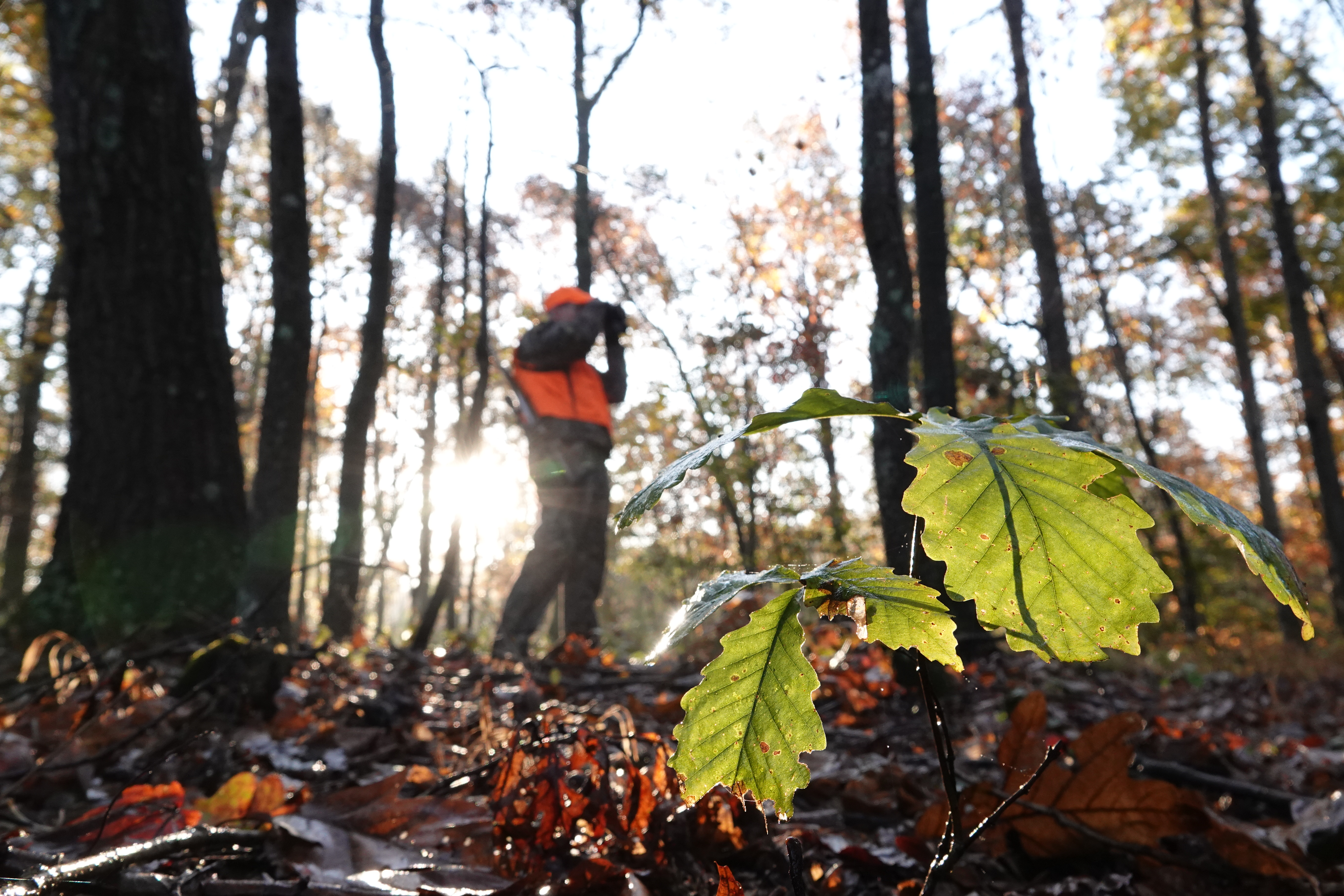
[00:06:30] Speaker C: Yeah, so the acorns are. You know, it's a little hit or miss, but if you find the acorns, that's where you're gonna find the wildlife. You know, talking with the hunters, you know, they're saying the same thing. The acorn crop last year was way more. This year, it's kind of hit or miss. But if you find it, you know you're gonna be on some good stuff.
[00:06:45] Speaker B: Right. How about you? Any good tactics to share out there before we get into some other stuff?
[00:06:51] Speaker A: Yeah, so I've very much taken advantage of ag tags this year. So I've got four deer in the freezer already because hunting started back in August.
We have a lot of agriculture in my area. We have a lot of farms and farmers that are trying to mitigate crop damage. And I found a lot of success finding these farmers, finding what crops the deer are into at that particular time. Right now, it's beans. If you can find standing soybeans, the deer are.
I had a neighbor's kid help me recover a deer just the other day. Thank you. Ryan DeFillips, if you listen to this, he was helping me get a deer out. And as we were walking past the standing bean field, he remarked that it sounded like the soybeans were alive because there were so many deer stomping around out there. So we have a lot of agriculture in our area, and targeting what food they're in at what time is the way to go. And we also have to time in our area how farmers are taking them off. So what crops are harvested and what parcels and when dictates where those deer are. If you've got a farm that's got standing corn and the one beside it is cut or beans and one beside it is cut, it will dictate how those deer are kind of using that terrain, using bedding, cover, using these surrounding areas. So we work a lot of food out in my area as far as where you're gonna hunt, how you're gonna hunt, and how to best take advantage of it.
[00:08:09] Speaker B: I always tell people, think about put yourself in that position. If we were a deer, somebody was hunting us. I mean, we get shot going to the drive through pretty much every day at lunch or, you know, somewhere there is some predict there. But. But like you said, food does change dramatically this time of year. I mean, you can. As the leaves fall, there's less to eat in the woods. Deer become more visible in fields, and not many fields up in your part of the world. So you got to, you know, you got to put your. Lace your boots up, I mean, and find them for sure. Good stuff.
Think about the rut and, you know, you kind of hit on it. Cole earlier.
Everybody talks about the rut and, you know, this year we've seen it. That full moon hit, like the 26th of October. We're coming out of it this, you know, here, the first week of November. You know, the rut is, you know, really is when the peak is, when most of your does are in that estrus cycle. But let's talk about, like, anything that you might have about rut activity, something that that, like, really keys you in this time of year.
[00:09:08] Speaker C: Yeah. And, you know, just touching back on the scrapes. That's. I'm like, big on hunting scrapes for some reason. I don't know why. I just had success prior, and it's kind of stuck with me. So if I can find a scrape that, you know, they're constantly hitting, it's a big scrape, not just a little scrape here. And there's, you know, you got that big community scrape that they're hitting or that rub line, you know, somewhere transition, you know, from maybe a clear cut to. As well, you know, they're, you know, get the scrape line over along the clear cut or something. Those sort of areas is where I try and focus my emphasis on. And if you're getting a lot of does on camera too, you know, eventually the bucks are going to show up, if the does are there.
[00:09:45] Speaker B: Absolutely. I love to see. And all deer hit scrapes. You know, it doesn't, you know, if you watch the timeline of a scrape, you can. There's times when, you know, does are first and then young bucks and then all of a sudden one that's smarter when at times. Right. Those more mature bucks will hit them. In my. That's what I've noticed over the past. And, you know, it was. It was funny to watch this year, too.
And we heard it all over the place, like, we're not seeing any bucks. We're not seeing any bucks, and all of a sudden they show up and, like, you didn't think anything was around. So that's the cool thing about this year and the biggest thing is just being out there, because anything can happen in seconds. How about you?
Do you focus on the rut a lot or, you know, let's get away from the ag tag season. Let's talk about November. I mean, what are your main focus?
[00:10:26] Speaker A: Now's the time that I'm really gonna transition, start focusing on bucks. I look a lot at doe bedding, doe betting and transition between bedding cover what I spend a lot of time on if I can get areas bucks are gonna be looking for does, especially early in the rut.
That's when I seem to see my biggest bucks are early in the rut before, when the first few does are going into estrus before they it fully kicks off. They're doing a lot more seeking. They're doing a lot more looking around. I have my best luck kind of early on near the beginning of November, as opposed to peak rut, when all the does are in estrus and the bucks might not be moving quite as much,
[00:11:01] Speaker B: Then they get locked down, and then you get frustrated. But how about calls? You guys use calls at all, like grunt calls or rattle or any of that stuff? You keep one in your pack?
[00:11:09] Speaker A: Absolutely. I keep them around. I usually if I'm not seeing or hearing anything, I'll do some blind calling. I'll do some rattling, I'll do some grunting. You know, not a tremendous amount. Usually relatively quiet just to maybe move a deer my way if there's something nearby. But you do have to be cognizant of the wind. You call to a deer that's on the wrong side of you, he ends up circling downwind, and you could blow him out without even knowing that he's there.
[00:11:32] Speaker B: In our state, the wind is definitely something that we pay attention to, but it's so hard because it changes like big hills, nooks, and valleys. I mean, the wind is always doing something different, but like, always having a piece of, you know, just knowing what direction that wind is and you prediction is tough here. Like in the midwest, different story flat. You can pretty much say if it's a northwest wind, it's going to stay there all day. Here you could have a northwest wind, and you get into that place you like to hunt, and it could be 180. So it's important to pay attention to the wind. I mean, it's what they're using every day out there. But that's awesome stuff. And one thing about scrapes, I like to think I love to hunt scrapes, too. And it keeps you in the game, you know, because you really have that confidence that at some point, you know, whether you have data with trail cam pictures or whatever, you know, you can smell it when you Walk in there. It keeps your head in the game. And my grandpa always told me, like, if you think there's nothing around, there's not going to be anything around. That's confidence. And I love to hear that stuff, but let's go kind of to the game warden stuff. This is something, you know, when you look at Game News, our publication that's been around 97 years, one of the biggest, probably they most read sections of Game News is field notes. And that's where notes come out from officers across the state. And, you know, we had it on our notes to try to get probably the best story you've had in your career or just something good to share with the folks that are tuning in here to call the outdoors. I'll start with you, Colt, second year. Yeah. You have any good stories yet?
[00:12:58] Speaker C: Yeah. So. And this is going to go back to when I was on field training, just because it was a good time. It's something that sticks in my. I can picture it. I was working with Warden Butler up in Tioheel county, so the Mansfield area. And we were. It was snow on the ground. We were kind of cruising around, rifle season.
And we drove by. There's a guy standing along the road. You know, we waved to him, and Warden Butler was on the phone. So I didn't want to go out of service. We pulled down the road. I rolled down the window. I don't know, five, ten minutes later, we hear a shot, and it's from buddy back the road here.
We go back, and the road is covered in snow. So it's white. There's just blood. Dead deer on the road. And we're like. We pull up to him. He's like, you guys aren't gonna like me. And we're like, why? And he's like, well, I forgot my license at home or in the car or something like that. And we're like, oh, not the. You know, not the deer right here. And he's like, well, that too. You know, it came down off and I, you know, did what I did. He goes, I did it. Look. He's like, you can see where I was standing. You know, I went to the bathroom there. It was me. You know, you got me. He was a good spirit about it, everything like that. You know, it was one of those guys that was. Thanked us for being out there, shook her hand and everything like that. Good interaction all around. I don't think we'll run into that guy shooting any deer, crossroads or in the middle of roads or anything like that anymore. And he'll have his license on him from here on out, too.
[00:14:18] Speaker B: Absolutely, absolutely. And, you know, as we. When you think about something like that, I mean, we all make mistakes. Every single one of us makes mistakes. And mistakes are one thing, but blatant, blatant disregard of the law is important. I mean, the reason that we have game wardens, the reason we have an agency, is conservation. And anybody that buys a hunting license, we're all conservationists. And a lot of that stuff we need to put on ourselves as we go forward for the rest of our lives. If we want animals here for our children and grandchildren to hunt, it's all of our responsibilities. Y' all are just tasked with a lot of things and making sure people stay in those sideboards. And, you know, that gentleman knew he did wrong, I mean, and admitted it. And the adrenaline probably got the best of it.
[00:15:03] Speaker C: Oh, yeah, yeah, yeah.
[00:15:04] Speaker B: That's a good one. Talk about, you said field training. Just talk about what field training is, you know, and being a newer game warden, what that entailed through the training school.
[00:15:16] Speaker C: Yeah. So field training, you know, you're here at the RLSC here in Harrisburg, and, you know, you find out, you know, who you're going with. I found out I was going to pike county with Warden Sowers, Luzerne county with Warden Macco, and then Tioga county with Warden Butler. And each one of those was a great experience. You know, I really enjoyed my time in the Northeast. You know, it's a great time out there, you know, with Warden Mac or with Warden Sowers. We were getting into the bear archery season. So a lot of interactions with people hunting bears, that sort of thing. And then Warden Macco, you know, we got to experience, you know, maybe the more dirty part of the job, you know, small games, small, you know, nuisance animals, stuff like that.
And then up in the north, you know, we had rifle season, the big woods, all that sort of thing. So it was kind of great to get a full on, like, interaction with everything like that. But field training is one of the most important things I'd say, you know, going through the academy, you get to go out there hands on, interact with the public, you know, really get to see the job, you know, as what you'll be doing, you know, how in our position, you know, years down the road.
[00:16:22] Speaker B: Right, absolutely. And, you know, so many times we talk about deer so much, we have them on the wall. But there's a lot of things out there that we're hunting right now. I mean, fall turkey Season's in. A lot of the small game seasons are in. I mean, squirrels, no matter what you do, we, we take a lot of that for granted as outdoorsmen here in Pennsylvania. We have, we're living in the best times of conservation. There's lots of stuff to go out there and, and, and chase. I mean, and when I was a, when I was young, growing up, you couldn't hunt until you were 12. And archery season ended on the 31st of October. Everybody fall turkey hunted, everybody rabbit hunted, everybody pheasant hunted or squirrel hunted because deer season was over until rifle season. And, you know, now archer season runs all the way through the rut and, you know, right up there till, you know, the week before Thanksgiving. In some places, it doesn't stop, you know, and, and we're living in the best times, and that's a good one. How about, how long have you been on with the Game Commission, Jared?
[00:17:17] Speaker A: I'm working on 13 years. I started as a cadet in 2014. You
[00:17:21] Speaker B: look about 25. So you started when you
[00:17:23] Speaker A: were. I started 12. Yeah. Nice. 12.
I started early. For me, I think I was 22 years old when I got into the training school.
It's been a great experience. I mean, everybody. It's funny you talk about field training for you. It was more recent than me, but I remember it like it was yesterday. Traveling the state, going to work in places I had never even set foot in before. And funny enough, where I work now is very much near where the places I went on field training. Yeah. Found some places that I liked and pretty much came right back.
[00:17:55] Speaker B: So where was your original home?
[00:17:57] Speaker A: So I'm originally from Southern New Jersey. Oh, wow. I moved. I decided I was a Pennsylvanian when I moved to college in Wilkes Barre. I was there for a semester and I decided Pennsylvania was more for me than New Jersey.
[00:18:08] Speaker B: You still drive like you're from New Jersey.
[00:18:10] Speaker A: I try not to. I try not to. So I, I settled in, in Wilkes Barre. I decided that I was going to be a Pennsylvania resident. And one of the things that actually solidified it in my mind was actually state game lands, because right outside of Wilkes Barre is Gamelands 292. It's a small, diminutive game Lands. On the big picture, it's not one of those 50,000 acre monstrosities, but it's right outside of town. I could make it from my dorm room to the game lands in 11 minutes.
Where I grew up in a more urban part of New Jersey. It would take me an hour to get to state Forest in traffic and red lights and everything. So to wake up on a day where I don't have classes until the afternoon and hunt all day and be there in 15 minutes or less was a heck of a thing. So while, as I've mentioned before, I didn't know Game Commission personnel that game lands, that was one of the reasons why I think I ended up in the seat that I'm in now.
[00:19:04] Speaker B: And we're so lucky to have 1.5 million acres of game land system here in the state that we manage. And we know that it's going to be here for wildlife and hunting and trapping, you know, when we're long gone and we're such a lucky place. But you got to have a good story over 13 years you can share with us as a game warden. And you probably have a pocket full of them. But if you could share one with us, like one of those cool ones or something, that might blow our minds.
[00:19:28] Speaker A: It's funny how often this question comes up when people ask game wardens about stories. Because I think it's just expected or known they run into these crazy things that are out there. It's like every Christmas or Thanksgiving. We'll keep
[00:19:39] Speaker B: them PG rated here.
[00:19:41] Speaker A: We'll keep it to a good one because it's all over the board. I mean, anything from trucks spilling research monkeys out onto a highway, to guys smoking meth and mistaking each other for coyotes, to one that this one I enjoy from just a couple of seasons ago. So I was with Game Warden Jake Klinger. He's in southern Columbia County. I was with him on the opening day archery season.
He gets a phone call from local police that they were headed to what was called in as a safety zone complaint. Somebody had discharged a firearm within 150 yards of somebody's house. We didn't really know much more for details than that. There was a deer involved is all we were told.
So we made our way out there and talked to the local police officer, talked to the folks that are on scene. And to keep it brief, what had occurred was a hunter was out hunting on the opening morning and he shot a buck, bad shot, on a deer up behind his house. He owned a small parcel of land. It ran off onto a neighboring property. He looked for it for a while, couldn't find it, gave up, went back to his house. A short while later, his wife left for work.
She drives half a mile or so down the road and calls him and says, hey, honey, there's a big buck that looks like something's wrong. With it laid in one of the neighbor's yards a few houses down, you might want to come look at it. It might be the one that you shot. It's laid right up against their garage door.
So a series of poor decisions happens at this point in time. An interesting one to start is, so he cocks his crossbow, he puts a bolt in it, he sticks his 9 millimeter handgun in his pocket, and he jumps on a small child's electric scooter and scooters his way down the road to go after this deer.
Why the scooter? Why not a car? I have no idea. But scootered his way down the road, he gets to the point where
[00:21:26] Speaker B: he's trying to be stealthy,
[00:21:28] Speaker A: maybe. Yeah.
He gets to where he can see the deer. It's laid up against the neighbor's shed, garage thing that they've got there.
And instead of doing another mistake made is instead of going up and knocking on the door and asking permission, explaining the situation as to why this deer is laid out in the yard and how he should go about handling it. He wants to sneak up on the deer. It's a nice buck. He doesn't want it to get away.
Next poor decision. He leaves the crossbow down next to the electric scooter, takes out his 9 millimeter handgun, and pursues the deer through the yard.
Well, it turns out the neighbor was not home. However, his elderly parents were home. So these are folks in their 70s, 80s. And she looks outside and she sees a man dressed in camouflage holding a handgun slinking through the yard.
They don't know what to make of this. She hollers to her husband. Her husband goes scrambling over to the gun safe. He grabs a gun just as the suspect unloads that handgun in the general direction of the deer, right up against their garage and shed. The deer was not harmed. I cannot say the same for the garage and the shed.
[00:22:32] Speaker B: Nice.
[00:22:34] Speaker A: The gentleman comes outside now alarmed about this armed gunman discharging a fire. Firearm outside.
[00:22:40] Speaker B: And he's
[00:22:41] Speaker A: armed. And now he's armed.
[00:22:42] Speaker B: Oh, nice.
[00:22:42] Speaker A: Confronts him in the yard. Standoff occurs.
Thankfully left the time to explain what was happening.
Guns get put away, police get called, we come to the scene to arrive. And culminated in that individual going back to his crossbow as he was out of handgun ammunition, circled around, stood in the middle of the blacktop road, and then shot and killed that buck in the ditch along the side of the road.
A lot of poor decisions were made on that particular story. But there's something about that gentleman with a crossbow in one hand, a handgun in the other, electric scootering down the road that really I really enjoy.
[00:23:20] Speaker B: Yeah, I can see where these. And, you know, I think that's a good point there too, is, you know, sometimes we have to make decisions as hunters out there in the field, we have to make those ones, sometimes split seconds. But making a good decision is better than making a poor decision. And I think if we can encourage everybody out there, you know, we don't. None of us want to see a deer suffer. But again, like you said, knock on the door, doing it the right way. Always take a breath and think about that decision you're making. And, you know, that's why law enforcement is so important. And I'm sure that when you got there, you educated him very well on all the poor decisions he made. I'm sure of it.
[00:23:57] Speaker A: Absolutely. And we find that, and rarely is it one poor decision. To get into a scenario like that, a series of things had to go wrong. You had a lot of opportunities to make the right choices, and wrong choices were made. And I bet Cole would agree that that's. Most of the time violations kind of fall into two different things. There's intentional and there's unintentional. You accidentally leave your hunting license at home, or you accidentally forget to sign something, or that's one thing. And. And we do a good job at educating folks. I mean, I think statewide we issue warnings on a 4 to 1 or better ratio than we do citations.
And I think those single poor decisions are educational. Those are opportunities we can use to tell these people the right and wrong way to do things and move on from there. Whereas once you start making series of poor decisions, when you don't have your license and you see the buck run down next to the road and you jump out of your truck and shoot it, that's when you end up scootering down the road, shooting with handguns in your neighbor's yard.
[00:25:00] Speaker B: Right. And as conservationists, making the right decisions are important. I mean, when you look at the future, and I love these stories, I could listen to these all day. But, you know, when you look out there in your years of experience, what do you think are some of the most common mistakes that our sportsmen and women make out there?
Something that they could think about and maybe even some things that they might not think that are wrong.
You know, from your purview, what are some of the things that you have to educate the public or cite the public the most on that we could talk about today?
[00:25:34] Speaker A: Sure.
Overwhelmingly, it's Those unintentional, those accidental things, those license violations, leaving things at home, not signing things. If I had to look at the numbers and the number of things, I say, hey, you've got to sign this. They say, oh, I didn't know. Or I, the lady at the store didn't tell me I had to sign it.
Very negligible, technically, violations of the law. Not something that generally warrants a citation in most scenarios far and wide, those accidental mistakes are the most common.
Moving into our unlawful taking violations, safety zone discharging, firearms and bows. Too close to occupied building, buildings or structures are very common
[00:26:13] Speaker B: while we're there. What is too close?
[00:26:14] Speaker A: Too close. So 150 yards for firearms, 50 yards for archery equipment.
Sometimes it's on purpose, bailing out of trucks and shooting things, people's front lawns. Other times it's incidental. There may have been a shed, garage, outbuilding that you were unaware of that was out there, recently built. It's something you couldn't see on a satellite map, things like that. Also, relatively common tagging violations for all of our different big game animals that require tags. Not filling them out appropriately, attaching them to the ear of the deer before you move them, or bear or elk, whichever big game animal it is. So following the instructions for tagging and reporting, all very common as well.
[00:26:55] Speaker B: To me, tagging and reporting is just as much as shooting nowadays. I think I get that much. It's part of the hunt.
And you know, when I look at other states, I'm just going to be honest. Other states, it's, you know, they went from check stations, from deer and turkey and everything to now calling it in. And nobody, not nobody, but in Missouri or Ohio or Alabama, it's just as much as the hunt as tagging and calling it in as it is as pulling the trigger. And I think here in Pennsylvania, we all need to live like that because it's, it is. I mean, that information is crucial for our wildlife management team to know how many turkeys or deer or whatever harvested. And it's not that difficult to do it the right way. So I think thank you for those. Because if that's what you run into the most, we don't want people to get, we don't want people to get in trouble. I mean, that's not our goal out there for sure. But if you do do something wrong, that's why you guys are out there. I mean, to figure it out. And it is an education process and to catch the, the chronic, the people that are chronic poachers I mean that's, I mean there's people out there that do that and then there's probably people tuned in here. But you know, every time to me it's stealing. It's stealing from our future, our next generation. When you look at it that way. How about you? Do you run into anything different than that?
[00:28:11] Speaker C: Yeah, Turner covered that pretty well. Loaded firearms and vehicles, that's a big thing, you know, that's a big safety thing too. Sure. Like that can lead to some bad things happen.
[00:28:20] Speaker B: 270 will put a heck of a hole in the bottom of a floorboard of a brand new F150. I've seen it happen and it's not nice.
[00:28:27] Speaker C: Yeah, I can only imagine, you know, the common unsigned license, you know, people leaving tree stands out on the game lands year round, that sort of thing. Not even having them marked with a CID too as well.
[00:28:38] Speaker B: Let's talk about that. Let's talk about the law about. Yeah, tree stands on game lands.
[00:28:42] Speaker C: Yeah, yeah. So you, you can, you know, you can have tree stands on game lands. They just have to be put out, you know, two weeks prior to the season and then removed two weeks after the close of the end of the season.
And then that's where we have run into the guys that leave them out year round, you know, or don't have them marked at all or that sort of thing. And pa. You have to, if they're going to be on the game lanes, you have to have a mark with your CID at least, you know, so we can tell whose it is, you know, that sort of thing.
[00:29:06] Speaker B: Yeah. And there's an equipment number too on your profile. You can use that number. Just like on traps.
[00:29:10] Speaker C: Yeah, exactly.
[00:29:11] Speaker B: We've made it simple to have your number for sure.
[00:29:14] Speaker C: Yeah. It can just lead to, you know, having a whole bunch of tree stands out on the game lands, you know, and then they grow into the trees that are there for that long which can cause damage to the trees later down the road. So
[00:29:25] Speaker B: yeah, I see a lot of game, I see a lot of tree stands left, especially in your country come turkey season that you know. And I know I hunt a lot with Deputy Director Mitchell up in that country and I'm sure that he sends a note of every tree stand that he sees up there in that part of the the world. But I mean, and that's awesome. And so let's talk about this like, you know, I'm out there hunting. We're second week of buck season, second week of firearm season. Sorry, I go back to my old school lingo a lot.
And, you know, I come up to a game warden, you know, let's talk about an interaction. And most of the interactions, you know, I come from a generation that law enforcement is the respect levels up here. I get nervous when I see a police officer behind me, and I know I'm not speeding, but, you know, tell people, like, just what to expect, like when they do encounter a game warden. You know, for people that maybe are intimidated or scared, you know, you guys just want to have a conversation. I mean, and what can we do here to ease that, you know, that. That fear of game wardens out there?
[00:30:29] Speaker C: Yeah. And so, I mean, I had an interaction with a guy the other day. You could tell he was a little nervous just because it was. There's a guy in green coming up to him, you know, checked his license, Everything was good. You know, there was nothing wrong with him. But as we get got to talking, you know, talking about deer, bear, elk, everything in the area, you know, he kind of settled down, talked, you know, we just. We were there for 20 minutes in the dark, talking at night about, you know, all the wildlife and where he's hunting, scouting and that sort of thing. But, yeah, I mean, we just were coming up mainly, you know, checking your license, making sure we're in contact, compliance with everything. You know, if there's firearms on vehicles and stuff, we're checking that sort of thing. But at the end of the day, we're there to just, you know, kind of see what's going on and what's moving, you know, in the woods here in pa,
[00:31:13] Speaker B: you care about that as much as anything. You know, what's happening out there. You know, that's great, great advice for sure. How about you? Do you have any advice for folks that.
[00:31:20] Speaker A: Yeah, it's. I've been around enough to see all kinds of reactions, and people do get nervous sometimes, and
[00:31:27] Speaker B: me included.
[00:31:28] Speaker A: It's not warranted.
One of the things is just acknowledging that we're all just people, too. There's nothing to be scared of. There's nothing to be afraid. If somebody runs into a warden, I would advise to just relax, talk to them, just do what they say. As far as if they're asking for a hunting license, if they ask you to unload your firearm. Some people get panicky. Some people. I've had a lot of loaded guns point at me because somebody is frantically trying to unload something when that really wasn't warranted or necessary. So just relax. We're all just here, we're all just people. And kind of like Cole pointed at you spoke to earlier, we're all hunters as well. Once we get those license checks out of the way. I spent half the time talking to them about what they saw, what, you know, other places that they hunt, other species that they hunt. We try to make every interaction a good one. That's kind of the goal right now. We don't go out to check hunting licenses to write people tickets. I mean, yeah, sure, there needs to be compliance with the law at the end of the day, I mean, I want everybody to leave with a positive picture of how that experience went. You know, I want them to go home and tell their family that they talked to a game warden today and turns out he's a really nice guy.
[00:32:34] Speaker B: Absolutely.
[00:32:35] Speaker A: I think we all kind of leave that.
[00:32:37] Speaker C: Yeah,
[00:32:37] Speaker B: you might even give them a tip sometimes, like where you saw a lot of oaks or someplace to even go check out if they're out there. If they ask you, I'm sure, I mean, you spend a lot of time out there in the woods. You know what's going on in your areas. For sure.
[00:32:48] Speaker C: For sure.
[00:32:49] Speaker B: So the next thing that I think we should talk about is Operation Game Thief.
OGT is something that we're pretty proud of here in pa. We lead the nation, folks calling us in and giving us tips and, you know, from your experiences, talk about maybe some OGT stuff that's happened to you in your career.
[00:33:05] Speaker A: Yeah, so the. We talked a little bit about, like, our accidental incidental violations that happen. OGT is kind of for the opposite. We talk about poaching, poachers. The reason that game wardens are all really here to catch these people that are deliberately out taking too many animals, doing things the wrong way. Operation Game Thief is a program for folks to report big game violation, threatening endangered species, kind of these big issues that they might be aware of, and it gives them an avenue to do it. There's a few different ways. There's phone numbers they can call, there's a website they can visit, There's a form they can be filled out.
We get a lot of tips that come in through that line throughout the course of the year. And I'm eternally grateful for all of those tips. And we make great cases off of them all of the time.
I'd say the best thing if somebody were to call in a tip or have information, is first to actually call in. The overwhelming majority of game law violations are entirely unreported.
A lot of folks see something, they don't say anything.
[00:34:06] Speaker B: Right.
[00:34:07] Speaker A: They might complain internally to their buddies, their friends, their neighbors, but until they call one of us, rarely is something going to change.
[00:34:14] Speaker B: Yeah, and you can remain anonymous. I mean, it's, it's completely up to you how you want to do it. But again, looking at it as poachers or thieves, that's kind of the headline for ogt. And they really are. They're taken from you, they're taken from me, they're taken from everybody. When things aren't done right, I mean, in today's day and age, I mean, when you look at deer, you can fill the freezers in many different ways and it's easy to remain completely legal and have enough venison to feed your family for the year nowadays. I mean, for sure. And people that go above and beyond, for whatever reason, they do that. Like we want to hear about it. And I encourage everybody to check out OGT Operation Game Thief on our website. The numbers are all there.
It's very easy to do. I've used it myself a few times in the past 10 years and it's pretty simple.
[00:35:06] Speaker A: My biggest request on that would be to the public is if you're going to leave information we have in addition to anonymous, there is confidential. You can check a box that says that you would like to remain confidential, but you do still provide contact information, a name and a phone number. For a warden like myself, I'm sure Cole here could say the same, that if you get anonymous information that says John Smith shot a buck on Main street, but without any follow up, that might mean something to you or the person that called. But there's a lot of who, what, when, where, why and how follow up that's required. And in today's day and age, a lot more information is better than a lot less. So having the avenue to call someone, ask follow up information, things that someone outside of law enforcement might not think of or might not think is important is really beneficial. As the recipient of those tips, I do encourage folks to leave some sort of contact info. We can leave your name out of it. We don't go running over to the neighbor's house and say, hey, Matt told me that you did this. That's just not how it works. You can remain confidential, but having contact info for follow up is, is really important. And it's the difference between being able to make a case and not being able to make a case.
[00:36:20] Speaker B: When you think about cases, I mean, there's a lot of cases throughout the year across the state that can't be made because we don't have that information. And we know that things have been done wrong. And, I mean, the more information we have on anything to make those decisions, the better it is for sure.
How about you? Have you dealt with OGT?
[00:36:37] Speaker C: Yeah, my biggest case last year came from OGT, so, you know, it resulted in over $12,000 worth of fines, multiple years, close to 10 years of revocation between the three individuals that were involved. But it came through OGT. And, you know, the guy gave all the information we're asking for, and I had a number to call him, and, you know, we got back to him, and in the end it was a successful case.
[00:37:00] Speaker B: Yeah. And. Well, not just successful. You've saved a lot of wildlife, obviously, for sure. And. And again, we have to put that back on ourselves as sportsmen. It's important that we. I encourage. I used to hunt out of state a lot, and the first phone call I would make would be to the local game warden because I wanted to be friends. You want to check my license? Come over. We can work on this. Here's where we're going to be. Because I wanted folks to know that we're doing things the right way. Now. If I stepped out of line and did something wrong, I'd expect him or her to tell me that. And I think.
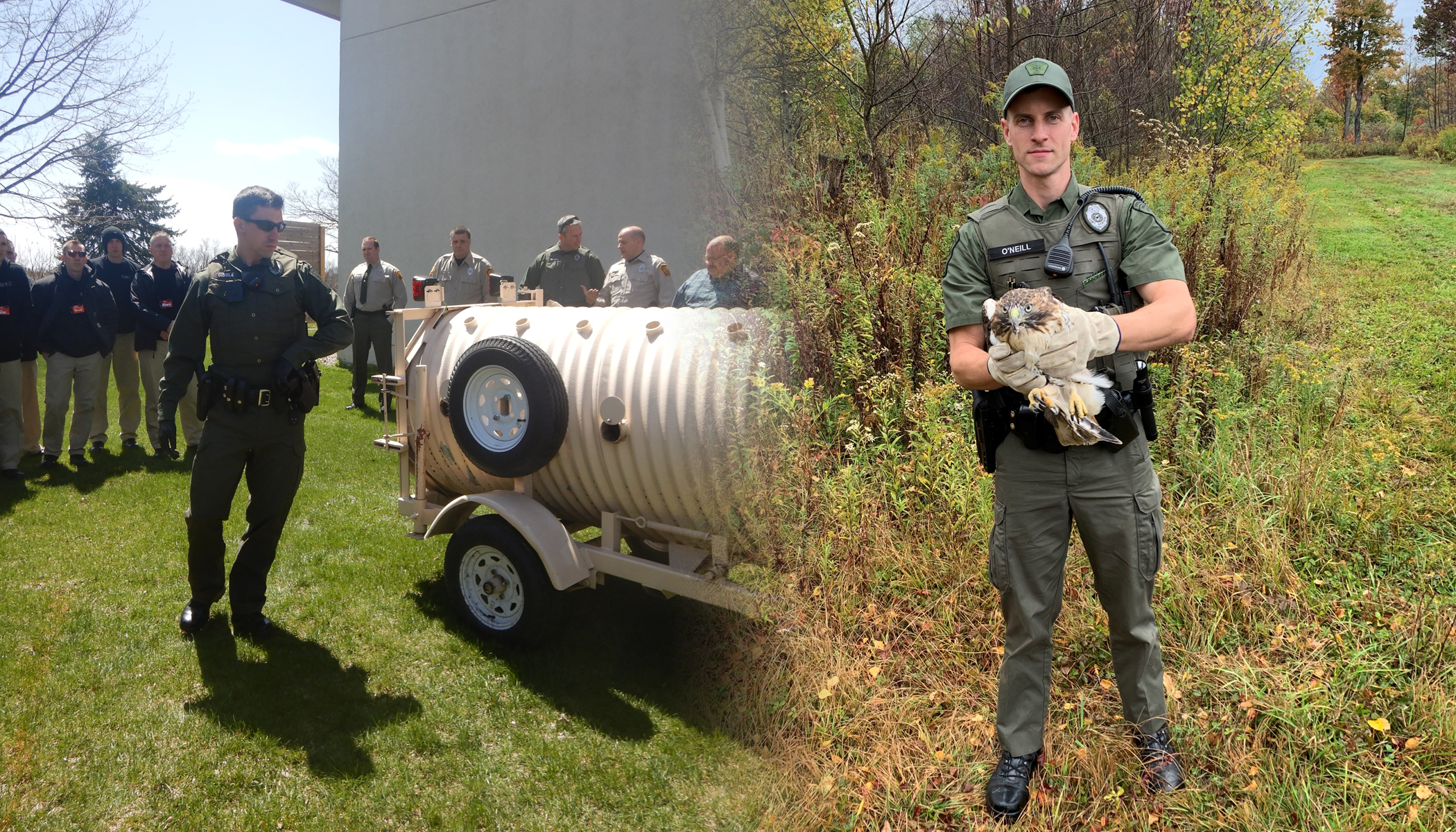
I think when you look at the generation that we're at today, especially in your generation, Cole, and even yours, I mean, I'm quite a bit older. I think there's a lot more compliance that's happening today than when I was a kid, and I'm making that totally anecdotally, but when I was a kid, there was a lot of wild, wild west out there. I mean, it really was. And I've seen the change over time. And that just, you know, there's way more to a game warden's job to. Than just out there checking licenses and writing tickets. I want to talk about that, too. Talk about a day in the life, you know, and. And what is put on you. I mean, you guys trap bears. You, you know, you're looking for turkey trapping, you're helping in wildlife management, you're doing I and E functions. I mean, talk about that. Talk about, like, what your day consists of or a week consists of as being a state game ward.
[00:38:20] Speaker A: Yeah. I always have to use the cliche, every day is different. I get my. I get eyes rolled at me every time I say that. But it is in one of. This is one of the cases where it's actually true, where every day is different. I mean, one of the guys, One of the game wardens that I supervise just had an interesting day where he had a hunter education class in the morning.
He had to investigate a couple of smaller time things during the day. He then had a bunch of folks get bit by a rabid fox and had to trap the fox down and then get it submitted for rabies testing. And then he ended the evening by being involved in a pursuit for a drunk driver, Ultimately apprehending the suspects. So anything from talking to a group of children first thing in the morning to be involved in felony stops in the evening. So every day is different, and it's all over the board. We're involved in things like you mentioned, from hunter education, wildlife management, wildlife research studies. I got to go and do some else elk calf banding this year, where we went out to the north central region, tracked down some elk calves, put tags and GPS collars on them for research.
Turkey trapping is always a good time where we're using rocket nets to capture flocks of turkeys for various biological data.
And then on top of that, all of our school programs. Just the other day I was out doing a trunk or treat, handing out Halloween candy out the back of my patrol cars. So anything and everything is what it seems like.
[00:39:46] Speaker B: Right? And that's. That's a part that a lot of folks don't see. They see us. They run into us in the woods or something. They don't see everything. I mean, I would assume you just melted in your community and probably you too cold, you know, moving from down here to north central, like you're one of the community and you're trying to do good things every day, no matter what that is. And how about you? What's your days look like a lot of times?
[00:40:08] Speaker C: Yeah, I mean, they're pretty similar. It depends on the year. You know, bear trapping, turkey trapping, that sort of thing. You got, you know, the summertime, the nuisance, animal complaints, bear complaints, you know, they're ramping up, that sort of thing. And then this time of the year, it's like you write it down, you're gonna try and do it that day, but as soon as something comes in, you crumple up and throw it away because it's changing every minute. You know, it's one time you're doing a school program, the next year out because some guy shot a deer off the road or something. It's just always changing. But this time of the year is probably the best time of the year to be a game warden. I'd say
[00:40:42] Speaker B: that's awesome. That's great to hear.
Speaking of that, we have another class that's going to be coming open here in January and, you know, recruitment wise and we didn't need to put the plug out there. And the word out there, if people know anybody that have some sort of interest in wildlife conservation, as an officer, I send my encouragement, but I let you guys send that encouragement and, you know, you kind of sold it right there. Like every day is different, but, you know, talk about, you know, something that could to give those folks the right frame of mind to apply.
[00:41:16] Speaker C: Yeah, I mean, hunting or not hunting, like, you come out here, you get to go to bear dens. Like, who gets to say they get to go to bear dens?
Calf captures, you know, up in the North Central there, that sort of thing. Every place is different, but everything's got their cool things. And this job is, you know, I wouldn't want to be doing anything else. You know, there's a lot of other things that you might make more money doing. But, you know, this right here is something that you get to wake up every day and enjoy and look forward to working. You know, I get, I look forward to going out, interacting with hunters, you know, hearing about what they got involved in and that sort of thing. And it's just not. It's like nothing else, you know?
[00:41:55] Speaker B: Right.
[00:41:56] Speaker A: Yeah.
Just like Cole said here. But coming from a background where I wasn't incredibly involved in hunting when I first started, that story I told about becoming a game warden and kind of just stumbling into it, now that's being involved in the outdoors and hunting is kind of all I do. I've hunted and fished in, I think, 40 of 50 states now. I travel all over the place. Being involved in the hunting community as a job feels like I'm cheating the system here somehow. It's hard to imagine that they pay me to do this sometimes.
Getting to go out, talk to hunters, going to these different events, speaking to folks about hunting. I mean, even get to come to some of the cadet classes to teach advanced deer hunting tactics. If you told me that was something I was going to get to do As a job 15 years ago, I probably would have thought you were crazy.
[00:42:45] Speaker B: That's awesome. When you wake up and love what you do every day, it's not a job, it's a lifestyle. And it's something. And from all of us here, thank you for what you guys do each and every day out there and best of luck to you when you get time in the treestand or in the duck. Marsh, I know you're a big water fowler, whatever your hobbies are, and it's important you enjoy them, too. But thank you for what you do for wildlife and here at the Game Commission every day from everybody here at pgc.
[00:43:14] Speaker A: Thank you, man.
[00:43:14] Speaker B: Yeah. Thanks for coming on today, guys.
[00:43:16] Speaker A: Happy to be here.
Sa.