Episode Transcript
[00:00:00] Speaker A: The number one question we get from a reporter for a newspaper or, you know, a magazine or even from our hunters, like, how many deer are here or here or across the state, like, how many deer in the state?
[00:00:12] Speaker B: You come to work and your thought is, how do we make it better every day? And that's what we're here to do.
[00:00:17] Speaker C: In PA, I think we're around 650,000 hunters, which is very fortunate. And that's not comparable to most other states. Most other states, hunter numbers are decreasing, have been decreasing over time, but they're nowhere near the numbers that we have.
[00:00:39] Speaker B: Hello and welcome to Call the Outdoors the podcast of the Pennsylvania Game Commission.
You know, it is in the air. Hunting season is here. Archery season has started. And today we're going to talk about white tailed deer. We have on today deer and elk section supervisor David Stainbrook and our white tailed deer biologist, Maureen Staats. We have a really special podcast here today because we have the folks that are behind the scenes of everything that happens, whitetail deer here at the, at the Game Commission.
And I know that we all want to learn about things. There's so much that goes on and we're going to try to dig down in the weeds and a lot of what happens here at the Game Commission, especially when we talk about whitetails and the biology part of it and just, just a lot of nuts and bolts. And I'm just going to pass it right over to David Stainbrook. If you would just tell everybody, you know, really your background and how you got here to the Game Commission.
[00:01:28] Speaker A: Sure, of course. Thank you. Thank you for having us on here.
So I grew up in northwestern Pennsylvania, Crawford county, right between Connaught Lake and Paimatuning Lake. And you know, being outdoors was a big part of my, my life.
Had family, uncles that were farmers and biologists across the country. Really kind of made me excited to get into this field after.
[00:01:52] Speaker B: By the way, that's almost Canada where you're from.
[00:01:55] Speaker A: That is right up there near Lake Erie, also about five minutes from the Ohio border. So as far as, like, how it fits into the state of Pennsylvania, it's much different type of landscape there. It's almost like Ohio. It's very high ag.
We have vineyards up there, so very productive part of the state.
[00:02:11] Speaker B: And the dirt's a little different up
[00:02:13] Speaker A: there, A little bit darker brown.
[00:02:14] Speaker B: Yeah, absolutely.
[00:02:15] Speaker A: Yeah. Well, that's really good for farming.
[00:02:17] Speaker B: That's something we're going to talk about too. You, you know, and I'm, we just talked about talking over. I Just something just hit me.
One of the tasks you have, and this is something that we should talk about later on is like, when you look at the state as a whole, managing deer across this whole state is very complex. But go back to what you were talking.
[00:02:33] Speaker A: Yeah, absolutely. We'll get there.
So after that, I went on to college for biology and then went on to grad school at Penn State and did wildlife science, which was I was able to do fortunate enough to do a project in Gettysburg National Park. Capturing deer and looking at ways to better estimate the populations in that area.
Also was really interesting because I was able to get my hands on deer and really see where they're going with the GPS collars and everything. So after that, looking for my first job. Would have loved to get a full time position with the Game Commission, but nothing was available at the time. But I did actually do some of the seasonal jobs when I was in college over the summer. So I was able to work under our waterfowl biologists up in that area and do some waterfowl trapping. And then the year before I got into grad school, I was actually a member of one of our deer capture teams.
[00:03:29] Speaker B: Awesome.
[00:03:30] Speaker A: Up in the north central part of the state. So that's like my first experience with the Game Commission after getting into grad school, looking for that first full time position, a position opened up in the state of Massachusetts as the deer and moose biologist. And so I was fortunate enough to get that position.
Started a family up there was in that position for almost 10 years. And then when a position opened up here in the Game Commission for this particular position, which is the deer and elk section supervisor, I was able to get that position. And I've been in that role for about five or six years now.
[00:04:10] Speaker B: Time's flying, isn't it?
[00:04:11] Speaker A: It sure is. Yeah.
[00:04:13] Speaker B: Yeah, absolutely. So, Maureen, let's. I mean, pretty new to the agency. We see your smiling face. Walk around all the time and, you know, tell us a little bit about yourself and how you got to the Game Commission.
[00:04:25] Speaker C: Yeah. So I am also a PA native. I grew up in Hanover, so just outside Gettysburg, not too far from Harrisburg.
I was lucky that I was exposed to the outdoors from an early age. My dad was a big deer hunter. Growing up, he was like the only person in my family that was a hunter. But I always liked wildlife and just anything to do outdoors, camping, hiking, that kind of stuff.
[00:04:48] Speaker B: If you live in Hanover, somebody you know is going to be a deer hunter.
[00:04:50] Speaker C: Yeah, you need to. Yeah, exactly.
Yep. So then I ended up Going to King's College in Wilkes Barre, Pennsylvania for my undergrad. I did environmental science and biology. Kind of took me a while to realize that wildlife biology was where I really wanted to insert my time and focus.
So I kind of started that later in life than I would have originally.
So I ended up doing a few seasonal jobs after I graduated from Kings, kind of bounced around doing different projects in Florida, out in Texas, in the Midwest, kind of all over the place, trying to just gain experience, ranging from like waterfowl to eventually a little bit of bear work till getting my first deer job in Florida.
Like David, I did a stint with the Game Commission as a seasonal crew leader for the deer forest study and then started my graduate work in Kansas, Kansas State University. And it was about eight years after my undergrad, so I had quite some lag time in between just getting seasonal experience kind of all across the country.
But yeah, so I did my graduate work in Kansas. It was a three year deer project focusing on mule deer and whitetail deer. In western Kansas was where the field work was.
It was a project where we captured using helicopters, male mule deer and white tail deer. We focused on movement, survival, resource selection, all sorts of fun stuff.
And then I graduated, moved out to Washington State, worked for pheasants forever for a while as their big game migration and habitat coordinator, and then came back to New Jersey, worked in their bear unit as a biologist for about two years, and then was hired in Maryland. In the meantime I had like met my husband, so I was trying to get back to the East Coast.
[00:06:51] Speaker B: They'll do that to you.
[00:06:52] Speaker C: Yep. So trying to come back.
And so started as a big game project leader or the deer project leader in Maryland, and then I was only there for a few months and the position opened up for within the Game Commission as the species deer biologist. So I applied for that because I was always trying to come back to the Game Commission if possible, and was fortunate to be hired almost two years ago.
[00:07:16] Speaker B: Awesome. In case anybody didn't hear that, if you run into Maureen out at a show or something like that, you better be nice because she's wrestled bears, so she's pretty tough.
But you know, when you, when you think about the backgrounds that y' all have and you know, out there in the dirt and whitetails are pretty special to our folks here in Pennsylvania. And you know, just talk on how difficult or the task of managing the population and the goals on a statewide level, because myself included, sometimes we just look at that little place that is our honey hole. We like to go. And we think, oh, the population's up. The population. We don't really see it across the commonwealth. And talk. Let's talk a little bit about that.
[00:07:59] Speaker A: Sure. So I think there's this challenge of trying to manage deer in the landscape that makes everybody satisfied. Right. And so we have a lot of constituents to satisfy, and that balance of, you know, making sure that there's enough for recreation and they're not too high, that it's causing, you know, deer human conflicts, but also that the forest is healthy and that the deer are healthy. It's kind of where we balance it.
And a lot of states, just like we do break the state up into smaller areas to do that management. And it has to be a good balance of, like, they're. They're small enough to make it meaningful based on, like, the soil conditions, the forest type, the access, all the factors that go into that, but they're not too large that you can't manage, you know, everything within that unit. And so in the past, we did counties, and I think a lot of people really got used to that. They like that some states still do it. The problem there is when you need enough data to make the decisions we have to make, you're not going to get enough of it at the county level. And in the past, when we did that, we actually had to lump together a bunch of counties to get enough data to make estimates, which ended up being about the same size as our current management units.
But what's nice about the current management units is that they use more realistic boundaries that both a hunter can identify, like a road or a river, but also things that actually are meaningful for deer movements. Like, deer don't really know whether they're in this county line or this county line, but they do know if they cross this major river or up highways,
[00:09:34] Speaker C: things like that, you know, interstates movement.
[00:09:36] Speaker A: Absolutely. And so, you know, we can all argue about, I think this unit should be smaller or whatnot. One of the things we actually did learn with our units is there was a point in time where unit 2G, there was a section carved out called 2H.
And one of the challenges we had as deer managers is getting enough data within that 2h area to make, you know, these decisions that we're tasked with.
And honestly, between the two, they mirrored each other very similar. Similarly, the data for 2H was looking just like the data for 2G.
So we actually recommended to merge them back together into larger 2G, which gives us.
We're managing similarly, but the data is there that we need to have.
[00:10:21] Speaker B: And the bottom line is, the more information that you can have, the better the end product is on anything. And really, when you look at what you all are processing information every day, and I think that's something that a lot of folks don't really realize is the amount of time that you're analyzing to make these decisions and recommendations come January.
And that's when you talk about that statewide brush. I mean, it's so important to understand that not we're sitting here in Dauphin county, it's different even across the river in Perry County. I mean, where there's a different wmu. I mean, it's hard sometimes for folks to fathom that. And I'm glad you brought that up. That was an awesome explanation.
[00:11:00] Speaker A: Yeah. Another thing is a lot of states manage their deer numbers on the landscape much differently. So some states will try to do aerial surveys to come up with an estimate of deer numbers, or they'll use these different statistical methods to come up with an estimate of the number of deer in the landscape and then use that value to make the decisions on if they want numbers to go down. And Pennsylvania actually used to do that. We used to have a target density, and we would estimate density.
And that was like our one goal.
It didn't work out very well.
And honestly, you don't need to know exactly how many deer are out there. What we kind of changed the decision framework into is it doesn't matter what the number is on that unit, whether it's 20 deer per square mile, 40 deer per square mile, or, you know, 30 deer per square mile. What matters is that level meeting our goals. And if the deer are healthy, if the forest isn't being impacted and the deer human conflicts are fine, then that level of deer is just fine for that unit. And that may not be the same number that the next unit can support.
[00:12:07] Speaker B: Right.
[00:12:07] Speaker A: And so that's the shift which is very hard to kind of wrap your head around, because it's like, we do have estimates of deer populations, but we use it mainly for what's the population trend doing, Are the deer numbers going up or down, or are they stable? And that's the way we use it.
And I think that's a good thing for hunters because that means that can allow us to, Instead of coming up with, we want 21 deer per square mile in this unit, we can say we can support as many deer in this unit as long as these goals are being met. And I think that's a good way to do it. It's just Not a lot of states are.
Are able to get enough data to make those types of decisions. And so that's why we say, like, we're data heavy to be able to have the forest metrics, the deer health metrics, and everything like that.
[00:12:56] Speaker B: Yeah. And I think a lot of states look to Pennsylvania as like, your program is doing some things that we're not measuring. And you see a lot of people graduating or looking at our program, I would imagine, especially in your circles.
[00:13:08] Speaker C: Right. And it is important just to be defendable and having those measurable impacts a lot easier to track versus a number. Like David said, deer are mobile. They're constantly moving, so you can't really defend how many deer are in each wmu. And again, to David's point, it doesn't necessarily matter as long as you know your goals are being met.
[00:13:30] Speaker B: And you said deer are always moving. When you go from like two months, a month and a half ago in August, when, you know, you see hidden ag fields or where you see the. You just see a lot more deer, and then all of a sudden the food starts dissipating and there's not as much to eat, and they're out there. I mean, they're traveling all the time. And then you add hunting pressure into that into an area, and people are like, there's no deer around. But, like, there's so many variables to that when you're just trying to do a count where your trend is telling you exactly what it is.
[00:13:58] Speaker C: Right. And, you know, it's. So when I said they're always moving, it's important to kind of keep in mind, like, the average home range for a deer is like 1.1square mile in Pennsylvania. And so they are moving, but they're shifting their movement potentially because of the presence of hunters or like, food variation within their home range. So they're typically not going very far outside of, like, dispersal events when they're yearlings as adults anyways, they kind of stick close to home for the most part. But that home range, you know, if that could be in between two different properties, it's not going to necessarily be in your backyard their whole life. They're going to be moving around.
[00:14:36] Speaker B: And other deer have home ranges and they're all meeting each other when you really.
And this is a question that just hit me, like, when you say Our average is 640 acres a square mile, is that because we have the right conditions, the habitat? Because I would imagine Kansas home range, where you came from, is larger.
[00:14:53] Speaker C: Yes. So, yep. Typically in terms of, you Know, PA compared to Kansas, deer do have bigger home ranges out in those, like, more open agricultural areas.
Typically, I think it's as percent forest cover decreases, like dispersal increases, so they make those larger movements and go further in areas that are less forested. And PA, as you know, is like 68% forested. Don't quote me on that.
[00:15:21] Speaker B: We like it.
[00:15:23] Speaker A: So within Pennsylvania, we have different types of forest conditions and the way that the habitat is broken up, you know, with development.
We do see some variation in our home ranges across the state. Sure. If you get into more of the more suburban areas, we actually. The deer have everything they need within a smaller area. So we actually see some home ranges in those areas. It's half a square mile, even smaller. And then you go up to the, like, north central part of the state where there's big expanses of forest, and we see home ranges could be as big, you know, much larger even at 3 square miles. And we tend to see the. The bucks will have a larger home range than the. Than the females.
And then that home range kind of expands during the rut when they're. They're moving, you know, all around and so. And then it kind of shrinks back down.
[00:16:15] Speaker B: I always. I always, you know, my background in, you know, in the hunting industry, if you will. We did a lot of talks about how to get a deer in bow range or gun range, you know, and I always try to relate it to, like, human. Like, we have. We've come. We have the ability to figure things out and reason, and sometimes we forget about that. But I mean, if we have everything we need at our house and don't have to leave, why leave, you know, and that's. That's kind of like really what a whitetail is. If everything's there until it's time to get a date and, you know, other things happen to a buck and then they go crazy, you know, a lot of times. Not always.
[00:16:50] Speaker C: No, that's true, though. That's a really good point. Especially during rut. Like David said, like, a male's home range can almost double or double in size, or their average daily movements can almost double during that time. But like you said, they're not focused on eating at that point. They're focused on, like, maximizing breeding opportunities and trying to find.
[00:17:07] Speaker B: You said that so nice.
Do we.
And this is just one off the cuff, do we know that through our research and our data, like, if we had three or four days to say when the peak of the rut hits here in our home state, do we Know that those days.
[00:17:24] Speaker A: Yeah. So we've done some past research for embryo counts and we've done fawn capture studies that you can. Then the gestation period is 201 days for whitetail deer on average. So you can just back calculate it and it puts us pretty consistently in this peak right around like November 12, November 8 to November 12, around then.
And then it's just like a curve. Right. So that's your peak and then you can have some later, some earlier.
And historically in like the reason that is especially up in the northeast part of the country is because that's when your fawns are going to be born at a time that gives them the best chance of surviving that next year. Right. So they need to be born at a time where there's good forage that the mother can produce enough milk for them.
So too early is a problem. There's also the issue with cold weather and rain that can cause hypothermia, pneumonia, that kind of stuff. And so the later they're born, the better. But then if they're born too late, they can't get large enough to be able to go through the winter if they're too small. But then you see in parts of Pennsylvania, our climate and conditions are pretty favorable.
And so you can get some of those smaller deer that will survive a winter that may not have survived that if they were up in Maine or New Hampshire. And so we're kind of in that sweet spot here in Pennsylvania where we can have really good productivity. The other interesting thing about Pennsylvania is we actually have a portion of our fawns that can get large enough to actually go into their first estrus as a, you know, roughly a six month old deer, which is very rare as you get further north of us.
And you know, that can range anywhere from like 10 to over 30% of the fawns in Pennsylvania will actually go into estrus as a six month old female.
[00:19:18] Speaker C: Body weight and habitat conditions.
[00:19:20] Speaker B: And this is something that I'm proud of, like Pennsylvania is good at growing deer and making deer when you really look at it. I mean you said about Maine and New Hampshire, I mean average like their deer per square mile is single digits. I would. In most of the state.
[00:19:37] Speaker A: Yeah.
[00:19:37] Speaker B: Especially Maine.
[00:19:38] Speaker A: One of the things you notice as you go up into that part of the country is, you know, the forest health is just phenomenal in there and they're holding much lower deer densities. They have pockets around suburban areas where their deer numbers are much higher. But yeah, it's certainly not as Many deer out there, as we see here in Pennsylvania or Ohio or parts of New York.
[00:20:00] Speaker B: And, you know, one thing to remember, like, when. And we're going to talk about allocation, but, like, hunters are the tool, the resource that we're using to manage our deer herd for the future. I mean, and when you look at that, and, you know, a lot of times, when you all come out with your allocation in January, your proposals to the board, those numbers. People's jaws drop. But I want to get into the nuts and bolts of how we come up with that allocation. But before we do that, let's talk about hunter numbers, you know, because it is our tool. I mean, it's our first line of conservation and, you know, making sure that our herd, our population, sorry, our population across the state, remains, you know, healthy and sustainable for the future. I mean, it's our mission. And it's what you, both of you and your teams do every day here at the agency. I mean, you come to work and your thought is, how do we make it better every day? And that's what we're here to do. So let's talk about hunter numbers and what you're seeing across the state, especially with a lot of the colleagues you work with in other places. And then we'll talk about our home state as well.
[00:21:07] Speaker A: Sure. Do you want to take it?
[00:21:08] Speaker C: I was just going to say, I mean, in PA, I think we're around 650,000 hunters, which is very fortunate. And that's not comparable to most other states. Most other states, hunter numbers are decreasing, have been decreasing over time, but they're nowhere near the numbers that we have. So, you know, we're in a similar position with the rest of the country where our numbers are declining. But PA is still in a really fortunate spot that we still have enough hunters to do what needs to be done in order to manage in a way that meets our goals.
[00:21:41] Speaker B: I've watched the numbers pretty much weekly, you know, of a hunting license sold, and, you know, not everybody that buys a hunting license goes deer hunting, but the majority of them do. And we are lucky. I mean, when you're looking at that curve, there was a big curve in the last 20 years that went from we had well over a million folks that bought a hunting license to where we're at today. Total sales, you know, 850, will be at roughly this year.
But those percentages are very.
The percentage of decline right now. We've kind of flattened off in the last five or six years, and we are lucky that we still have that Tradition and that heritage and the folks that understand how important it is to manage this resource for sure. And on that note, I'm going to throw Back to Last podcast. It's so important that we try to introduce new folks to hunting in the outdoor sports, because if we talk about everything today without hunters out there helping us and getting that job done, I mean, we're going to have some problems. So in talking about hunters and David, I'm going to kick this back to something we talked about a little bit earlier. So many folks, until I came to the Game Commission, didn't realize, like, I. Everybody wanted a number, like, how many deer do we have in Pennsylvania? And just from my terms since I've got here, like, we can take a hundred of whatever marbles, put them in a circle, and tomorrow you take those marbles and you go, how do you recount those hundred? I mean, it's almost, I would say, impossible to know exactly how many numbers or how many deer we have in the state. So, you know, talk about that issue, because it's been one of those issues that's a hot topic. I'm sure you get asked that question probably daily.
[00:23:16] Speaker A: Yeah, I mean, that's the number one question we get from a reporter for a newspaper or, you know, a magazine or even from our hunters, like, how many deer are here or here or across the state, like, how many deer in the state? And it's. It's challenging because we do use population estimates to look at those trends, like I mentioned earlier, but that number doesn't really mean anything, and it certainly doesn't mean anything at the state level. We can certainly look at it unit by unit.
But I think the challenge is, like, there is no perfect way to come up with a estimate of deer numbers that's going to be, you know, accurate and exactly what it is out in the landscape. What we strive to do, though, is have a way to estimate it so that over time that change, we feel confident that we can say the numbers are increasing or decreasing. But there's really no perfect way to estimate the total number.
I think that's a challenge. We can come up with an estimate, put it out there, and everyone's going to argue over that number.
[00:24:13] Speaker B: Sure.
[00:24:13] Speaker A: And so that's kind of the shift in the way we manage is, like, it doesn't matter. It doesn't matter what that number is. What matters is, is that number that's out there meeting the goals that we need to meet.
And can we see. Can we tell if the numbers are going up or down?
[00:24:29] Speaker B: Just going back to goals, like, talk about the goals that we're trying to meet when we're talking about population and what's really important to get to the numbers that we need to get to.
[00:24:41] Speaker C: So we have three main goals that we use to kind of evaluate our deer population and that those are our deer healthy, our forest healthy, and are our levels of public satisfaction acceptable or public tolerance acceptable to the number of deer that we have on the landscape?
[00:25:04] Speaker B: And that's some categories that are a lot of work to figure out what's going on out there. I mean, it's not just, you know, you're not rolling the dice and picking that number out of the sky. There's so much time and effort going in to figure out to get those three variables to line up. And obviously that's where allocation comes and all that, and we'll get down that road. But let's talk about. And we've ran a campaign for the last three years, you know, healthy forest, healthy deer. Let's talk about the health of a deer. What are some of the things that you look at when you. When you know your deer are healthy and how you find that out?
[00:25:40] Speaker C: That's a. That's a great question.
[00:25:41] Speaker B: I threw one at you.
[00:25:42] Speaker C: I'm sorry. Yeah, no, it's okay.
Well, in general, there are things that every state kind of does it differently for us. Our main thing that we look at in terms of deer health is the process of deer aging that we use. And so we look at like our fondo ratios, and that's kind of a measure of productivity.
Like David had mentioned before, we don't do embryo counts anymore. That's something that the agency had used in the past.
But now we kind of look at fondue ratios as a measure of recruitment. So how many fawns have entered the hunting population? And so we look at those numbers, and every wildlife management unit across the state every fall is our main measure of health right now that we use.
[00:26:28] Speaker A: Yeah. So, I mean, it's a. It's a lot of work. Right. So we have. We train personnel throughout the agency to go out to processors and open up, cut and open up jaws of the heads there and look at the teeth and actually come up with an age, whether it's a fawn year and a half or two and a half and older. And then that.
That information, as well as the tag information, is used to come up with a reporting rate. So we can say, you know, if 10,000 deer were reported.
And from the sample from processors, we see that a Third of those are that we got our hands on were actually reported. We can then take that 10,000 deer that reported and say something of, well, that actually equates to this many deer that were harvested. And that's one of the methods we use. We actually break that down into antlered and antlerless, because those can change, and by unit it changes. So there's a lot that goes into that. But the.
Just to kind of reiterate what she does, a lot of states look at different health measures to kind of get a sense of health of the population. A lot of states use an antler beam diameter. And if you look at the yearlings, the yearling males specifically, that is their very first set of antlers that they produce. And so when they are, from the time they're born until that very first set of antlers, they're putting everything they can in body growth, and whatever they have left, they can devote to that first set of antlers. And so if you can look at how thick those antlers are at the base gives you a really good measure of both the sense of health of that individual deer, but also of the mother and the resources on the landscape that allowed, you know, those resources to be used to that. And so in general, some states will. Will look at those to get a sense of, you know, where are those numbers, Are they stable? Are the antler beam diameters going down, are they going up? And get a sense of conditions on the ground.
[00:28:26] Speaker C: PA it's harder for us to do something like that because roughly half of our yearling males are protected from apr.
[00:28:33] Speaker A: Yeah. So that's one of the challenges. We would love to use that type of metric, but if we, like you mentioned earlier, more data is better, but that isn't always the case. But for us, we are looking at the data we collect has to be standardized and representative, or else we could be going off in a different direction. So this is a good example of that. If we went out there and we collected the antler beam diameters from the bucks that showed up at processors, those are only the ones that were legal to shoot as yearlings. And so that could make it look like, boy, things are great.
[00:29:05] Speaker B: Right, Right.
[00:29:06] Speaker A: But we're missing the other half. And so that's one of the things that we don't feel comfortable using antler beam diameters here in Pennsylvania because of that.
But it's not something that we would consider removing APRs to get back to a health measure, because APRs serve a really important role in Pennsylvania of protecting
[00:29:24] Speaker B: don't start a war.
[00:29:25] Speaker C: Right.
Aprs are helping us.
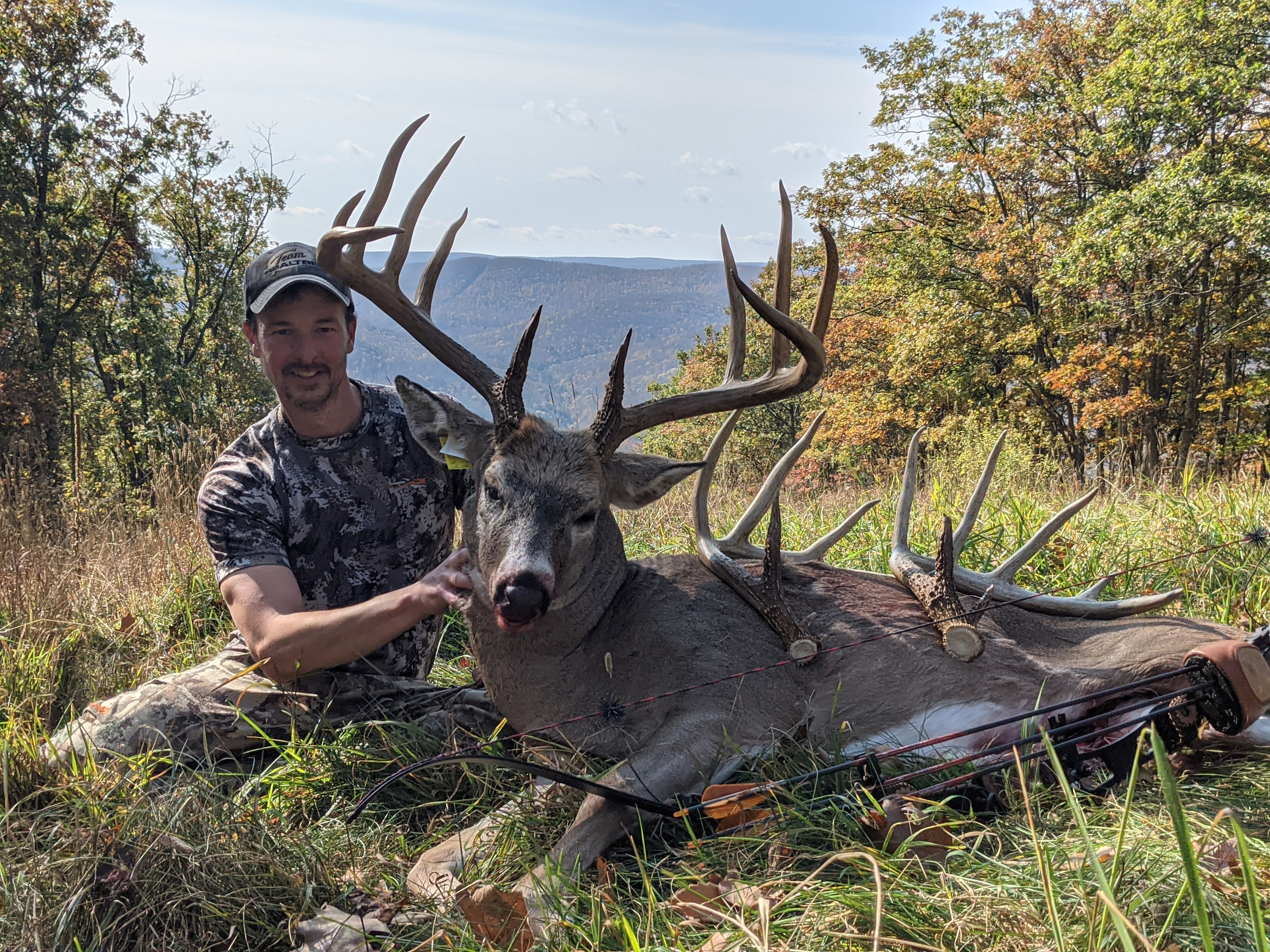
[00:29:28] Speaker B: Speaking of antler, speaking of bucks, I mean, when you look at the country, our rank of antler deer buck harvest per square mile leads the nation, right?
[00:29:39] Speaker C: Yeah, I think it was like 3.9 per square mile, which is like double most other states.
And then I think we were also ranked second in antlerless deer harvested per square mile. And just overall antlerless harvest and antlerless antlered harvest, a lot of lists going on.
[00:29:59] Speaker B: Right. Well, and you're comparing to a lot of states where antler, you know, in the southern states you can shoot a doe a day, you know, in a lot of places where there's, you know, I've been fortunate to hunt a lot of those southern states where they have a real problem. I mean, their, their population is way out of control. And we're going to talk about shooting antlerless deer because it, it's a challenge here in Pennsylvania and we'll get to that in a second. But you know, one of the things we got to relate it back to as well is the opportunities that we have as, as a deer hunter in Pennsylvania are pretty tremendous nowadays. And when you look at conservation, no matter who wants to argue about it, we're living in some incredible times to be a deer hunter. And you know, the work that your shop does, the work that the agency does as a whole and the sportsmen that are out there, I mean, we are living in the best of times of whitetail deer conservation, in my opinion.
[00:30:52] Speaker A: Yeah, it can certainly be argued that way. I think we, we're nearing the.
[00:30:57] Speaker B: They're not going to say anything because they don't have the facts on that. I pulled that one out of the air.
[00:31:01] Speaker A: We're nearing the kind of buck harvest that we had before antler point restrictions. And when we were historically probably at the highest level of deer numbers on the landscape in Pennsylvania in those late 90s, we started to reduce and we have fewer hunters and so success rates are almost at an all time high.
We still have plenty of deer on the landscape and opportunity has been expanded, Expanded as well.
[00:31:23] Speaker B: I lived through those days.
You know, I turned 12 in 1982 and if a spike buck came by, you drove them around for three days because you were so, I mean, you were literally. And then, you know, I remember when aprs happened and I've got to visually watch what's happened to our deer herd and understand it more now than I've ever have. And like, we live in one of the best places in the country now, you know, talking about opportunity, you know, brings up the big subject, and that's allocation. And I really want to get down in the weeds and talk about how allocation works. And antlerless allocation, that is.
[00:31:58] Speaker A: Yeah, sure. I think one of the biggest things that hunters see about allocations is what is that number in the hunting digest? And did it go up or down? And what does that mean? Right. And so one of the things that.
[00:32:10] Speaker B: I mean, I've been at the board meeting when people are throwing darts, when you're presenting in January.
[00:32:14] Speaker C: Contentious.
[00:32:15] Speaker A: And in the past, just because an allocation went up or down doesn't necessarily mean that we were trying to increase or decrease deer numbers because we factor in success rates into that. And so you have situations where we were trying to harvest, say, 15,000 antlerless deer and stabilize the deer numbers in that unit and just keep it steady. But in order to harvest those 15,000, you know, in the first couple years, it was this level of allocation. But then as success rates declined, and that wasn't because the deer numbers were low. It's just because we had fewer hunters. Those licenses, those allocated licenses went into later rounds. And so, like, your first license that you get in round one, like, places like unit 1B or 2G have much higher success rates because you just have one tag. But as you get into those later rounds, you're going to have two tags or three tags per hunter. That second tag has half the chance of being filled as your first tag. The third tag has half, you know, even smaller chance. And so that success rate ends up meaning that now, instead of, you know, three tags to equal one deer harvested, it's now five tags to equal one deer harvested.
[00:33:24] Speaker B: And that number is going up.
[00:33:25] Speaker A: And so we have to put out more antlerless licenses to meet that same 15,000 target. And so you start to see, boy, those numbers are going up, but it's not necessarily, you know, the same success rates as it was in the past. It can be confusing and to your
[00:33:41] Speaker C: point, like the license success or success rate, what he means is to say is, how many.
How many antlerless licenses does it take to harvest one deer? And you were saying that number is going up, but that number can go up, and it varies by unit, and it changes every year, too.
[00:33:57] Speaker B: So when I first started, it was four. And, you know, one of the things that happens, we just, you know, fourth round, we still have analyst tags, and people are filling their pockets with. With tags in case they get the opportunity. They might not even go to that wmu and hunt that season. So their tags in their pocket. Well, that's five deer that you have to allocate for next year to achieve the goal. So it's. There's a lot of clouds there, and it's hard to understand that. And I'm guilty of it. I buy a couple tags in case I might have an opportunity to go up north or to a different area and hunt, which is great. Just in case, which is great. But that's one of the reasons, too, that you see those numbers sometimes, because you're just trying to get to that goal.
And, you know, when you do need to.
When the numbers come back and we do need to decrease the population where we have our numbers are a little bit over. What we need. Talk about how we try to turn that machine on to get reduction in the harvest.
[00:34:59] Speaker A: Yeah, absolutely. So we're looking at that historic level of antlerless harvest in the unit. And, you know, if we were taking 15,000 antlerless deer year after year in a unit and the population appears to be trending upward, or we are now having problems with forest health, we would then want to increase that antlerless harvest to start to bring that population either back to stable or to decrease. And so we would just simply change that target harvest from 15,000 to, say, 20,000. And we use a way to come up with that change, and then the allocation needed to meet that 20,000 is what that allocation would come out as. And it's pretty.
We end up getting pretty good at knowing what number to allocate to get that target harvest. And we're pretty close.
And then we can monitor how those trends go over time and then make adjustments as necessary.
[00:35:53] Speaker B: And usually it's just a fraction of a deer per square mile. Right. That's how you're figuring that out, too, correct?
[00:35:59] Speaker A: Yeah, usually. So if we were taking five antlerless deer per square mile and we want to drop the population, we would, you know, potentially adjust that by another one antlerless deer per square mile, get that target to six antlerless deer per square mile harvested to start to bring that population down.
[00:36:16] Speaker B: And where people like freak is when they see that big number at the end. I mean, that's depending on how many square miles are in your wmu. It takes those kind of numbers and then multiply that. You have to allocate five tags to achieve that goal. I mean, it's like compound interest when you look at it in the big picture.
[00:36:36] Speaker A: Yeah.
[00:36:36] Speaker C: And we're at the point now where some of our units are kind of at that saturation point. And that's where you kind of see the extended seasons sort of come into play as well, especially within some of our, you know, CWD units and areas like that.
[00:36:48] Speaker A: Yeah, so I think that's a good point.
A few years ago, we've had more of these units where we're trying to reduce the deer numbers because of cwd, but we were kind of at that saturation point where if we just did the typical increase the allocation to achieve that new target, we weren't going to sell out of that allocation. And so what we proposed to the board was an extended season in those few select units to try to increase the opportunity for hunters so they have more time to fill those tags that are out there. And it did work to, you know, help increase that harvest.
But the opportunity is there, like we are to a point now where in a lot of units there's still tags, you know, available under those later rounds and hunters can get, you know, that opportunity. I remember back when I was my first year hunting in Pennsylvania, it was like, frustrating that, you know, we really relied on the venison for our food. And you know, that first, the whole week, actually I think it was the two weeks of rifle season was buck only, and there was three days at the end for antlerless. And, you know, I just remember sitting there and seeing does come by non stop in buck season, in the buck season and waiting like, you know, and then the three days came and it's like, where are they exactly? You know, and I found that very frustrating. And so when you talk about today, the opportunity is now you can take an antlerless deer during that time there was also, you can only shoot one deer per day back then. So if you chose to, you know, shoot that one deer, your season's done. Even when we had it, where it shifted down to, you know, the first week was buck only and the second week was concurrent. Doe or buck, you still had to choose. And so now that has been removed. Now you can shoot, you know, more than one deer per day if you have the tags. And so it's just this constant expansion of opportunity, which I think is really helpful for hunters, but it also helps us as deer managers because back when there was a three day season for antlerless, like, we really had these big swings in our antlerless harvest. If we were trying to take those 15,000 antlerless deer in this unit, you know, by the end of the season, it may end up, the numbers come back and it's 10,000 or the numbers come back and it's 20,000. And you have this like based a lot of times on the weather during that. You know, those three days can really affect your harvest. And so that's really hard for us to try to incorporate those fluctuations. If we have more time, we get more consistent harvests and we can factor that in. And so it's been really nice for us as deer managers to have that expanded opportunity as well.
[00:39:24] Speaker B: One of the. Here's. I'm just gonna say it because I'm guilty of this and I have no data behind this except this talking to people. But one of the problems that we face is the mentality of hunters. We don't want to shoot a doe because we think there's a buck behind it. Whether it's the beginning of October, especially during the rut, and then going to gun season. I mean, it's one of the things that, I mean my whole family is the same way and we all need to do, do a better job of thinking about that when those opportunities come out. Because I remember those days that you're talking about when you had three days to shoot an antlerless deer. They've been through two weeks of pretty hard pressure and sometimes finding a doe was tough back then because they're hiding. It wasn't. They weren't there. They just weren't. They weren't. I mean if somebody was shooting at me for two weeks, I. You. I wouldn't run out of my house too much. And that's, I mean they're, they are survivalists out there and it is hunting and they're smart and you know, sometimes think about that, especially, you know, if you have private property and you're trying to manage it yourself and, and harvesting those antler. Antlerless deer are important for so many reasons.
And we could go down in all kinds of rabbit holes there. But that's, that's how we manage the deer at the landscape level.
[00:40:36] Speaker C: They make the biggest impact. When you harvest an antlerless deer, when you harvest a doe, not only take her, but her future offspring as well, you know, which really helps us meet our goals as deer managers if our objective is to reduce the population.
But it's interesting you say like you guys were talking about when it was three day season for does.
I wonder if it's more of a cultural thing because you don't really see the same issue of, you know, the same. I don't know if it's an issue, but whatever it is of hunters passing up on does in other states where historically they had like those longer opening or concurrent seasons, you know, with antlered and antlerless deer.
[00:41:16] Speaker A: Yeah, I think you're absolutely right on that one. You don't see like this hesitancy to shoot a doe in some of these other states. And, and a lot of that might have just been cultural. Historically.
[00:41:28] Speaker B: It is.
[00:41:28] Speaker A: I think Pennsylvania was set up in a way that almost created, you know, a different type of culture.
[00:41:34] Speaker B: Three inch spikes, maybe.
It is 100%.
[00:41:38] Speaker A: Most hunters, even today, like, they, they want to shoot a buck, and getting an antlerless deer is kind of a consolation prize if they didn't get a buck. And that's the way it was set up. You had your buck season and then if you didn't get a buck those three days, you would get your doe and it was, you know, you didn't see people. You know, if you shot a buck, people would be like, oh, can I see a picture? But if you shot a doe, they're like, okay, you know, it's, it's not, it's not that same.
[00:42:01] Speaker B: So I lived in Iowa for seven years and you know, really before Iowa was like Iowa than it is today. And the local folks, when shotgun season opened, they had two seasons.
A lot of them would do deer drives and it didn't matter what came out. And that really managed their herd tremendously because they would shoot a lot of antlerless deer in those times, especially farmers and people that wanted those deer off of their property.
[00:42:26] Speaker C: Yeah. That were being so impacted, I'm sure.
Yeah. And that still kind of exists today. Just speaking, you know, personally, I know my husband, he won't shoot a doe until maybe it's the last day. And I'm like, why are you like this? But I think it's just kind of ingrained culturally.
[00:42:41] Speaker B: Honey, this is my job. You have to shoot a door, Right?
[00:42:43] Speaker C: I'm like, please just kill.
[00:42:46] Speaker A: So going back to. I think a theme that we are aware of here is hunters have been supported by the public to be the ones to manage deer for state agencies. State agencies are tasked with managing the deer populations for the public.
And we, based on the North American model of wildlife conservation, have support to use hunters and hunting as that main tool. And we would love to continue that into the future. And I think one of the challenges we have is that as hunter numbers are declining in several states, they're to the point where they don't have enough hunters to shoot enough the number of deer that they need just to keep the deer numbers from increasing. And so the public in some of those states, especially in some of the more suburban urban areas, are looking at it like, what do we do now? And if hunters can't get the job done, what do we do? And I think hunters need to be aware of that, that if, you know, we want to make sure hunters are relevant into the future and are being used as that main management tool and that these other options aren't being used before hunters are given a chance to do the management. And I think that also takes a shift on the hunter side of saying, well, okay, I don't really want it shoot three deer, I just want a buck and maybe I'll take a doe to, you know, what can I do to help, you know, the state meet, meet its management goals? And maybe I do need to take an extra deer.
[00:44:08] Speaker B: Right?
[00:44:09] Speaker A: And that's one way to look at it is like what the state management goals are. The other way to think of it is, you know, if you're a property owner and you're trying to manage your property for, you know, forest health, whatever it is, be aware of, like, what do I need to have on my property to keep those deer numbers in balance with what I'm trying to grow? And so a good example of that is my father in law owns some property in Mercer county and he really wants to make sure that those trees are growing and sustainable and that there's going to be a future healthy forest for the future for his grandchildren.
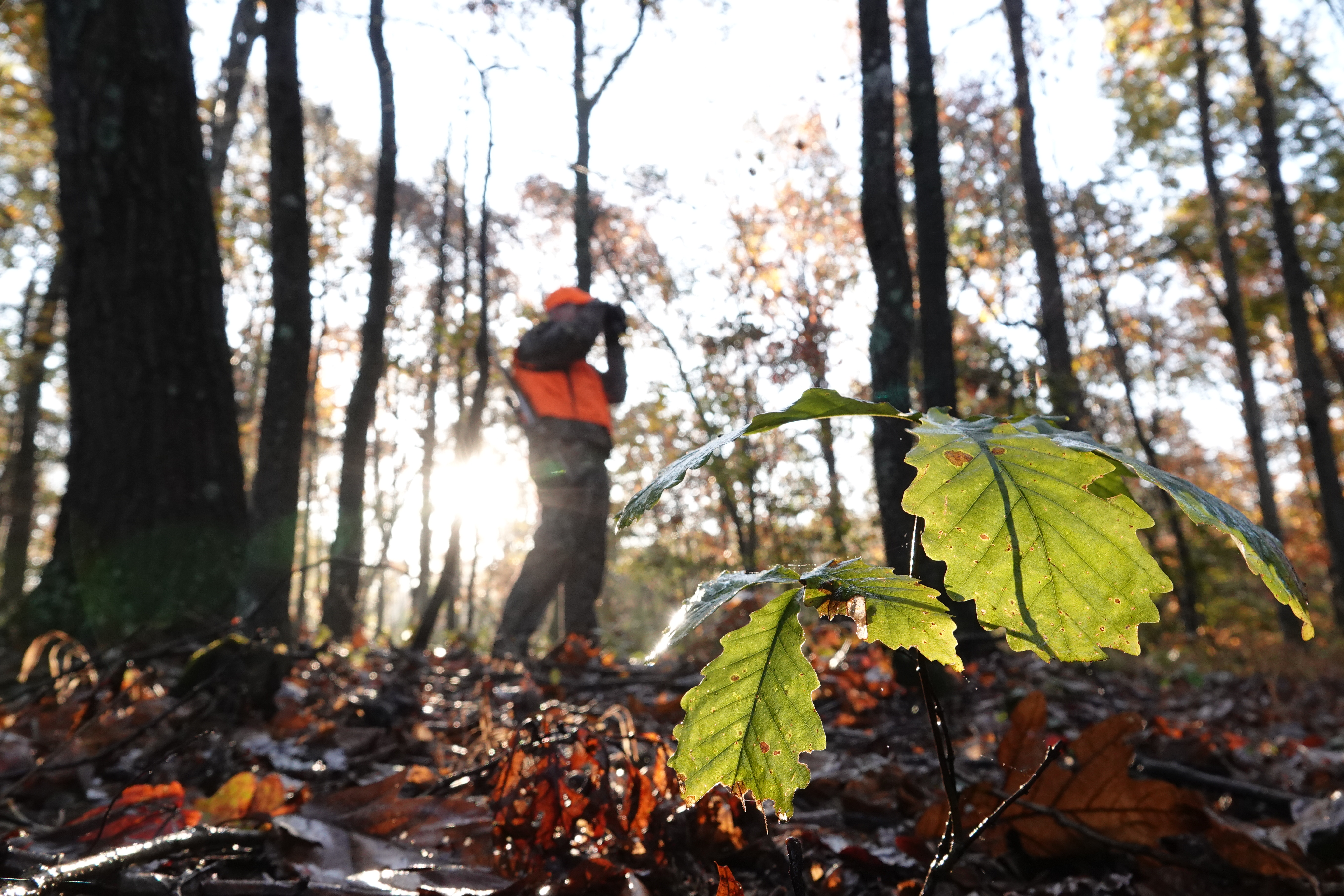
And so one of the things that I'm aware of in helping him out there is we walk the property, we look at the trees that are being browsed and get a sense of like, are the deer numbers here okay or are they too high?
And I would say one of the easiest things to do is look out, walk around and look at some of these trees and saplings that deer don't typically prefer.
They tend to go for the things that are, you know, more. We call it palatable, which means it tastes better. It doesn't have as many tannins, but. But also has good nutrients. And they really prefer those plants. Those are the things like your young oak saplings, your maples, those types of seedlings that the less dense it is. So once it becomes woody, they don't seem to browse it as much. But when it's a young sapling, they like that. But then you could look into some of these other trees, like American beech is a good one that they don't tend to browse.
So if you're on your property and you see some beech and it's being heavily browsed, that's a good sign that the deer numbers are probably a little bit higher than they should be on your property. And the beauty of our management program is we don't have to deal with that at the unit level with allocations. We actually have these landowner programs like DMAP and Ag Tag that help for that particular landowner or if you're a farmer, to help you deal with those problem areas without having to rely on those folks to come to our board of commissioners and complain or to do the surveys that we use and deal with it at the unit level. So we can kind of balance those hotspots with these programs to get more tags onto there without having to increase the whole allocation at the whole unit level to deal with these smaller scale
[00:46:26] Speaker B: issues to the point where, you know, enough foresight with the agency that we just implemented in the last 18 months, the landowner Resource Office with, that's going to house a lot of those programs that are working in conjunction with your programs. It's really a great place. I mean, it's a great place to be where we're at today and getting a handle on that. Because when you look at what we're in charge of and you know, our 1.5 million acres that we can control, it's a minute part of the state as a whole.
[00:46:55] Speaker C: Right. And we are, we're really lucky to have all those localized programs. Just like David mentioned. Dmap, Ag Tag certified hunter is a good one too, because again, you don't want to end up increasing the allocation for entire unit when that's not necessary. Because again, you're trying to balance all of your different stakeholder groups in mind. You're trying to keep hunters happy, you're trying to satisfy farmers at the same time. And they usually want opposite things. So it's just a lot to keep in mind.
[00:47:21] Speaker A: But I think what you brought up with the landowner access program, I think is a really important thing. We have hunters that they're frustrated because they know there's deer out there. It's just they're on this property that's posted or they see them here.
And so there's this issue of access, of like, how do I get to where these deer are? And so. And then you have folks that are frustrated because the deer numbers are too high on their property, or, you know, agricultural landowners that they don't have the time to do it, or they don't know who could they trust to have on their property. And so merging those Two things. Getting places where hunters can find a place to hunt, but also help out. That lunar, I think, is. Is a great step forward.
[00:48:04] Speaker B: Yeah, I'm excited to see the future. Obviously, we're scaling all that, and we'll get that group in here on the podcast probably, you know, as. As we get into the new year, next year as things are scaled out, but agreed. I mean, that's like. It's a. It's a great step forward for the agency. And I'm going to circle back real quick to deer aging.
Mainly.
It's a big task that you all do. I mean, it's like all. All hands on deck, and it happens every year during firearm season and talk about that process a little bit.
You guys are out there and you're elbow deep into harvested deer, and you talked briefly about some of it, but just talk about that process, and it's a task.
[00:48:44] Speaker C: It is. Yeah. So we have 31 aging teams throughout the agency, and I think overall we do around 25,000 deer heads in total.
So basically, we'll have each aging team go to different parts of the state at different processors. They spend the first three days, first three days of the first week of firearm season there, and then they spend two days the following week, and then two days after the close of the season, and then just try to age as many heads as are set aside at each processor. And again, like that harvest head that David mentioned before is kind of crucial. So the processors are kind enough to keep the heads set aside for us with the tag. We collect all the tag information, which is crucial for us getting the reporting rate, which eventually gets us to our estimated harvest. And the estimated harvest is really important because that helps us with things such as antlered harvest trends over time, antlerless license success. It all kind of leads to that. But, yeah, it's. I mean, it's a huge undertaking for the agency. Our staff spends a lot of time.
[00:49:55] Speaker B: Coffee, drink.
[00:49:56] Speaker C: It's freezing. Yeah, you're like up to your elbows and literally deer heads just trying to get those ages and all the tag information. But that tag information is so important, not just for harvest, but CWD as well. We collect information that helps that.
[00:50:12] Speaker A: We also collect some of those heads for CWD sampling, which is a good snapshot across the state of CWD samples.
But it's a lot of work. But it's important work. And as I'm out aging deer with some of the other folks, you can tell, they're just like, oh, this is a lot of work. I don't cold. This isn't fun, but here I am. I'm like, this is awesome.
Like eating my sandwich.
[00:50:41] Speaker B: Buckle up.
So let's talk about aprs antler point restrictions too. And a lot of that information you see during deer aging, is it working? Let's just cut to the chase. Your thoughts or feelings or the data that supports it.
[00:50:57] Speaker A: Sure. So I would just start by like, why did we put in place aprs as the game commission? And when they were put in place, there were two things going on. There was the main one was increased antlerless opportunity and licenses to start to reduce deer numbers in those early 2000 years.
And then antler point restrictions were put in place to kind of help facilitate that decision to take an antlerless deer over an antler deer, but also protect roughly half of those yearlings, males, from harvest and allow them to. To get to an older age. And so did it work from that lens? Yes, we did see what used to be.
When we go out to those, those processors and we're, we're aging the heads for the bucks that were coming in, it was roughly 80% of them were yearlings. Less than 20%, you know, on average was two and a half and older. Now today, when we go, it's 36% yearlings. I think it's, it's almost 60 to 70% of those buckheads we get our hands on are two and a half and older. And, you know, yearlings are, are a much smaller portion of that. So from the, the hunter opportunity standpoint, if that is a important thing for you to see, you know, some of those older bucks on the landscape, then absolutely it's working. We still have hunters that would be happy to have taken a spike.
So that, that is something that changed for them that, you know, it's not. Doesn't allow them to do that, but we still have opportunity for antlers harvest as well. Yeah. So in general, what we're seeing is the yearling proportion of what we get our hands on is completely flipped from what it used to be. Almost 80% of of those deer were yearlings, and now it's, you know, less than 40%.
We're seeing a lot more of those two and a half and older bucks coming in. And that's a good sample of what's out there for hunters to see. And so, yeah, hunters are certainly going to see some of those yearlings that are, you know, don't meet the antler point restrictions, but they're also now going to see more of those older deer that do you know, have.
[00:53:07] Speaker B: Selfishly, I like, I like to hunt more mature bucks and that's just the way I like. But I've been there when. But a lot of that was misunderstood with apr. Early times, it was just like, hey, we're trying to be a big buck factory. We're trying to improve the deer herd. I would assume that was the goal of APRs.
[00:53:24] Speaker A: I mean, mainly the goal was just to protect half of those yearlings to allow them to get older. There wasn't really any value of trying to produce any kind of trophy class bucks or anything. I don't think that was a part of it. And I think that's a misconception.
[00:53:41] Speaker B: It's a byproduct of what happened.
[00:53:42] Speaker A: It's a byproduct. But I think that main point of it was, you know, allow that age structure to kind of shift to have older deer on the landscape and order deer for, you know, opportunity is a part of that or by product.
[00:53:57] Speaker B: Awesome. Well, you know, in, in a lot of our conversation today too, a couple times you mentioned cwd and I think it's important that we, you know, circle back and talk about it because it's, it is very important. And we're, you know, we're still keeping an eye on it on a daily basis. And, you know, we've had some changes this year as well. So if we want to just touch on that a little bit. David.
[00:54:14] Speaker A: Sure. I would say biggest thing hunters can do is, is make sure you actually, actually read through the Hunting Digest. It's going to outline all the new changes. Whether it's a CWD regulation change or other regulation change.
It's, it's all there. But I would say the one main one that has changed is the way that we have been managing the restrictions on CWD for hunters has changed a bit this year. So rather than having these disease management areas where you cannot move high risk parts out of those areas, it is now shifted to a statewide regulation on the disposal of those high risk parts. So it opens it up so hunters can, you know, choose where they want to have their deer processed or butchered.
But those high risk parts need to, you know, ideally go into the trash landfill. If they can't do that, then there is an option for them to leave the highest parts at the kill site.
[00:55:14] Speaker B: Right.
[00:55:15] Speaker A: But we would much rather have it go into, you know, the, the landfill and be properly disposed of.
[00:55:21] Speaker B: I mean, if you, if you hunt up north and want to come back down, you can transport your deer. Just need to make sure that Those high risk parts, if you're doing it yourself or in your trash can.
[00:55:28] Speaker C: Right. Just throw it in the trash.
[00:55:30] Speaker B: Right. Or a processor or, you know, processor.
[00:55:32] Speaker A: Yes, correct. Processors.
Now we'll all make sure that the highest parts are disposed of properly. So we did have kind of a transition there where we had these CWD cooperating processors that we knew that they were going to be disposing of everything properly. But what we've learned is most of our processors do dispose of things properly and they will certainly do that now.
[00:55:51] Speaker B: Right. We all, I mean, you know, we've been down CWD Road here in Pennsylvania since 2012 and you know, a lot of the facts that come into even allocations, you know, CWD plays a big role, especially in that endemic area where, you know, it's really, really, we're getting, you know, positive results quite a bit. And that. And also, you know, there's, there's, we want you to test your heads. The head bins are still out there. And then we're offering, starting the field sampling test, you know, and I mean, we're still taking a big leap at CWD and like you said, checking out the digest, looking at the website, that information is there. We want everybody to be aware of it.
[00:56:31] Speaker A: Yeah. I would say for the CWD testing, there's kind of two different things that we're trying to accomplish there. One is learn where CWD is spreading on those outer edges and into new areas. That's a huge priority for us to get, get an understanding of, you know, get ahead of it. The suit, the earlier you can pick it up, it opens up more opportunity to actually manage the disease and keep the prevalence low.
The other part is having that opportunity for hunters to be able to test their deer to make an informed decision of whether they want to eat it or not. That that is more of a convenience or opportunity for hunters. And that's where the head bins or the self sample kits can be really important for them.
But, you know, we only need so many samples in some of these areas where we already know CWD is so that, you know, not necessarily critical for us to have all those extra samples. But it is important for hunters to know, you know, if their deer test positive.
[00:57:31] Speaker B: Sure. And you know, CDC recommends that you don't consume it, but you know, it especially like I live in an area, I want to have my deer test, I want to know, you know, how it comes back. I just, it is important for us hunters to do that.
[00:57:43] Speaker C: Definitely.
[00:57:45] Speaker B: So now let's go to some good news.
Let's talk about any advice that y' all have for our hunters that are going to head out this fall and maybe this past weekend somebody missed a deer and they're going back, whatever it is. But as, as, as two individuals that work every day talking about white tailed deer, whether it's have fun out there, whatever, the best advice we can leave the podcast with,
[00:58:09] Speaker C: I would just make the most of the time that you have. Like make the most of your free time. Enjoy it while you're outside. Maybe try a new area if you're not having any luck where you, where you've gone in the past. Maybe do some scouting, trying to try to go to some new places or maybe a little bit further away from the road too.
[00:58:27] Speaker B: That's great advice. I mean, can't catch 10 pound bass in a lake that doesn't have any 10 pound bass in it. I mean, I mean, that's great advice.
[00:58:34] Speaker A: Yeah. I think one of the things that we can provide is kind of what we've learned from the different projects we've done where we actually put collars and GPS collars on deer and see where they go. And that's kind of something that gives us a unique insight into deer behavior that most hunters don't get to have that. And so from that perspective, I'd say the biggest thing we've learned is that deer certainly react to pressure and go to where they don't experience as much pressure. And oftentimes that's right in a public land or a place that's open to hunting. Just the hunters are not going that further, you know, far enough in to
[00:59:08] Speaker C: see where they're going or in those slightly steeper areas.
[00:59:11] Speaker A: Sometimes it's steeper areas, sometimes it's just that thick stuff that, that where no
[00:59:16] Speaker B: one wants to go or they're watching the road that people drive in on
[00:59:19] Speaker C: and like they know what's they do watch. They're very smart and aware of hunters on the landscape.
[00:59:23] Speaker A: Yeah, that's go to those further in places or those thick places that like. I know I'm guilty of it. I walk around some of those thick areas and hope that I'm gonna like somehow see a deer in there. But you're not gonna see that deer. It's bedded. Another advice is, you know, if you have the opportunity to hunt with a partner or somebody else, you can really increase your success rates. You know, work to have one person go through a thick area while you put yourself in a good position to see it doesn't have to be like A drive. It just has to be working together to kind of, you know, kick up a deer while the other one sees it.
I think that's a shift that we've seen in our hunting culture over time as we have moved away from that, you know, people on the ground moving to more of a stationary. Stationary. It's almost like our rifle hunters are now hunting, like, archery hunters, where we're sitting and waiting for these deer to
[01:00:14] Speaker B: come eating a bologna sandwich, but nobody's moving the deer.
[01:00:17] Speaker A: And I think that.
[01:00:18] Speaker C: That everybody's sitting.
[01:00:19] Speaker A: Getting a little bit of that culture back, I think, can be really important.
[01:00:24] Speaker B: Right. I think I'm gonna weigh in on here, too, is no matter what you do, it's hunting. We're out there in that. Where that deer, that turkey, that's their house, just like our house. And you have to understand, like, they're surviving every day, whether it's predators that are out there every day or it's us as a predator going into their home. And they have senses to stay away from us, like the scent, you know, smell. I mean, the wind is very crucial. But I love what you said.
It's always good to enjoy it with someone else, too. And just when you're out there, enjoy it, enjoy it. Don't make it a job or chore. Enjoy every sound out there. And the older I get, like, so many things that I didn't realize that happened out there in my younger life out there in the woods, and I enjoy it so much more, whether I'm sitting still or walking around. You know what, it's hunting, and the odds aren't in our favor all the time when we go out there for sure.
[01:01:20] Speaker A: Yeah. And I think you just brought up a good point, is, like, it's an enjoyable experience and bring someone out with you to enjoy that with you.
Like we said earlier in the podcast, like, we're seeing deer hunter numbers decline across the country. Even in places where deer numbers have been increasing, they're still seeing declines. You know, it's.
[01:01:42] Speaker B: It.
[01:01:42] Speaker A: What we know is that we're seeing declines in hunter numbers mainly because of this aging population where we had this baby boomer generation that's aging out and we don't have enough to replace those current hunters.
But that doesn't mean that we have to, you know, be satisfied with that. I think hunters can really, you know, instill this legacy of future hunting as that main management tool by making sure we have enough hunters in the future to do it and bring out a hunter, a new hunter. It could be somebody in your family. And even if they don't end up becoming a hunter in the future, you still did something to support hunting, the culture of hunting, the importance of hunting as a conservation tool.
Just by having someone experience what hunting is and the importance to you and. And just being familiar with that or even, you know, experience let people try venison for the first time and, you know, that kind of thing, I think, is just those kind of steps as a hunter, I think is an important part of, you know, the future legacy of hunting.
[01:02:48] Speaker B: Leaving it better than you found it.
[01:02:49] Speaker C: Yeah. Especially if you can bring a child or someone young or someone that you might think is going to say no, like, at least invite them, because I never would have started hunting if I hadn't had that opportunity. And. And that wasn't until later in life. So just never know when you're gonna make a new friend or get somebody into the game.
[01:03:06] Speaker B: Well, y', all, thank you so much for coming on today. And thank you for what each of you and your teams do every single day for the agency and for the sportsmen and women in Pennsylvania, and for the folks in Pennsylvania that like to see white tailed deer. But keep up the good work, and I'm sure we'll see you back here again pretty soon.
[01:03:21] Speaker A: All right? Thank you.
[01:03:22] Speaker B: Yep.