Episode Transcript
[00:00:00] Speaker A: I would never have had an opportunity to learn about hunting, harvest deer, harvest any game for that matter, if somebody had not been selfless and given up their time to take me.
[00:00:11] Speaker B: We all know somebody that doesn't hunt or doesn't understand or doesn't, you know, realize about conservation. Take one day this fall if you haven't in the past, and take someone out there and let them experience it.
[00:00:21] Speaker C: When you talk to kids at Hunter Ed, they're excited about being there and they have the interest, but they don't have anybody to take them. And that's the big cliff that they fall off.
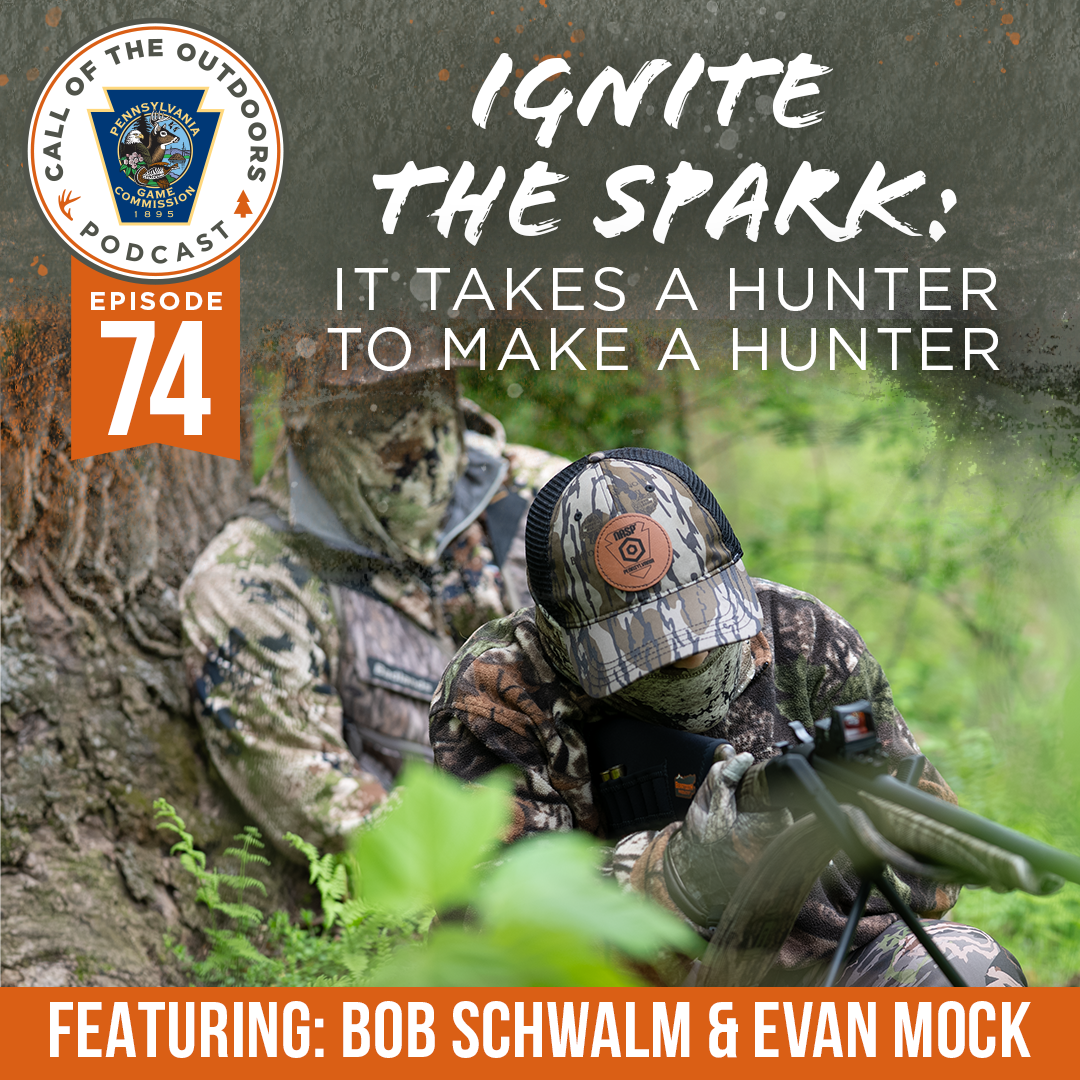
[00:00:39] Speaker B: Hello and welcome to Call the Outdoors the podcast of the Pennsylvania Game Commission. Very excited to bring this episode to you today. It's probably one of the most important subjects that we can hit on, and it is about passing it on and becoming a mentor and taking someone out. There are introducing someone new to hunting and conservation. And with us today, we have Evan Mock, who works in our R3 division here at the agency, and Commissioner Bob Shawlum, who lives every day of his life trying to introduce someone new to the outdoors. So hang on. Challenge yourself this fall to introduce someone new. And we got some really exciting things to talk about here today on Call of the Outdoors. Well, appreciate everybody coming out today. And we're talking about probably, in my opinion, one of the most important subjects that we can talk about all year or anytime. And, you know, obviously the three of us here, hunting is just an important part of our life, but we're talking about R3 and really how we can get anybody that's interested in getting out there in the woods and just experiencing what happens here in Pennsylvania, whether it's in the fall or in the spring, how we can get more people involved that want to be involved. And I have two special guests today.
Evan Mock, who leads so many things here at the agency when it comes to R3, and Commissioner Bob Shawalam, who needs no introduction and his just his emotions and lives it every day of his life. And we're getting ready to have some fun today. So, Evan, just if you would just tell us what you do here at the Game Commission, how you got started in hunting and why you quit Chippendales, any of that stuff.
[00:02:17] Speaker C: Yeah.
[00:02:18] Speaker A: Thanks, Matt.
So I am an R3 programs coordinator here at the agency. I've been here about three years.
Started in the hunter Education Outreach division as a management tech in the Hunter Ed division. Worked my way up, got a promotion into an R3 programs coordinator role, and I think a really large part of Why I got that promotion and really can excel in my role is because of my own late start to hunting.
I didn't start truly hunting until I was in college, you know, 19, 18, 19, 20 years old. But I did have some experience early in life fishing with my grandfather. He took me all the time. Felt like every day we were trolling for crappies or, you know, doing whatever, fishing. So he took me a couple times as a kid. You know, one time I was in a cast actually, and it was like my first time hunting, but didn't really see anything.
By the time I was ready to start hunting, my pap had aged out, couldn't really take me anymore. So really it was my friends in college that got me started. And kind of once the bug bit me, it was over. And I probably spent a little too much time hunting in college, then studying, and so it's.
[00:03:30] Speaker B: But look where you're at now.
[00:03:31] Speaker A: Yeah, it's led me a long way and has put me in the role that I am now. So hunting's done a lot for me in my life and there's a lot
[00:03:39] Speaker B: of fancy words there, but really why you're here at the agency and why so many people are here, including what you do, Bob, is the passion you have.
Whether it's hunting, passing it on, whatever it is, that passion runs like you can just see it when you walk over there to Elmerton Avenue, to any of the region regional offices, the people that work for this agency, the passion for the outdoors, the passion for conservation just shines through every day.
Bob, how about you? We had a little discussion about how you got involved in hunting too. And I'd like you. I'd like folks to hear that.
[00:04:11] Speaker C: Yeah, absolutely. But before I begin, I would just like to say, Evan, I really appreciate all you do and. And you do a fantastic job, you and your team. So it's always a pleasure for me to be a part of your mentored programs and your learn the shoots and everything that you're involved in. Thank you so much. Yeah, I was. Well, first of all, I was. When the stork dropped me off, I was ready to hunt in this life. And so growing up, I couldn't wait to become 12 years old so I could finally get out and get involved. And my father was a coal miner and he worked, you know, seven days a week.
And so it came time for opening days, actually was small game season. And I can remember I played midget football. And we were at football practice and my coach, Bill Angelo, he asked the question, who all is going hunting tomorrow. And everybody raised their hand except yours truly. And I put my head down.
I was so upset. I was so ashamed.
A moment in my life that I had always lived for was not going to be a reality. And Coach Angelo looked at me and he said to me, chawum, how come you're not going hunting tomorrow? And again, I was embarrassed because everybody's like, oh, you're not going hunting.
I said, coach, I don't have anybody to take me.
And he says, will you be ready tomorrow morning at 6 o' clock and I'll be out to pick you up. And of course that was the way it began for me. And I went from being, you know, down at the bottom to sky high. It's like somebody gave me 50B12 shots. I was so excited. And so I was that kid. I know what it's like. And Bill Angelo took me hunting him and I became best of friends. Matter of fact, he was my best man on my wedding. So that's how you know, a friendship can begin. And you know, Bill's no longer with us, Lord rest his soul. But I was not the only one that he had taken out. He had been doing this throughout the years because he saw the value and he saw the struggle that that youngsters had to get into hunting. So you know, from there on, I guess Bill Angelo was my first mentor and he taught me how to pass it on. And so I've been doing it ever since.
[00:06:24] Speaker B: Right. And you know, you live it, you, you absolutely live it. I mean, there's not a weekend that goes by that you're not at some kind of event, whether it's passing it on to youngsters, to adults, whatever. And you know, our hat's off to you, Bob, for just living that life. And you know, when you look at the big picture and we talk about this a lot and if we can all just replace ourselves, we're doing conservation and that's what it's all about. We're doing conservation justice and leaving it better than we found it. Now if we can replace ourselves plus one, I mean, we live in the greatest state there is for hunting. We really do. And I mean, one thing that I think that we all have to do is become less selfish and you know, give a little bit more back sometimes than we take. And that's kind of the challenge that I want to put out there is introducing one person to the outdoors. We're going to talk about a lot of this because you guys, I mean, you live it every day and just the Messages that we get out there.
Evan, why is mentorship so important to conservation?
[00:07:24] Speaker A: Yeah, I mean, just to mirror what you just said there, I would never have had an opportunity to learn about hunting, harvest deer, harvest any game for that matter, if somebody had not been selfless and given up their time to take me. And without that, you don't have a strong knowledge or base of hunting. And to continue hunting as a whole population, that's what drives conservation.
That's what drives wildlife management. So it's really important to have people out there that are selfless, that can take people out to continue creating hunters across the landscape, because that's the root of what we do here at the agency. Right.
[00:08:02] Speaker B: When you talked about your pap, and when you think about Riley Greene's country song, I Wish Grandpa's Never died, man, that hits hard. Cause I remember. I can remember my last hunt that I got to spend with my grandpa. And if everybody out there closes your eyes and think about that person in your life that taught it to you, I got goosebumps sitting right here yesterday. We were talking about a lot of upcoming things we have coming on here at the agency. And about 20 years ago, Tracy Bird released a song for Mossy Oak. At the time, it was called Pass It On. And when you listen to the lyrics of that song, man, it hits hard.
And you probably never heard it because you're too young, but go Google it when you get back. It's pretty cool.
[00:08:41] Speaker C: Great song.
[00:08:42] Speaker B: It is, but. And that's. And Bob talking about passing it on to the next generation and how important that is. If you would take that one.
[00:08:50] Speaker C: Yeah. You know, the thing about it is, I've been mentoring youngsters for a long time, and now they're no longer meant. Now they're no longer youngsters. They're up in their 20s. And, you know, the neat thing about that is they're now teaching me. You know, I'm taking them out in the woods, and they're showing me how to use onyx. I know how to turn it on, but they. They know how to filter and show me all kinds of ways to use it. They're showing me how to use saddle stands. And, you know, what it took for me was through the years, I spent time with them. And then when they went to college, I would stay in touch with them, like, hey, you guys get your hunting license? No. Are you coming home for Christmas? Yeah, get your hunting license. We'll get out. Kept them involved during those tough times when they were going through college. And the thing about that is, you create a friendship. And I'm getting older, so, you know, this isn't the reason I did it, but eventually these guys are going to be the ones taking me out and taking care of me as an old fogey, because I hope for as long as the good Lord gives me my health, I can still.
So as long as I have young guys taking care of me. And there's a lot of, you know, bonuses to that, helping drag my deer out and so forth. So there's many perks to being a mentor. So I highly suggest you do it.
[00:10:05] Speaker B: One thing that's. That's constant is we're always going to get older. And I watch it with my own dad. My dad's 85. And, you know, there was a time when, like, there wasn't anything that he wouldn't do to help me out. And now, as you know, in my life, I kind of reversed that role in helping him out. And that's one thing about hunters. When you go across this country and you talk about friendships, look how many friendships and people that would do anything to lend a hand across the great country we live in that are hunters. I remember one time I got a flat tire in Atlanta, Georgia, back in the old days, and I had a truck that was a billboard. And I'm in this city that, like, you don't ever want to be in with a flat tire. And somebody pulled up to help me with a Turkey federation sticker on the back of their truck and helped me jack that F250 up, change the tire, and got me out of there. Only because we probably shared that same passion. We had a great story, and I've never met a hunter across this country that we couldn't have a conversation. We might not believe. You know, we might have differences of opinions and things like that, but we all. We all here for the same reason when you look at the big picture. But one of the things that we see so much out there of getting into hunting are barriers to entry. And, you know, I think that's one thing we should really talk about quite a bit, because there are a lot of barriers nowadays. You talked about technology. You know, you and I are on the same page. Like, there's so many things that we can do and not even go into the woods with technology. That's crazy. But how help some folks overcome what it would take to get started? Evan, if we can just get that conversation started. Yeah.
[00:11:38] Speaker A: I mean, there's a lot of barriers to entry for hunting, and that goes from youth to adults alike.
Just talking. You know, time is probably the biggest factor right now for really anybody, and that could be youth and adults. So, you know, as people get older, they're having kids, their kids get into sports, and all of a sudden there goes your time.
Especially right now. Youth sports have changed in the last 10, 15 years.
When I was growing up, you could play baseball in the spring, football in the fall, and that was pretty much it. You still had time to do other things, but now it's really changing. And you can see people that play baseball, they play it year round, people play football year round.
And that's just time that's competing with people getting in the woods. So time is one of the biggest barriers right now, I would say.
But you also got to think about knowledge barriers, access barriers, think about if you've never hunted, or think about the first time you went hunting. You had no idea what to expect. You had no idea where you were going, you had no idea what you needed. And that's why you had to lean on somebody like your coach.
Your coach picked you up and took you out, but probably driving, riding that truck, you had no idea what to expect. And that knowledge barrier is a big one for people, too. It's, if they don't know what they need, how can we expect them to go out in the woods and, you know, give, give, even give hunting a shot?
[00:13:00] Speaker B: Right.
[00:13:01] Speaker A: So those are, those are some big barriers.
And to go along with that knowledge is the equipment anymore. You have all the, all the types of guns, 6, 5, 7, PRC, Union, the list goes on.
How do they know what's best for them? How do they know what to use for a squirrel versus a deer? How do they know what to use for a deer versus a turkey? If you have known no base knowledge for firearms, archery, you're kind of in a tough spot and you got to lean on people.
[00:13:28] Speaker B: Well, that's the good thing. What you do here, you know, when you look at hunter Ed, and I know you've said it before, like the first thing that we could recommend would be to take a hunter Ed class.
[00:13:37] Speaker A: Sure.
[00:13:38] Speaker B: I mean, Bob, you've taught thousands of first timers in hunter Ed because you. I don't know how many courses you teach yourself a year, but it's a ton of.
[00:13:51] Speaker C: Yeah, I usually do six, seven courses a year. And one of the things that's always been consistent with International Hunter Education's data is that you have students that are there because they're interested in hunting.
And they say 33% of all the students that Graduate from hunter Ed, never buy a hunting license. And I would agree with that because when you talk to kids at hunter Ed, they're excited about being there and they have the interest, but they don't have anybody to take them, and that's the big cliff that they fall off. You know, you look at Pennsylvania in 2024, 2025, we had 29,000 people graduate from Hunter Ed. And if you take 30% of those kids that never buy a hunting license, we've lost an unbelievable number of kids that we had in our grass.
[00:14:48] Speaker A: Right.
[00:14:48] Speaker C: So, you know, that, that, that seems to be a big problem. They need, and you know, you look at kids, they need somebody to drive them to go hunting. I mean, it's different with adults, but it's just as important that, you know that we get the adults into it as well.
[00:15:04] Speaker B: And when you look at, when you look at that, you know, one of the other barriers is access.
And, you know, when you look at, number one, our public hunting opportunities alone in Pennsylvania, access really isn't a problem to get out there in the woods in this state. I mean, we have, we have a state game land system in every county in the state except one. Our partners with, you know, DCNR and National forest. Like, there's lots of public opportunities to get out there and experience the woods. Plus, we still have a lot of people that you can knock on the doors and ask permission. I mean, a lot of rural areas, a lot of farmers that, you know, we'll be glad to, to let you go out there and try to try to shoot a deer or go squirrel hunting or whatever, access is a problem. But it's. It. I mean, when you look at it on paper, but if you get out there and just do your little bit of homework, access in Pennsylvania is as good as it is anywhere in the country.
[00:15:53] Speaker A: Yeah. And I think it's also important to go on that is say, it's also part of the. Access is a knowledge thing, especially in our suburban communities and urban communities in the state.
Although there are game lands and public opportunity, I think that knowledge of knowing the game land system, knowing that DCNR has opportunities, knowing that, you know, your local county park has that lottery opportunity for a chance to go hunt there in the season. So I, I do think that knowledge of some of these places in the urban and suburban communities can be, can be difficult for some people.
[00:16:24] Speaker B: And today that information is right here. I mean, that's, that's the cool thing. You know, we were talking a little bit about getting lost earlier, like getting Lost today isn't like getting lost lost when we were kids, when you followed a compass that you didn't really trust, but you did. I mean, we've all gotten lost before, turned around or whatever. But that technology that's out there today, the information that's out there today to become a hunter or how to get started, the information is there. It just takes that little bit of spark to get on our website or attend one of the events. I know just earlier this summer, you all had a learn to shoot event multiple, but I know a big one down in your part of the world and talk about that a little bit. The experience that you gain when you go to one of those.
Teach somebody how to use a firearm that's never used one.
[00:17:07] Speaker C: Well, one of the episodes that really stood out in my mind is, you know, you saw so many different people that never had exposure to a firearm, and you saw those that were reluctant to try. There was. There was a woman standing aside and her kids were actually shooting. And I walked over to her and I said, are you going to shoot? And. And she says, well, I don't know. I've never fired a gun. I said, well, start, you know, try over at the pellet rifles. And so she did. She was very cooperative. She went over and so I went on about my business and I came back and I looked and she was over with the shotgun patterning. So I walked up to her, I said, how was it? She goes, it wasn't bad at all. I mean, it's just, you know, get people an opportunity. And, you know, our instructors were the best. I mean, they do a fantastic job of making people feel comfortable and going over all of the safety of it. And once we. Once we establish that, I think that takes a lot of the fear out of it. So, you know, basically everybody that had participated in that event had the opportunity not only to shoot firearms, but also bows. I think, you know, really they walked away with a whole new attitude about firearms and bows and so forth. So we just got to step up and give people an opportunity.
[00:18:28] Speaker B: Talking about pellet rifles and I'm going to go to you on this one, Bob. How many soda cans did you wear out as a kid with a BB gun?
Maybe beer cans? I mean.
[00:18:37] Speaker C: No, no, no. Yeah, kind of in the coal region, we had Yingling, so you would find a lot of those. Yeah, we did that.
We would have contests. That was so much fun. I mean, we were never in the house.
[00:18:50] Speaker A: Right.
[00:18:50] Speaker C: You know, I used to get in trouble because I never came home on Time we'd be in the woods, we'd be building shacks for hunting camps and, you know, shooting BB guns.
[00:18:59] Speaker B: It was in the creek catching crayfish.
[00:19:01] Speaker C: I mean, just catching crayfish. Yep, yep.
[00:19:03] Speaker B: But Pilgrimites, when you think about that, you. You know, Evan, we. We had to wait till we were 12 years old to go hunting. And we watched our dads or our grandpa's, our mentors, and we wanted to be like them because. And. And this is something that. That I can remember as a kid, like, my grandpa used to always tell me, like, every time you go to the woods, you want to bring something out with you.
And I always thought, you know, you'd see dad come home with a turkey, or grandpa had a buck slung over the hood of his 1974 Dodge Dart. You know, I can remember that like it was yesterday. I don't know about the year, but I always thought they meant you had to shoot something. And I think this is something that we really got to spend some time on. Hunting is more than just pulling the trigger, and it is the whole experience, the whole process, and a continual. Continually when you're out there learning, whether it's learning the woods, learning the quarry you're after, learning how they call. How they talk to each other, there's so much to learn. And when you look at it like that, hunting is a much bigger experience than just pulling the trigger.
[00:20:01] Speaker A: Yeah, I mean, it's a journey for sure whenever you go out hunting, regardless of what you're hunting for. And, you know, I can just reflect back on myself and learning. When I really got started into hunting, you know, my friends took me out. I had a chance to harvest a few deer. But then once I kind of got out on my own, it was just nothing but learning. And it was a really, really hard learning curve at first. And I still learn every single time I go out there. But I can just remember some times, you know, like, I'd see a deer walk on top of the ridge. So the next day, I'd take my stand up, hanging at the top of the ridge, and I'll be dang. The next day, it's back down at the bottom of the ridge. And it's just learning things like simple things like wind direction, and that's something that new hunters and especially myself didn't think about. The amount of times I got blown out by deer when I first started was more than I'd like to admit. But really, learning is everything, and you learn by failing. And the more you fail, the better you're gonna be. And I can't even sit here and say that this year I'm gonna fail. I know I am.
[00:21:04] Speaker B: It's like hitting a baseball. I mean, you don't learn by hitting them out of the park. You learn by whiffing.
[00:21:07] Speaker A: Yeah, that's right.
[00:21:08] Speaker B: Yeah. I mean, it's the same thing. And, you know, I had the opportunity to take lots of people on their first hunts. And number one, girls are way better to take, in my opinion. They're better shots than we are. They listen, and they're just a good student when you're taking someone out for the first time. But number two, I always thought, and I made this mistake myself, especially with my own kid, that I was judging success on shooting something. And I made that mistake because you're feeding them, that this is like, this is what happens every time when most of the time you go hunting. There's a lot of downtime. There's a lot of time to just soak it all in and think about it and learn. And why is that tree? Why are they going to that tree? Well, is it an oak? Is it a white oak? Why do I always see deer over there? Why are they always avoiding me? Those are the things that we need to teach when we're out there, is the things that can help us be successful. And we all got to admit, there's still a little luck involved, a lot of luck involved when we go out there.
[00:22:11] Speaker C: If I can add something to that, and I agree with both of you, what you said, you know, don't be disappointed if you take somebody out hunting and they don't become a hunter. I've been doing that for years. And, you know, I can tell you this much. For all the folks that I've taken out hunting, even though they've not become hunters, they would never vote against hunting.
They've learned the value of what a hunter does and the importance we are in conservation. You know, people today that I've taken out when they were youngsters, they always come up and say, hey, you got any back straps or any venison jerky? So they're still in the game even though they don't want to do that. And, you know, if you look at the overall numbers, we are a minority. We don't have all that many people that do hunt. So don't be, you know, disheartened if someone doesn't pick it up. But as long as they learn the value of what hunting is and what it means, the rightness of what we do, I'd Say that's a. That's an accomplishment.
[00:23:10] Speaker B: You're 100%. And there's so many folks that don't realize and they know, but they don't really truly understand how important hunting is to managing wildlife for the future. And that's really why we're here. I mean, it's. It's an activity or a sport or whatever you want to call it, that we all love to do, but we're out there to make sure that there's those. Those species are here when we're long gone. And conservation is such a big word, means different things to everybody. But without hunting conservation, wildlife conservation wouldn't exist today. And that's. That's a great point, Bob. And. And we need all those people on that side to understand the full picture of why we hunt.
So, you know, I talked about earlier, you and I had to wait till we're 12. But in today's world, there are so many opportunities, you know, and, you know, you were. You spearheaded a lull that happened this past year with the mentor system. And then let's just talk about all the opportunities, talk about our mentor program here at the Game Commission in Pennsylvania and talk about the opportunities that new hunters have with different seasons, especially the newer stuff.
[00:24:20] Speaker A: Yeah, I mean, thanks to Bob here, we have a lot of great opportunities for new hunters, youth and adult alike.
Currently, we have two options for a mentored permit, one of them being an adult mentor permit, and one of them is the youth mentor permit. The adult mentor permit you can actually get as you don't have to take hunter education. So it gives you the opportunity to try hunting.
[00:24:41] Speaker B: It's a test run.
[00:24:42] Speaker A: A test run. It really is. And you can buy it for three years before you have to take hunter education and actually buy a regular hunting license. But on that permit, you have to have a mentor to take you out. You can't go hunting by yourself, but say, you know, you want to take somebody, you know, that's an adult that has never hunted before. They're kind of on the fence. It's a great option for them to just kind of give it a test run.
And then we have the junior license and the junior mentor permit. They're treated just the same. They need to have a mentor with them. But there's specific seasons where these folks can take advantage of specifically deer, bear, pheasant, and squirrel, all mentored permit holders, adult and juniors alike, can take advantage of those seasons. And I think that's really important for people to get out there.
Maybe when there's Less pressure and maybe have a little higher opportunity to go harvest one of those species. And I think there's a lot of great time for people to get out there. We also have the turkey, turkey, waterfowl, dove and rabbit.
They're for the junior license holders and junior permit holders.
And I know you're a huge proponent of turkey hunting, especially getting youth out there in turkey season. So that's a great opportunity for youth hunters to get a field and experience hunting for the first time.
[00:25:55] Speaker B: And, you know, those opportunities coupled with, you know, like, extended firearm seasons that we have now and now this year, well, last year was the first, but now, you know, going full bore is Sunday hunting. And you think about how huge Sunday hunting is for those opportunities to turn someone new in, you know, turn them on to hunting. It's that day of the week where a lot of everybody's been busy for six days a week, families today. And I want to talk about that a little more. You know, that they're working, parents are working six days a week. Sundays that, you know, we thank our lucky stars every day that we can have that opportunity now, something that never happened in Pennsylvania, I think Sunday hunting, you know, if we can challenge people, like, give up a Sunday to introduce somebody new this year, because it's a day of the week that can really, really turn the tables when it comes to getting new people involved.
[00:26:45] Speaker C: And to go back, what you guys said earlier about, you know, Sports today are 10 months out of the year, you know, trying to get that athlete out hunting, and that's the target group. That's a good group to get involved in hunting. Now, usually Sunday is a day where you don't have any kind of sports or school activities. So it's a. It's. It's. It's a. It's a godsend to have Sunday to be able to get more kids and more adults out hunting.
[00:27:11] Speaker B: When you. And you look at just the opportunities we have, those there's nothing better than sitting in a stand or being out there in turkey woods and watching that sun come up over the hill and just listening to the woods come to life, it just makes you realize how lucky we are and lucky to be living in the very best days of conservation. You look at where we're at today with deer populations and, you know, some small game populations, you know, habitat plays a big part of that, you know, and, you know, when you look at opportunities, I say this through everybody I can.
Hunting necessarily just isn't deer. I mean, a squirrel, a good squirrel hunter, is the Best hunter you ever met out there. I mean, and squirrel hunting is a great way to introduce a youngster or a new hunter to the woods. It teaches you everything you need to know to be out there. And, you know, what are your thoughts on that?
[00:28:02] Speaker C: Well, squirrel hunting is great not just because of what you can teach about shooting and so forth. You can also share finding scrapes and rubs and deer trails, looking for sign. You talked about wind direction. You can teach all of these during that squirrel hunt. And it's a challenge. You know, the mentored hunt we had last year with the squirrels, we had such a task to try to get a shot at a squirrel because, you know, with all the foliage, we'd go one side, that squirrel would go to the other and back and forth. And he ended up winning that battle. But the whole thing was I was out with a young man and his father, father. And we had an opportunity. They were both new to hunting, and so we had an opportunity not only to, you know, educate the son, but also the father. And the father said to me, he goes, I'm here because my son brought me here. He wants me to get into hunting. So there's so many great opportunities. And I think that is the way to start a new hunter is with something like squirrel hunting.
[00:28:55] Speaker B: Right? And you being from Schuylkill County, I'm sure in your life you've had squirrel Popeye, squirrel Popeye.
[00:29:01] Speaker C: My mother made the best.
It was so good.
[00:29:05] Speaker B: And I tell folks where I grew up in Linglestown, a bunch of the old timers, my dad's buddies, they have a. In March every year, they have a squirrel pop pie. And it's something I try never to miss because it's one of those things that you don't see that much anymore. But there's nothing better table fare than a squirrel, in my opinion.
[00:29:22] Speaker C: I second that.
[00:29:23] Speaker A: I also think that small game hunting is a great way to get. Get people on board because for us, you know, we're. We're die hard hunters. But it also feels a little bit like less pressure to us. There's not as much pressure to put somebody on a deer or a turkey.
It just. It's relaxed. You can kind of be more conversational. You're not really worrying about stepping on the twig and breaking it, because if one squirrel runs, there's going to be another one right around the tree. So it's, it's much more conversational. And it's more this question. Squirrels, pheasant, waterfowl, they're all great ways to get people into it.
[00:29:57] Speaker B: I think. I think you hit a good point there too. And one thing we have to do as. As a mentor or trying to. We need to make sure that we keep it fun.
[00:30:05] Speaker C: Yeah.
[00:30:05] Speaker B: If somebody wants to eat a Swedish fish or, you know, a little Debbie cake and rattle the. Who cares, right? I mean it. I mean, we're get serious about it. And sometimes we get way too serious. We got blood squirting out our eyes like we want. Like you said about the squirrel won the game that day. Most of the time when we're out there, our quarry is winning the game. We're out there in their house where they live every day. They know every little nook and cranny. We're not winning the majority of the time. And when we make it fun and enjoyable, if you want to laugh and I mean, how many times have you just cracked up in the middle of the woods or taken a nap or you made a mistake? Yeah, it's frustrating. You know, you move and a gobbler walks off or something happens. But then make it fun for those new folks, because if we don't, that's where we're going to lose them.
[00:30:50] Speaker A: Yeah, I think that's super important. And I think that's honestly one of the biggest reasons why I became a hunter, truthfully, is just being in the woods with my friends, having fun and, you know, learning from mistakes. One of my first times I ever went hunting, one of my best friends took me out. We climbed up in climbers. First day of rifle season. It was my first ever first day of rifle season. And as kids, we were like 17, 18 years old. I was just messing with them, like, hey, here comes a deer. Here comes a deer. And then every time, there was never a deer. But then I'll be danged after about the sixth, seventh time telling him that here comes a deer, and it was at 10 yards. And he said, no, there's not. And then all of a sudden it ran off. And, you know, that's like. That's one of my best memories. It's really like one of my first times getting out in the woods. And it was fun. We didn't harvest anything, but it was fun.
[00:31:39] Speaker B: That's right. And that's. That's what it's all about, is to enjoy it every second out there. Again, there's times when nothing's going on and it's. It's tough, but when you, especially youngsters, if you let them have fun while they're out there and let them, if they want to pick up a stick, or they want to, like, maybe give them your pocket knife and whittle. Who cares? Like, go out there and enjoy it and teach them how much fun it is. Because, again, it's not always.
There's not always action out there. And that's how you learn. That's how you want to do better. And I think that's something that we all probably can share those stories back when you just had fun.
[00:32:12] Speaker C: Yeah, keep them involved.
When I take youngsters out, I teach them how to use the call, Let them be a part of the calling.
Same thing, deer hunting. Let them do the grunt calls. But one of the things that really we have a lot of fun was I have an app called Merlin on here. And especially during turkey season, because you have so many birds, you know, listening to that app. And after a while, we guess which one you think, is that an oven bird? Which is one of my favorites, you know, so the bird makes it sound. It shows the picture of it, what it looks like and everything like that. And so you get to learn about all the different critters that are out in the woods, and especially the birds, which is really enjoyable.
[00:32:51] Speaker B: So when you yelp on your turkey call, does Merlin pick it up as a wild turkey, or is it say, Pennsylvania game Commissioner?
[00:32:56] Speaker C: That's a great. That's a great story I got to tell real quick.
I don't have the best of hearing. The kids obviously do. And that's another advantage to taking kids out to turkey hunting. So I have the Merlin app going, and all of a sudden it's showing wild turkey on my Merlin app. And I'm looking at this, and I said to the young lad, hey, did you hear that bird? He goes, yeah, it's over here. I said, what did you tell me? And he's looking at me like, I should have heard that, you know, but it showed up on my Merlin app, so that was a little embarrassing.
[00:33:25] Speaker B: But it happens. Birthdays sometimes, we just can't slow things down. I mean, I see your readers right there. You know, I was 40 years old. I started. Can't see the paper or the computer screen. And you got to work. I mean, you'll see how it gets when you get old. I mean, it just happens.
Let's just talk a little bit about data. And we don't have.
Last year was the first year, you know, of course, of all Sundays in the fall. And we're taking a really close look at how those opportunities are affecting a lot of our license sales and mentor programs and junior License. So we'll have a good snapshot after three years. But let's talk about some of the real data. I know that you have shared earlier, Bob, about what it looks like in society today. And we hear so many folks complaining that it's the Game Commission's fault that we're not. We're not getting kids involved. It's not our fault. I mean, we'll take some of it on the chin, but it's every sportsman out there, it's all sportsmen and women. It's all of our responsibilities. I mean, we set the law, seasons and bags, but we all have to get together, we all have to work as one to make sure we pass this on. But talk about just families out there today, some of the data that you've uncovered.
[00:34:37] Speaker C: Yeah, well, you know, all you need to do is go to a high school sport like football. I go home to Myersville High School and, you know, football in the coal region is huge. And when I played football and for many years thereafter, you would look on the sideline and we were relatively a small school. You'd have anywhere from 70 to 75 students lined up on the sidelines. I was at a game last year, there were 23, from freshman to sophomore. And when you look at the demographics across the state, the northern tier, the birth rate is down 34%.
The Southern is 26%. We just don't have the pool of kids out there that we once had. And you know, you look at the family structure today, that has changed. You know, we have something like 460,000 families here in Pennsylvania that are single parent and are headed up by the mother, 80% of them. So that's a lot of struggling going on there. And you know, when I do some of the hunter ed classes, I see mothers come with the sons and they say, hey, you know, my son wants to hunt. I don't know why we don't have anybody in the family to take him. She said, and I want to take him, but I have to work because I have other children to take care of. You know, this is something that has been a struggle. And when you look at the numbers of the surrounding states, Pennsylvania is doing a pretty good job. I mean, we are holding our own. I think we were like 0.74% loss last year. And you look at New York and Maryland and New Jersey, West Virginia every year, 3% down, 3% down. You look at Michigan, they're like 5 and 6%.
So what the agency is doing is doing a really good job. We just need more people to step up, more NGOs to grab those kids from hunter Ed. We don't have a very big pool of kids, so we got to make and we got to take advantage of the youngsters that we do.
[00:36:31] Speaker B: Did you say the birth rate was down like 33%? Is that what you said?
[00:36:33] Speaker C: The birth rate of the northern part of Pennsylvania is down 34%.
On the Southern Tier, it's 26%.
You know, you go back to 1960. I was reading on the census there were over 4 million youngsters from 0 to 19 years of age. And in 2020 there was something like 2.7.
So we have lost a lot of kids. The family size today is on the average with two youngsters and you have 30% of families in Pennsylvania, married couples that don't have any children at all.
[00:37:12] Speaker B: Sounds like they need some date nights.
We're not going to go there, but I mean, when you look at that is a societal problem and capped with a lot of the other things that we talked about. But again, I'd like to challenge everybody if you can get one free day out there this year, one free day to just take the neighbor, take the neighbor kid. I don't care if it's hunting, fishing, just outside, just in the woods, and teach them a little bit about conservation and what goes on out there.
[00:37:39] Speaker A: Yeah, and I think that's, that's also important to highlight. Every hunter knows somebody that doesn't hunt.
Not every non hunter knows somebody who hunts.
[00:37:49] Speaker B: Right.
[00:37:49] Speaker A: So it really falls on us and all, all people that hunt. It falls on everybody to grab somebody, take them out.
[00:37:56] Speaker B: If somebody.
Let's look at mentorship too. Let's look at somebody that is a hunter and wants to share those experiences. Do you have any tips for, for them or. I mean, can they. I mean, we have resources here at the Game Commission to help them as well.
[00:38:10] Speaker A: Sure.
On our website we have a get started hunting page and that's kind of where we direct alter traffic that is kind of looking to hunt. If they don't have that mentor, they don't have the family that hunts on there. There's resources everywhere from get started squirrel hunting to deer archery to turkey, you name it, it's on there. And you can also find all of our mentored hunt events. You can find how to get involved as a mentor, hunter Ed instructor, hunter Ed classes. It's all located kind of centrally on our website.
In terms of tips for taking somebody new though, you got to find somebody who has the interest and if you don't find somebody who has an interest, even in a little bit, it's going to be really hard to get them out there. So finding somebody that, you know, you feed them venison, you feed them a turkey, and they're like, wow, that's pretty good. That's a great start to get somebody out there and that's the person you want to say, hey, well, you want to learn how to do this? Come with me.
[00:39:01] Speaker B: What's your favorite way to cook venison?
[00:39:03] Speaker A: Ah, I'm a sucker for the crock pot.
Any kind of a crock pot meal, Mississippi pot roast with venison. Any kind of roast. That's probably my favorite. It's my go to.
[00:39:14] Speaker B: How about you, Bob?
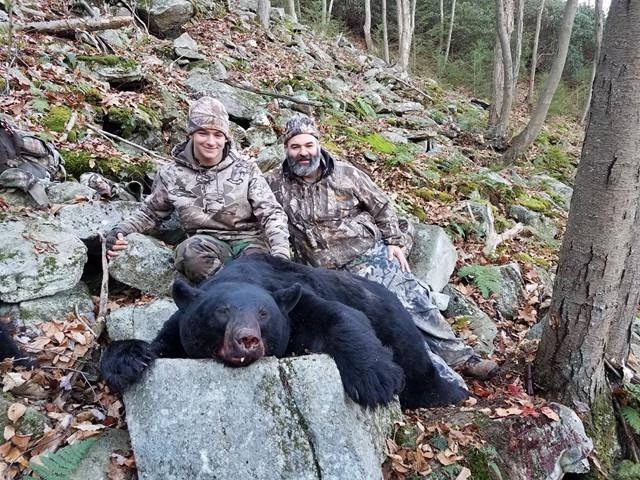
[00:39:15] Speaker C: Well, you know, my favorite. I mean, I like to take those back straps and loins and. And stick them in some peanut oil and then throw some Montreal seasoning on there. But crock pot is. Is a great way to go. Yeah. And I mostly do that for bear meat. And that is, you know, you let that sit on a stove all day and it. You cut it with your fork.
[00:39:37] Speaker B: You talk about technology. You know, we grew up eating shoe leather express and we loved it. Couldn't wait for a deer steak. But, like, you get on the Internet today, there's, you know, gourmet venison recipes, and it's pretty amazing. And I talked to so many families that, you know, in, you know, a society thing that that's all they eat is venison. At our house, that's all weed, is venison. But rarely buy beef. And once you. Once that happens, like, then the marching orders come that you better be successful this year. Those years where they get the best of you, they make it tough then going to the grocery store, but there's nothing better than harvesting your own table fare, cleaning it yourself, and all the process, I mean, that's all part of the hunt. That's all part of stuff that I know that you teach on every mentor hunt that we teach do.
[00:40:26] Speaker A: Yeah, it's. It's something that's really special that you get to see. Some people that have never hunted before, they get a chance. They harvest their first deer, and then, you know, you start skinning it and they're like, wow, like, didn't really know this is what it looks like, and I'm gonna eat that. And it's really special to see some people, their, you know, their eyes get this big around and it's really cool to see that. And I'm sure when I was in their shoes, you know, seven, eight years ago, it was. I was the same way, so.
[00:40:53] Speaker B: Right. And, you know, the other thing we, you know, just a little sidebar here is we offer a lot of programs and opportunities, even beyond hunting is learning how to shoot.
I know you did that big learn to shoot event. And when you look at firearms and ammunition and archery tackle, state agencies and wildlife conservation is funded by PR dollars by Pittman Robertson with that excise tack that's on taxes that are on that equipment, which is another, you know, thing that we promote here at the agency. We have a shooting sports division.
You look at our public shooting range opportunities and, you know, through. Through your bureau, Evan, there's a ton of learn to shoot events and information out there as well.
[00:41:35] Speaker A: Yeah, it's. I think it's also, like you said, it's important to let people know that a lot of what we do, whether it be the mentored hunts, learn to shoot, any kind of educational activities that we do as an agency, is funded by Pittman Robertson. And Pittman Robertson, like you said, is the excise tax on firearms, ammunition, archery equipment. And hunters, recreational shooters alike, they're. They're footing the bill for that, and that's what drives conservation as a whole. So it's really important that although we're sitting here talking about getting people hunting, it's just as important for us to get people shooting. And I know the shooting sports division does a great job getting people afield or getting people shooting, rather, to help drive our mission.
[00:42:20] Speaker B: Right. And just, you know, teaching them fire, general firearm safety and really how to shoot. And it's hard, you know, at our age to realize that there's some people that never went to a shooting range or never shot a BB gun, but there's tons of people out there that haven't, and we have those opportunities. There's lots of gun clubs around the state. You know, we.
We have so many local sportsman's clubs that are willing to lend a hand to these folks, too. And I know you're a big part of many local sportsman's clubs, and that's
[00:42:47] Speaker C: a great way, too.
By joining a local gun club, you're gonna network with a lot of hunters and shooters.
And, you know, I can't see where you're not gonna learn something by getting involved. And there's so many opportunities, like the club that I belong, Aunolani Run Gun Club, they have a Junior Olympic team, they have a shooting team. And a lot of these kids have gone away on scholarships because of the fact that they had gone through these programs. So it's a great way to learn and meet people and be able to network into shooting and hunting. And before I stop, I just want to give a plug to our NASS program, which I am so proud of the people in this agency and what they've done. From what I understand, we got 400 school schools involved. That's another great way to get kids involved.
[00:43:36] Speaker B: Yeah, the, the NASH program is. When you look at that, it's probably one of our most successful R3 programs. You know, I don't. I mean, do you know the number of shooters in it, by any chance?
[00:43:48] Speaker A: I think it's over a thousand.
[00:43:49] Speaker B: Oh, well, that's just at the competition.
[00:43:51] Speaker A: I think it's statewide.
[00:43:52] Speaker B: I'm not positive it's a bunch. I mean, you got 400 schools.
We can get that information. But it, when you go to that state shoot, that's every year, you know, in the springtime down in Lancaster at Spooky Nook. Spooky Nook, yeah. Baseball player. You have to know that that's what happens when you get old, too. You forget those things. But when you watch Those kids, there's 100 and some on the line. Release that first arrow.
It just gives you goosebumps that these kids and youngsters are enjoying the sport of archery. And that NASS program is a hit across the country.
[00:44:27] Speaker A: Yeah, I think it's, it's. That goes back to what we were talking about earlier. Is it those people participating in nasp, they might not become a hunter, but they are going to shoot a bow for probably the rest of their life. And that, that funds conservation.
[00:44:41] Speaker B: I know. Talking to Todd and Kayla, too, the retention rate of people that the kids that are involved in NASP that are actually by a hunting license, pretty high. I mean, when you look at the whole program in general, so that's great. I mean, and that's something that we're full bore working with every year. They're always trying to get new schools and attracting those kids that may never get a chance to shoot a bow. And you think about it, we're at that time of year when we've been practicing, you know, a month, and there's nothing better than going out and shooting a couple arrows every night. It's just, it's relaxing, it's fun, it's frustrating, and I mean, it's what we live to do.
So, Bob, let's.
This is more personal.
You know, you've. You've taken probably thousands of kids or introduced thousands of kids in your lifetime to hunting. If you Have a couple tips that are just something that you've learned by your mistakes. We make mistakes mentoring too. Something that you can share with the folks out there that you think are very vital if you've never done it before or you're looking for some new tactic that if you're gonna. If I was planning on taking somebody, something I wouldn't know.
[00:45:44] Speaker C: Never assume anything, you know, when you're teaching someone, you know the point of aim on a shot, be careful of the analogies that you use, because these kids are not familiar with all of the terms that I grew up with. So I've learned to, you know, make sure that exactly what I want them to do is exactly how I tell them. Like, a good example of that is you mentioned about technology.
A couple years ago, I had a young lad in a blind, and we had a turkey coming in and he couldn't find it. And I said to him, hey, he's coming in at 2:00'. Clock. And he looked at his watch, which is a digital watch, and he's pointing to 10. To the watch. And he shows me it says 10:30. And I thought to myself, oh, yes, okay, look to your right. And then, you know, I explained it better. And then he. Course he picked it up because one of the rules when they're hunting with me is they can't shoot anywhere away from the Jake decoy. Once I hand them the firearm, they're going to point it at the Jake decoy. And when that bird gets in there, which is usually set about 25 yards, that's when they're going to harvest that bird. So I walked away from that thinking, you know, be very clear on what your instructions are and pay attention. And most of all, enjoy the moment because you're going to have so much fun. Fun. And, you know, I can always tell a hunter from the first time we walk in the woods because they pay attention to everything. Like, hey, there's a turtle. Hey, look at that track in the mud. I say to myself, this kid's a hunter. And he. And 9 out of 10 times I'm right about that.
[00:47:18] Speaker B: And I think a lot of folks, I mean, we just got to be realistic here. There's a lot of hunters are selfish and they don't want to share that experience. They don't want to give up that stand. They don't want to take someone new to their woods. But. But I can tell you from my experiences, and I can almost bet I get more of a rush out of sharing that and watching somebody else have that success than myself. And I think if a lot of hunters would try that, I mean, if you've had luck over your hunting career and you want to try something new, take someone new. Because it brings that back to that point when you were 12 years old or when you were 19 years old, and you're sharing that experience with someone else and living it vicariously through them. You know, I bet the conversation when you were in the blind with that youngster, when you said the 2 o' clock thing, I bet you were probably more excited than that person that had the firearm in their hand.
[00:48:08] Speaker C: It's the gratification of not only just, you know, harvesting, but having them experience the whole thing. Like, I always try to present to kids, like when I go into the woods, it's like I'm sitting in an auditorium and there's a big show taking place out in front of me. And if you can present that so that they get to enjoy everything that's going on. Like, hey, what's that up there? That's a woodpecker. You know, you're teaching. You're constantly teaching. That's why I like to use ground blinds. And I was very reluctant to go that route. But it's ideal because then you don't have to, you know, you don't have to say, don't move, don't sit still. You can keep the kid in there, and they can pretty much go about their way. But you were there one on one, and you're getting to share a lot of important points about hunting.
[00:48:51] Speaker B: Right. And you can have a conversation. You can have a good conversation for whatever reason. Turkeys, they ignore it in deer season. You put a ground blind up, make sure it's out there, plenty of time, brush it in or whatever. But you can be. You don't have to be in a tree to shoot a deer.
[00:49:04] Speaker C: You can take the students with you to help set it up.
[00:49:06] Speaker B: Right.
[00:49:06] Speaker C: Get them involved in all the prep
[00:49:08] Speaker B: work, the whole process.
[00:49:09] Speaker C: Yeah.
[00:49:10] Speaker B: Evan, you have any. Any good tips? I mean, especially being like that. You started a little bit later than a lot of folks. You know, maybe something like that would be a great tip if you have something. Yeah.
[00:49:19] Speaker A: I mean, I think most importantly, you can't just take somebody one time and expect them to be a hunter.
[00:49:26] Speaker B: Say that again for the people in the back, because that's a big key.
[00:49:29] Speaker A: You cannot take somebody one time and expect them to be a hunter. And I. And that's something that is so true. And it was so true for me, you know, the first time I harvested a deer, I wanted to go right back out the next day, but I tried and I had no idea what I was doing. I'm like, man, I'm back to square one. I have no idea what's going on. Taking somebody more than once, showing them the ropes, taking them out, setting up the blind, walking them through everything. It's really important that somebody new sees everything, sees every step of the process.
Understand why you're picking this spot, why you're going in this early. You know, they might not understand why you're going in at 5:30 in the morning.
It's really important to do that and drive those points home to these people.
And I think something else that's really important, if you're taking somebody new that is brand new, has never been around hunting.
If they harvest an animal, it's really important to kind of match what they want. They might not be super pumped. You might be ready to jump out of your shoes because you're so excited, but they might not be. That's the first time they've harvested an animal. And that's, that's a really big moment. I mean, I can remember the first time I harvested a deer. I was, I was excited.
My friend was excited. But that doesn't mean that there wasn't a moment that, you know, of. Silence sure took a, took a minute, was, was with the animal. You know, it's really important that you, you as a mentor aren't, you know, high fiving them and they're getting ready to cry.
[00:50:56] Speaker B: Right. I mean, respecting you. I mean, what just happened going back to you said you were ready to go back the next day after you shot your first deer. One of my favorite quotes was from one of my heroes, Ben Rogers Lee, who. You know, when you look at old time turkey hunters, I know you don't know who it is because you're way too young, but his quote was, I wish I could. After a successful turkey hunt, I wish I could breathe life back into that bird so I could hunt him again tomorrow. And once you pull the trigger, there's a whole different emotion that happens with hunting. And, and that's. I agree with you 100%. That's a great tip.
[00:51:29] Speaker A: Yeah. I also think another really good tip for people is there's so much out there right now. Everybody wants to shoot the big buck. You know, look around, it's, it's everywhere. It is just as awesome for a new hunter to harvest an antlerless deer, a squirrel, like we were talking about small game, but don't Overlook that because that's their first animal that they're, they're able to harvest. And that's, that's so invaluable, especially with all the opportunity that we have in Pennsylvania with the extended firearm seasons. It's. It's priceless what an antlerless deer can do for a new hunter.
[00:52:03] Speaker B: The smell of gunpowder does it. I mean, right? You're looking at a guy that smells gunpowder a lot because, I mean, that's why you go shoot. I mean, you shoot. I know. Sporting clays. And I mean, anytime you can do something like that. I know you just talked about, just recently you guys had your Jake's done day.
Talk about the kids that came through
[00:52:21] Speaker C: Jake's Day that you're going to give me goosebumps here. We had our Jake's Youth Field day, which is our 24th that we had, and we had 190 kids from ages 8 through 17 and probably 50, 50 boys and girls. And that really excites me to see the girls that are stepping up and of course, sorry boys, but the girls are always more focused and they are the shooters and they always do extremely well. But in our program, it's an outreach program through the National Wild Turkey Federation, we have Jake's, which is the 8 to 12, and we give them a taste of everything. They get to go in canoes, they get to fish, they get to shoot bows and crossbows. But the kids that come back for extremes, they want to be the hunters. And that's where we put the icing on the cake. They're going to climb all kinds of tree stands and, you know, they're going to shoot 2, 2, 3. They're going to learn orienteering, they're going to learn shot placement, blood trailing and so forth. So I, as I make it around to all of these different classes and I get to talk to these kids. They are excited about hunting like we are, and that just get. That's a B12 shot when I hear that. And so, you know, it's. It's a long day, but it's all about hunting. And one of the things that really made me feel good was there was a grandmother at this event and she came up and she said, you know, I really wasn't into any of this. You know, I'm kind of reluctant to let my granddaughter come, but she insisted. She says, but I got to tell you, you know, the way that you teach, you know, shot placement and respect for the animals has changed my mind about hunting.
So you never know how you can, you know, it's not just about recruiting hunters, but it's also about educating the public on the rightness of what we
[00:54:11] Speaker B: do as hunting and hunters 100%. Again, hats off to that. I know that's one of the big events you do. I mean, you do tons of events across the state, but that's a big one that makes national headlines every year, too.
[00:54:22] Speaker C: In 2010, we were the best event chosen by the National Wild Turkey Federation. And that's a credit to all the people that volunteer. And it takes a whole village to do a program like that.
[00:54:33] Speaker B: It's kind of like your position here too, at the agency as a commissioner, when you know that is a volunteer position.
Sometimes you all don't get enough credit for that. This is time that you're away from families, away from everything that you do to come and serve as one of our board members because of conservation, because you want to leave it better. And I think that's something that a lot of folks don't realize about our board of commissioners. And they do a super job. They're engaged. We hear a lot that nobody here at the agency hunts. I can tell you that every one of those folks that sits up there at that table can't wait for hunting season here, you know, this fall. But Evan, you know, we talked about a lot of the opportunities and things that are going on.
Where can folks that might want to become a mentor or want to, you know, get started in hunting? Let's just talk again and where that information is available here at the agency.
[00:55:29] Speaker A: Yeah, first of all, you go to our website to Get Started Hunting page. I believe it's under the hunting tab drops down, you get into Get Started Hunting and you can find everything on there from webinars that teach, you know, start to finish to our in person programs we have this year. We're going to have upwards of 12, maybe even more. We're kind of still in the place planning phases right now, but we're definitely going to have 12 mentored hunts this fall for new hunters, mostly in suburban areas, Pittsburgh, Philadelphia alike, where we take new people that have never been exposed to hunting and match them up with experienced mentors. I know Bob's going to sign up and come down this fall and take somebody new hunting for the first time.
All, all of our mentored hunts are lottery system, so if you're a new hunter, you can fill out the application, submit your application and we'll do the drawing here closer to time of the fall. But as for mentors, if anybody out there is looking to get involved, they can contact us here at the agency. Our email is going to be on that get started hunting page. But if, if you don't have it, it's mentored huntinga.gov just shoot us an email, say, hey, looking to get involved in some form to mentor somebody new and we'll get everybody squared up and, and we're always happy to have more people.
[00:56:44] Speaker B: And if you're a member of your local hunting club, sportsman organization, gun club, and you have some interest in learn to shoot, we'd be glad to talk to you and help you get started. And I think that's something that a lot of these clubs, we're fortunate to have all these clubs around the state. Get out there and get active with your local clubs and get that fire burning for folks that don't have those opportunities.
[00:57:08] Speaker A: Yeah. And we, we have a really great program. It's the Mentor Pheasant Hunt program, where sportsman's clubs or non governmental organizations, NGOs, they can reach out, they can apply for a mentored pheasant hunt. And us as the agency, we can supply them birds and we'll also do a little bit of promotion for them and run a registration for them. And it's really a great program that last year we had just over 20 clubs participate, but those 20 clubs were able to put over 500 people through the program.
[00:57:37] Speaker B: That's awesome.
[00:57:37] Speaker A: And that's new hunters across the state. And those are coming from sportsman's clubs.
[00:57:42] Speaker B: Yeah. And all that information and lots more available at our website.
That's what we're here to do. You know, reach out to us if you. And you know, again, I'm going to challenge everybody out there that take one day this fall.
Like you said, we all know somebody that doesn't hunt or doesn't understand or doesn't, you know, realize about conservation. Take one day this fall, if you haven't in the past, and take someone out there and let them experience it. They don't have to necessarily even carry a gun. They can just go along with you and, you know, hear those sights and sounds and learn about it and, you know, hear a deer snort or see a pile of bear poop or whatever it is. You know, we owe it to ourselves, we owe it to conservation and we owe it to the future. For sure.
[00:58:22] Speaker A: Absolutely.
[00:58:23] Speaker B: Anything else, guys?
[00:58:25] Speaker C: I just want to say it takes a hunter to make a hunter.
So come on, everybody, let's get together and make this happen. We can turn this around.
[00:58:32] Speaker B: Yeah, that's not the enthusiasm that we usually see. From Commissioner Swallow. I mean, you're usually flexing when you say that. You'll never meet anybody that gets more excited about it. And, you know, to both of you, from myself, and just thank you for what everybody does out there on a daily basis.
We can turn this around. It's not. We always, we look at it in a negative context a lot. But again, you hit a. A lot of it. Like society's changed. Let's take it. We're not living in the 80s anymore. You know, we're not there. We have to, we have to kind of chuck and jive and move with, with the times.
Let's all do a better job of it, and that's all we can do to make it better. But thank you, both of you, for what you do every day, day in and day out. And let's come back here next year and talk about some big wins in, in this, in mentorship and R3 and all that. So thank you for coming on today.
[00:59:19] Speaker A: Yeah, absolutely. It's the not going to be one year.
[00:59:20] Speaker B: That's right. That's right.
[00:59:22] Speaker C: Sounds good. Hey, just one more thing. There's an organization that's coming to Pennsylvania. It's called Pass It On Outdoor Mentors. And recently they hired a director. You're going to see that out in the papers and on the Game Commission website. It's open for mentors and it's also open for hunters. So let's all get together and help this organization and blow this thing out of the water.
[00:59:46] Speaker B: We're ending it on that. Bob, thank you very much.