Episode Transcript
[00:00:00] Speaker A: You know, so many people look at this and just don't realize there is a master plan to this.
[00:00:04] Speaker B: Every animal has certain things they prefer. So we try to create pockets of all these different things all the way around.
[00:00:10] Speaker C: Timing is very crucial. You know, we want those sunflowers to be perfect for dove fields, you know, so we need the timing of the sunflowers to bloom just in time.
[00:00:25] Speaker A: Hello and welcome to Call of the Outdoors, the podcast of the Pennsylvania Game Commission. Obviously we're not in the studio today.
We got to come down and kind of go on a road trip. We're at State Gamelands 280 Blue Marsh and we're talking with the gentlemen that get a lot of things done here, not only in the game lands but across the southeast region. And with us today we got Kevin Clouser and Mark Weiss. And I'm going to turn it over to Kevin and just tell us a little bit about yourself and how you got to the Game Commission.
[00:00:51] Speaker C: Alright, Matt, thanks for the invite today.
Like he said, I've been working with the Game Commission here.
Had a long career here. Actually I'm here about 20 years now.
Totally career change. Was a pilot in the beginning there.
Ended up like the outdoors, was always in the outdoors. Enjoyed that quite a bit. And I had some. That was back when the airlines were slow in the industry. So I ended up getting out of that. Came to the Game Commission as a game warden. Did a lot of law enforcement through the Schuylkill and Berks area here.
Ended up coming through that and then went into land management from there. Had a little stint in the office as the LMS and then came back out as a land manager just because I liked the outdoor and like to be outside in the fields more. So I'm currently the LMS here. The Land Management group supervisor, I should say the lmgs, I should say Land management group supervisor here for Schuylkill in Berks County. So we're currently in Berks county here. Been here for about 20 years and I enjoy it. Have a great cruise with both crews actually. And Mark's our foreman here down at Blue Marshall.
[00:01:55] Speaker A: Anybody that's listening to this can definitely tell that you're from Schuylkill County.
[00:01:59] Speaker C: Well, that does not surprise me.
But it all goes back to the Skook one way or the other.
[00:02:06] Speaker A: Right. And Mark, thank you for having us down here to Blue Marsh and a little bit about yourself too.
[00:02:11] Speaker B: Sure, sure. My name's Mark Wise. I'm the Gamelands maintenance supervisor here. I've been Working here, just shy. Well, around 27 years. A little over 27.
I grew up in this area in the Burnville area.
Never thought I'd get to work for the Game Commission. I always wanted to do this because I grew up here. But I was a union welder for about 11 years. The company shut and I needed a job and I volunteered here for a couple months. Actually a full time volunteer basis kind of left them trying me before they would buy me. I knew there was an opening coming so I did that and it really worked out. And having looked back, I mean this, this job is great for me. It's a perfect fit. And I'm a hunter and a trapper and it means a lot and got to meet a lot of nice people. I have a three man crew that helps me with this.
We have around, we have three game lands. This is by far most labor intense when to manage because of all the openings. But it is also like a destination for a lot of hunters and we get a lot more positive responses from people than negative. It's pretty much one of the real rewarding parts.
[00:03:24] Speaker A: We hear so much about what happens, what kind of habitat, what kind of management do you do on game lands and that's why we're here today. Blue Marsh is just, I mean it's really a pinnacle, like you said, labor intensive. But there's so much that goes on and you know, even behind us and hopefully the folks can see as we sit in this field of just, you know, a lot of people look at this and say it's weeds and don't understand what happens here. And that's what we want to talk about. And you know, let's just start off, you know, every one of our game lands, which is well over 300, 300 game lands, you know, total across the state. I don't know the exact number because it changes pretty much every commission meeting. But you know, there's a management plan, a comprehensive management plan that we follow for that game lands. And let's just talk about what that plan entails. Kevin.
[00:04:10] Speaker C: Sure, sure. What that plan is, it's basically a document that goes over some of the goals and the habitat strategies that we want to use on that particular game land. So each particular game lands will have its own individual management plan that we'll follow and it gives you a direction to look so we don't skip a beat. We have an ultimate goal that we're trying to achieve and we have something to focus on once the management.
[00:04:34] Speaker A: So are you all involved in developing that plan?
[00:04:38] Speaker C: The way that plan works is, yeah, Mark and myself will go in, but it's kind of a unique thing where you pull everybody from the Game Commission together, like in the southeast region. So we'll work with our foresters, we'll work with our biologists, and we all sit at the table and start bouncing ideas off each other. What would be better for what species here, how we can manage a certain area there? Do we need a timber sale?
Do we need use fire for something? Is there some endangered species we're looking at? So it's a whole comprehensive plan that everybody has a say in and says something or adds something to the pie.
So we can get this document pulled together and we can use it all as one and have a focus that we're leaning towards.
[00:05:18] Speaker A: Right. And we're sitting here in this field that we're in or this meadow.
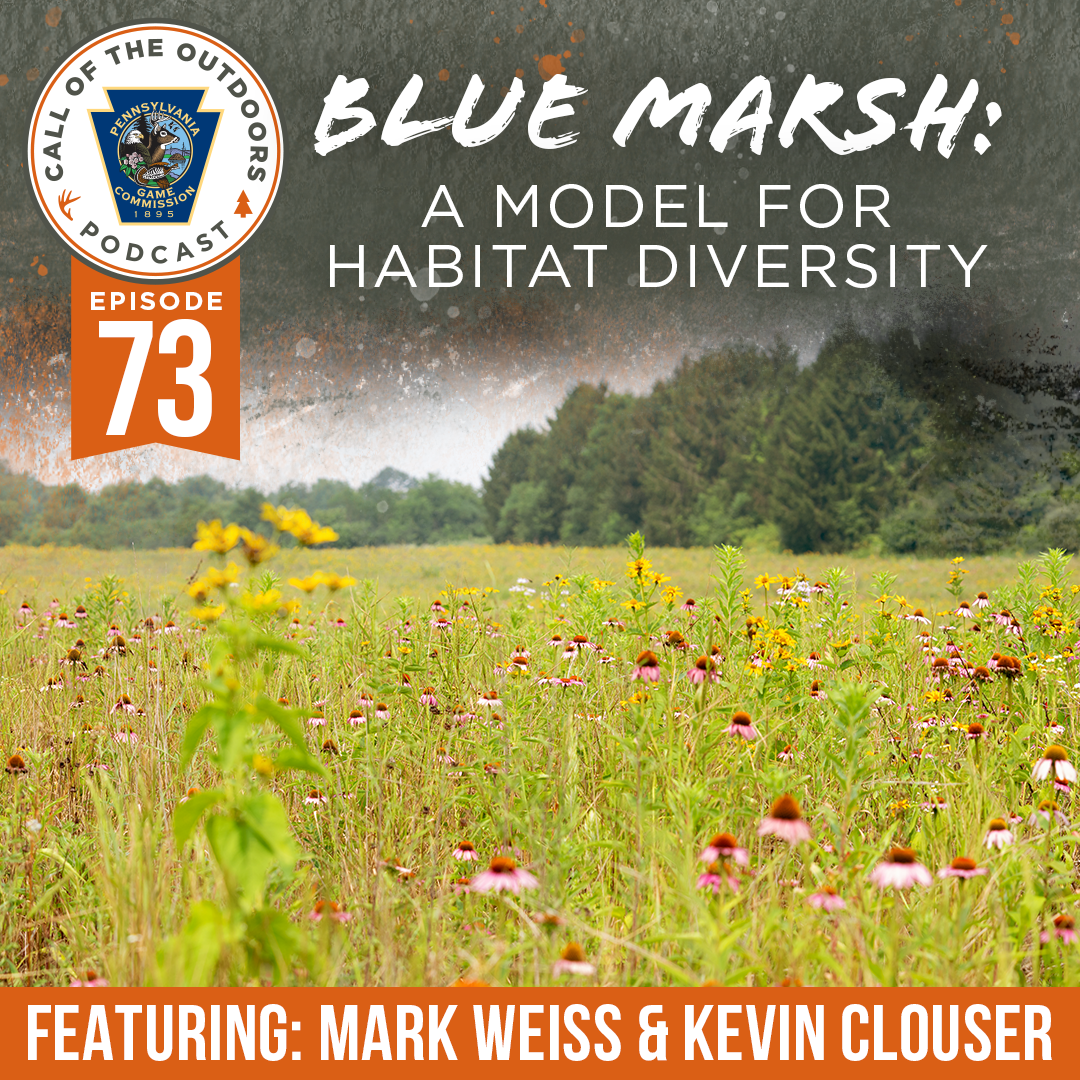
Talk about this meadow, Mark, exactly what goes into making something look like this? Obviously we're in a year where there's been a little bit of a drought. And I mean, we see lots of flowers or forbs as y' all like to go poking up there. But like I said, a lot of people look at this and think it's weeds and just talk about how we get to where we're at right now here.
[00:05:41] Speaker B: Okay. Well, Blue Marsh is managed a bunch of different ways, but one of the ways we used to manage a lot of this ground was through sharecropping. We'd have farmers that would come in here and they would farm parts of land. They called them sharecroppers because 10% of their share was ours that we would let stand for wildlife. Or if we had enough in the area, we would collect the money and use it to do other things for wildlife. These fields here were probably sharecropped probably seven years ago. About seven years back, the Game Commission decided to take out some of the land that was sharecropped and 10% a year for five years. A five year program. So at the end of five years, we were left with 50% of the sharecropping ground and the rest was converted into pollinator fields. Different kind of grasslands open up areas for grassland nesting birds and pollinators and a lot of stuff can piggyback off of. Turkeys like to nest in this.
[00:06:37] Speaker A: And we won't tell, we won't tell too many people that.
[00:06:41] Speaker B: Yeah, we're definitely starting to see a few more. It was, it was. It was down for a while, but I think the dry spring might have helped with pult survival.
[00:06:49] Speaker A: Good. So there is Turkeys down in this part of the country. Oh, okay, that's good to know. Talk about some of the other specifics here at 280.
[00:06:57] Speaker B: Well, it's.
[00:06:59] Speaker A: This is.
[00:07:00] Speaker B: We have around 2500 acres of game lands here and we have another additional 2,700 that we lease from the Army Corps of Engineers. So it makes like 5200 acres of land here that we manage. We only own 2500, but we lease the other part.
So out of that there's 3,100 acres of fields. The rest is different compositions of wooded hollows. And the original woodlots here, almost all really stellar oak woodlots. So we were lucky there. Anything that's made up of walnuts and stuff was probably a pasture back in the day, and that's just what they reverted to, was walnut. But we have 110 acres of dove management fields. Those consist of sunflowers and wheat. So basically half and half. So one year the field will be sunflowers, the next year will be wheat because we have to rotate.
So coming up shortly here, the wheat fields we have, we'll go in and start mowing them down in strips to put the seed on the ground to get the doves used to coming in.
Then right before September, we'll start mowing the sunflowers down and they really hone in on that provides a really great hunting opportunity for hunters. And then other birds, of course, feed on them as well. But it's something that's a destination for dove hunters to come here and dove hunt.
[00:08:21] Speaker A: And you look at this game lands, it sits so close to, you know, a big city really. The Redding is not very far away and it's. It's crazy to just look at the landscape here and think, you know, we're. We're within almost walking distance of Reading. And you come out here and, you know, thank, thank goodness our forefathers are smart enough to put these things together. You know what I mean? Absolutely. And the hunters that, that funded us being able to purchase game lands.
[00:08:45] Speaker C: Yeah, absolutely. And part of Blue Marsh share. Mark had mentioned share farming and we did start slowly getting away from that back in 2000. We started removing some of the share farming to get the grassland components here. This is a key area because of the grassland. To have vast grasslands like this is not a normal thing in Pennsylvania due to obviously all the trees. So when we have a spot like this, it certainly is a gem in itself. And then with the different diversity we have here through either the sunflowers or mainly grass fields, and pollinator fields to keep that open grassland is something a little special here in Eastern pa. Yeah.
[00:09:24] Speaker A: You know, so many of our hunters think about deer and, you know, when a deer walks out through this. This field, there's lots for that deer to eat. I mean, and there's a lot of nutrients in that for sure.
[00:09:33] Speaker B: You'd be surprised how deer can hide in this field, too. You look out there and they just pop out of nowhere. It's like, where was he at?
[00:09:39] Speaker A: Well, I'm only five, eight. I can hide in this field pretty good, too.
[00:09:41] Speaker B: But the other thing here is this is a destination for pheasant hunting. We stock. We stock around 12,000 pheasants here every year. And we start in the middle of October for the youth season. And then it just goes right up until February these last few years, because of different avian flu and stuff, the pheasant farm keeps backup breeders in case something would happen that they need to replenish their breeding stock. In the event that that doesn't happen, which happened the last two years, we get to stock those birds and extend the season for the pheasant hunters. And it's a huge success.
[00:10:14] Speaker A: Right.
[00:10:15] Speaker B: It's a little problematic maybe, because that time of year we might risk getting into some bad weather driving to the pheasant farm. But other than that, it is hugely successful with the pheasant hunters.
[00:10:26] Speaker A: Right. And that was kind of the next thing I was going to get to is like, when you look at that comprehensive plan, hunting does play a part of that, that management plan, I'm sure. And you know what kind of things? Obviously the pheasants and the dove fields. Any other things you're looking at when you're looking at that plan that hunting plays a part of?
[00:10:41] Speaker C: Yeah, sure, 100%. I mean, there's a lot of things that are looked at in the plan, but definitely hunters take a priority when we're looking at that. And it goes from everything from. And Mark can explain that a little bit more in detail, but just timing. When we do some planting, when we do some land manipulation, it's certainly timing. So it's ready for the hunters or in the hunting season. And also if you look through our fields, the height of our fields actually play a part of that also.
It's preferred by hunters. It's knee high to waist high as a general rule. And with the. The pollinator mixes and the mixes we use, game recovery is a little bit easier. So that's definitely something hunters really appreciate. And also just working their dogs there's a lot of folks with dogs that will come here and they'll work their dogs or train their dogs here in these fields. And it's just a great place for people to get out. And because of the land mass and how large it is, we can handle a lot of people. And you still don't feel crowded. So you still feel like you have some elbow room to get out there and hunt a little bit. Even on this, when we have a large number of people, because we are so close to such big population of people.
[00:11:44] Speaker A: Right, right. And, you know, one thing we always want to talk about, especially in the dove fields and the pheasant fields, you know, our number one priority when hunting season comes is obviously we're welcoming everybody, but being safe out there.
You know, it does get. Dove season gets a little bit crazy. And, you know, obviously you want to shoot to the sky, you don't want to take low birds and anything else you want to. Would want to talk to hunters about when they come to Blue Marsh.
[00:12:10] Speaker B: Yeah, it is. You know, you gotta try to be courteous to the other hunters too. You know, if you see somebody there, don't necessarily go through towards them and hunt. You always gotta be aware of your surroundings just like anything else in hunting. Because it does get. There's a lot of people here after these birds. I mean, when they first. When we first stock them, they get a lot of action. But the guys that have dogs and come here the next days, they have real quality hunting because the pheasants are a little bewildered when you first put them out. But they become acclimated to the land pretty darn quick. And it's just huge. We have banded pheasants out here. Some guys literally try to watch for bands so they can shoot only banded birds. It's kind. I don't know how they can see that. Good. I couldn't do it.
[00:12:54] Speaker A: No, I'm with you on that one.
[00:12:55] Speaker C: That is one thing about the guys here, though. We have a good community, a good hunting community here also. And in general, hunters are fairly decent people and are out here to have a good time. But when we're stalking birds, we get a lot of respect from hunters anymore where they will actually stop, they'll unload their firearms, they'll wait until the birds are stocked. And that doesn't happen all over the place, we'll have to admit that. But here we have a pretty good report with the hunters and they're pretty respectful to when these guys are actually stalking birds to make it a little Bit safer for them out there. So just so hunters remember that when there are stalking situations, keep in mind those guys are in there. Don't be shooting at them. Wait till the birds are released. They're still going to be there when the truck leaves, that kind of thing. So just want to let folks know that we. We do have some good people and we appreciate that out there. Yeah.
[00:13:38] Speaker A: Yes.
[00:13:38] Speaker B: And we also, when we're stocking, we try not to set them up for failure either. Well, if we see them, we'll pull up to them and say, hey, we're gonna stock birds here. Let them hit the ground and then go after them. You gotta watch. There's not somebody just out of sight that they don't actually see, and inadvertently, they would shoot at you by mistake. But for the most part, over the years, 28 years of stock, and most of these people know us all, and they are very respectful.
[00:14:02] Speaker A: Awesome. Awesome. What about deer hunting opportunities?
[00:14:04] Speaker B: At deer hunting in the. In archery season, you got a really good chance.
Once the pheasant season starts, these deer get pushed like crazy because we see a lot of traffic here, but there's a lot of surrounding areas that a lot of our deer will go there. But then after the season, they start coming back and they're like, crazy here now. But that happens a lot.
[00:14:25] Speaker A: Yeah, and that's. That's. There's a lot of times we take that for granted. Don't think about pressure. I mean, those. Those animals out there, out there to survive, and they get. They get smart pretty fast. They're not as smart as us.
[00:14:36] Speaker C: Ye.
[00:14:37] Speaker A: But sometimes they make us look foolish.
[00:14:39] Speaker C: Well, and the positive thing about the Gameland series, just like Mark said, we'll get pressure. They may leave, but they come back. So there's something here that keeps them coming back. And obviously the habitat work has a big part of that. So that's a benefit of the game lands in general.
[00:14:53] Speaker A: While we're on the subject of habitat, you know, our responsibility, obviously, is game animals, but the habitat work that goes on here at Blue Marsh is more than just game animals. I mean, as I'm sitting, we're sitting here doing this podcast. There's all kinds of birds flying around that I have no idea what they are. But I mean, let's talk about how it benefits all game.
[00:15:10] Speaker C: Sure. Well, just the fields themselves and having that diversity in the field and the pollinator fields like that, we'll get all kinds of ground nesting birds and songbirds here that are definitely benefiting. And Mark, I'm sure, can Go on. On how many birds he has seen and what he sees when he's out in the field working.
[00:15:26] Speaker B: Yeah, yeah. So we have a pretty extensive kestrel trail around here with kestrel boxes. And this was our best year.
We had 17 active nests here.
[00:15:36] Speaker A: Oh, wow.
[00:15:37] Speaker B: And we have a couple grad students out here doing various studies on them. And it's pretty cool. They can tell you when they hatch, when they're gonna fledge. They band a lot of them, they put transmitters on some.
Pennsylvania is responsible for 10% of the gray cat birds in the country, and it's loaded with them here.
And some of our management practices. These bigger hedgerows that we have around here, we started getting them closer to the ground. We cut the big down, make more of a brushy type cover. There's a lot of birds that hone in on that and they nest in that. That's what they like. So we have.
We have such a diverse type of hedgerow system here that all different types of birds choose different things. That's what our whole goal is here, to create diversity. And I don't mean in one field. I mean like groups of diversity. Because every animal has certain things they prefer. So we try to create pockets of all these different things all the way around. And we're fortunate here because we have such a vast amount of land that we can experiment, try stuff. If it doesn't work, we can redo it. And I'm not opposed to trying just about anything, so.
[00:16:45] Speaker C: And part of that habitat, too, is building the food chain. So we have a lot of bird diversity here because we have insects. And we start with the insects, we start with the grasshoppers, which then of course, we have the songbirds feeding on them. We have turkeys, you know, bugging in the fields, things like that. So we try to build the food chain as we're building the habitat here.
[00:17:04] Speaker A: Yes. You know, so many people look at this and just don't realize there is a master plan to this, you know, and that's what we kind of let off the show on. And it's amazing, as a hunter, as I say this all the time, looking at the Game Commission and looking at what happens behind those walls, until you get behind those walls, you don't realize how intense it is. I mean, from everything that happens every day and everybody's job, there's always a purpose.
[00:17:31] Speaker B: Yeah, for sure.
[00:17:33] Speaker A: So, you know, what are some of the biggest challenges? Because we've been talking about all the good stuff and there is challenges. I mean, every day I Mean, absolutely. These things, these fields don't look like this without effort.
[00:17:44] Speaker B: No. And a big thing with these. These are like, known as permanent fields. So it's not like a crop field. If you have an issue in there with a certain weed. Once you have this and you have a grass and a forb mixture, your spray program kind of goes out the window.
[00:17:58] Speaker A: We gotta call them flowers.
[00:17:59] Speaker B: Okay.
[00:17:59] Speaker A: Flowers.
[00:17:59] Speaker B: Okay.
[00:18:00] Speaker C: Okay.
[00:18:01] Speaker B: But because it's tough to kill thistle in a field where you have grass and other broadleaves, because you can. There's certain, Certain. Certain of these flowers are resistant to certain herbicides, but it definitely becomes tricky. We. We have, you know, we're faced with maintaining these fields, but they also have to grow back for pheasant season. So we have certain criteria that we try to do where we can maintain or manipulate a field in a way where it had the least negative effect on habitat, yet it will still give it a chance to grow back by hunting season. So we couldn't go here and mow this in September, expect it to grow back in October. So we have a series of protocols that we use that my whole crew understands that we utilize to maintain these. So we don't hit a turkey nest and we don't mess up the woodcock nesting areas, and we don't hit fawns. There are so many things to consider, yet still maintain the field and have it the right hunt, the right consistency for pheasant season.
[00:19:03] Speaker A: Right.
[00:19:03] Speaker C: But Matt, you mentioned it before, too. Just like any ag field or any farmer in general out there, the rain, when we have a drought situation like that definitely affects everything we do here. As Mark alluded to the timing of everything. Timing is very crucial. We want those sunflowers to be perfect for dove fields. So we need the timing of the sunflowers to bloom just in time.
So that's always things we're fighting with the whole time.
[00:19:30] Speaker A: That's a dice roll. I mean, it really is sometimes.
[00:19:32] Speaker C: Absolutely. And I'm sure many people are well aware of the invasive issues we have too, which everybody, I think, in Pennsylvania is dealing with and beyond.
And just like everybody else, we have those invasive issues here, too, that we're trying to handle and deal with.
[00:19:46] Speaker A: I think that's a tough one that we're going to face long after our careers are going, because every year there's something new and you, you know, you disturb the ground where I live. And stilt grass is immediate and chokes everything out. And if deer would eat it, it
[00:19:59] Speaker C: would be great and hard to kill along the Way.
[00:20:01] Speaker A: Exactly, exactly.
[00:20:03] Speaker B: And even if it would provide the correct structure, you could learn to live with it. But still grass is just. It ruins everything, right? Yeah, yeah. We. Some of the. Some of these invasives are not natives. You know, they're not native, but they were introduced in the 1600s or the 1700s.
[00:20:18] Speaker A: Oh, no kidding.
[00:20:19] Speaker B: Yeah. So they've been what they call naturalized. Well, they're not native, but I don't even know if I had ancestors back that far. But you know, somehow they fill a void that the natives can't.
A lot of the natives can't survive because they have competition from the invasive, but also because they had natural predators and disease that would kill them. So that's kind of a thing, but we deal with that. And the other big thing we have to deal with in our dove fields is deer. So we feel the pain of the farmer. Because I think deer like sunflowers almost better than anything.
[00:20:52] Speaker A: I agree with that. Turkeys like them too.
They sure do. So let's just talk about where we're sitting and behind us. What is in it? You know, when you look at this field, what all is in here? I mean, the high points.
[00:21:05] Speaker B: Yeah. Well, the purple flowers are coneflowers. The yellow, high yellow ones are a form of sunflower fall sunflower. The little yellow and brown ones are Rutabeckia or black eyed Susans.
The light purple is bee balm. That stuff has a tendency to take over for some reason. But these fields they're keeping in check. But we. It's a very beneficial plant. It actually comes from Indian Town Gap. No kidding? Yeah. Yep. That's ecotype from there. And then we have different. Various short stature grasses that we put in early in the day. They used to plant a lot of high warm season grass.
It just gets so much bulk and the higher it is, it'll fall over. It makes a pure stand of real dense grass. That really isn't as good for wildlife as what they thought at one time. They like to have little channels where they can walk around in there, especially turkey poults and stuff like that.
[00:21:58] Speaker A: Well, that brooding habitat is the most important part of where a turkey can get away from predators.
[00:22:03] Speaker B: Yes.
[00:22:04] Speaker A: I mean, especially avian predators, you know, and you know, people think that just grass and that's why it's important to have that stem structure that you have. That's. Yeah, I feel like I know what I'm talking about.
[00:22:14] Speaker B: You do? That's exactly right. Because if there was poults here, they could be in there bugging under the Structure that would keep them kind of hidden from the avian predators for sure.
[00:22:24] Speaker A: So you talked earlier about, you know, blue Martian and 280 here and you talked about lease ground. I assume that's 400 area.
Let's talk about 400 areas because we have quite a few around the state that we, you know, where we're, we're acting on our mission on that ground, but it is, it isn't something that we own. So part of this is 400 areas, so.
[00:22:45] Speaker C: Well, yeah, it's a unique concept that's working well for us right now.
So 400 area, if a larger landowner wants to sign up for that, we end up in a contract with them. So it's a 25 year contract that allows us to manipulate or manage their property. Now of course they always have a say in what goes on and we confer with them a lot.
But they do lock in for a 25 year plan which allows us to look long term again just like we would with a game lens. And it gives them, the public the same access as it would a game land. So it's open public land that you're allowed to hunt on.
And we have the benefit of being able to manage that and kind of incorporate it with some of our landings and holdings that we have. So it works out nice. And we do work here with the Army Corps of Engineers through Blue Marsh and a great bunch to work with. Definitely help us out a lot with things we help them. It's kind of a joint mission.
They'll help us stock pheasant sometimes and things like that and allow us to do pretty much anything that we would like to do on their property. So it's a real benefit to work with them and it gives us that extra land that we can offer to the public for public use.
[00:23:56] Speaker A: I would assume that's the lake part of it. Yeah. Okay.
[00:23:59] Speaker B: The lake here we only lease 2700 acres of theirs. They actually have around 4500 acres and some of that is in the park and stuff for just recreation, no hunting. But they also have a lake here that's just shy of 1200 acres.
[00:24:14] Speaker A: Oh wow.
[00:24:15] Speaker B: Yeah, yeah.
[00:24:16] Speaker A: This is such.
[00:24:17] Speaker B: It's a multi use area. There's a 30 acre, 30 mile trail that goes all the way around with a lot of terrain. At one time was in the top 10 single track bike trails in the country.
So it's really nice. And there's a. I think there's 20 other miles of trails that they established here not too long ago. But the multi use Thing is huge. The Army Corps is great to work with. They help us. They basically help us with. We bring the pheasants back and they stock their ground and we stock our. So it's a huge help to us.
[00:24:48] Speaker A: So there's a lot of fishing going on over there.
[00:24:50] Speaker B: Yeah. And the fishing that's really gotten good in here. Yeah. One time they, they used to call it the Dead Sea, but no way, now it's. There's a lot of fish in there.
[00:24:58] Speaker A: That's great news.
[00:24:59] Speaker B: Yeah.
[00:24:59] Speaker A: Well, gentlemen, we talked about a lot of stuff that happens here and obviously there's a lot more. But you know, I drove driving in here. Obviously we came by the new archery range and you know, talk. Is there anything else about this Game Lands and Blue Marsh that is just unique to, you know, including the archery range? Obviously there was somebody shooting their bo this morning and it was great to see that.
[00:25:19] Speaker C: Well, the archery range is a big one that just opened up not too long ago. Last year was our first opening of the range. And I would say on a daily basis there's somebody here. May not be a big crowd when you drive by, but there's usually one or two guys shooting constantly.
So it is. People do enjoy it and close to population. So people do get to come out and use that. So it's kind of unique in that way.
We did talk a little bit about how we have a 400 area work with the Army Corps. The unique thing about this game lens is again where you focus towards the hunter. But it's multi use. I mean, we have guys who do their regular dog trainings, things like that. But then we also have bird watchers, we have hikers, we have people doing all kinds of stuff in this game lands. They have the biking trail at Blue Marsh around the lake there. So we have to work both with our hunting community and our general public that get together and work around and we can make that happen. It works well here. So people respect each other and they understand what's going on and they accept what's going on here. Which makes it really neat that we can have both and offer both opportunities for people here. So that's something unique about that. The other thing that I think is really unique and Mark can certainly talk more about that is we do a lot of studies here also. So you mentioned some of the Kestrel stuff we do. We do some banding with the Kestrels now. We have some ARU's out here that are just listening to different sounds. And again, Mark can definitely get into That a lot more. We had a small mammal study done out here and there's numerous studies and things that go on here because of the grasslands and the open fields here. So Mark, I don't know if you want to touch anything or get in any of the details on the studies. I know you participated with some of those.
[00:27:00] Speaker B: Yeah, that's one of the neat things. We get people asking for permission to do that and we always accommodate them. You know, it's kind of neat. It's usually younger kids, you know, working on their masters or something like that. But it can baffle your mind how many things people actually study.
It's pretty neat. The guy that did the small mammal study, he had a grid work of little live catch traps and they would check those things twice a day in the heat of the summer. And he had two interns with them and they were walking through chest high grass and they had these things. But they were amazed by the amount of small rodents that were here. Different types and some were not even the most common ones. But it was a sign of a healthy ecosystem. You know, there's plenty of food, predator, prey relationship here.
So I think that's a huge thing. The last study they did for the kestrels that we have here, they actually put cameras under the kestrel box so they could see when the adult kestrels were carrying in how many times a day they would bring rodents back to feed their young. And what it actually was, they could identify it. And that was a kind of a cool one. Then they do studies because a lot of times when they're younger they'll eat stuff like grasshoppers and stuff. So they do grid works for that. To see that kind of stuff is really cool. And like I said, the multi use thing, there's people that bird here every day and we have a pretty good working relationship with them. There's one guy that studies dragonflies. I mean you just don't know what people are into.
[00:28:30] Speaker A: Right.
[00:28:31] Speaker B: And it's amazing being that it's multi use.
Like there was an older lady out here that would come out and set up an easel and paint pictures of these flower fields and people. When the sunflowers are close to the road, that is a non stop photo shoot there.
[00:28:48] Speaker A: Absolutely.
[00:28:48] Speaker B: And people love it. So there we're not only, you know, working with the hunting public, we're also working with the non hunters to kind of bring them together in a way. And everybody kind of coexists there. It's kind of neat when they do that.
[00:29:02] Speaker A: We're exposing wildlife to everybody. And that's our job.
[00:29:05] Speaker B: Exactly. Yeah.
[00:29:06] Speaker A: So I do have. I have a study request for you that we'd like to. We'd like to do a small mammal study in trapping season with you this fall for the podcast. Because obviously, that's your passion. I mean, other.
Obviously, this is your passion, too. I mean, but. But I know trapping is one of your. Your. Your passions, and. And we've been talking about it for years, but. But we won't forget it this year. We're gonna. We're gonna come down and go for a ride with you and do a podcast.
[00:29:31] Speaker B: That'd be awesome.
[00:29:32] Speaker A: Come trapping season for sure.
[00:29:34] Speaker B: Bring your skin and knife.
[00:29:35] Speaker A: Okay, we'll do it. We'll have Mel and Emily get. Get in on that as well.
[00:29:39] Speaker B: But that'd be neat to do. You come. Come early in the season so I don.
The time to get here. That would be the way to do it.
[00:29:47] Speaker A: We'll do it. And gentlemen, your passion, it just shows through in your job and the Game Commission and the sportsmen and folks that love wildlife in Pennsylvania. I mean, we're all lucky to have folks like you that work for this agency and have given, you know, your career to wildlife and hunting and trapping and just making it a better place. And I think that's all of our goals, too, to make it better, leave it better than we found it. But anything else that you'd like to hit on Kevin or Mark before we take it out?
[00:30:16] Speaker C: Well, not really. I mean, just come see it, you know, if you want to come see it. You know, just come walk around, see what we have here and see what we offer here. So I want to thank you for inviting us out for the podcast, 100%. And I'd like to publicly thank Mark for all the work he does here also. So thanks again, Matt. I really appreciate it.
[00:30:32] Speaker A: Absolutely.
[00:30:33] Speaker B: Yeah, me too. We are very proud of this, me and my crew, and we're glad you came out to give us a little publicity.
[00:30:40] Speaker A: Well, absolutely. And like you said, we invite people to come take a look at it. That's what it's here for. And.
And, you know, if anything, if we can learn one thing, you know, my grandfather always told me, like, you know, hunting's about bringing something back out of the woods with you in hunting or anything, and that I always thought he meant like having a buck strapped to the back of your truck, but he meant knowledge.
[00:31:00] Speaker B: That's not bad either.
[00:31:01] Speaker A: Just. No, that's the icing on the cake.
[00:31:03] Speaker C: We're talking mushrooms here. But.
[00:31:04] Speaker A: Okay, but when you learn something every day, that's what it's all about.
[00:31:08] Speaker C: No, it is.
[00:31:08] Speaker A: But again, gentlemen, thank you and we appreciate the invite. And again, Mark, we're going to catch back up with you.
[00:31:13] Speaker B: I hope you do all right.
[00:31:16] Speaker C: Thanks a lot, Matt.
[00:31:16] Speaker B: Thank you.
[00:31:17] Speaker C: Absolutely.