Episode Transcript
[00:00:00] Speaker A: I'd break that straight razor out and put it on top of that left ear. And I said, well, look, do you think there's any possible way I can come go turkey hunting this spring? You know, I never did get turned down.
[00:00:10] Speaker B: The state wildlife agencies are crucial in what happened with wild turkeys.
[00:00:14] Speaker A: You know, told them I hadn't made a lot of money, but, boy, I made a lot of friends.
[00:00:17] Speaker B: That's your dang right.
[00:00:18] Speaker A: One thing that'll help you the most is learning to run a pot call or box call and a mouth call at the same time.
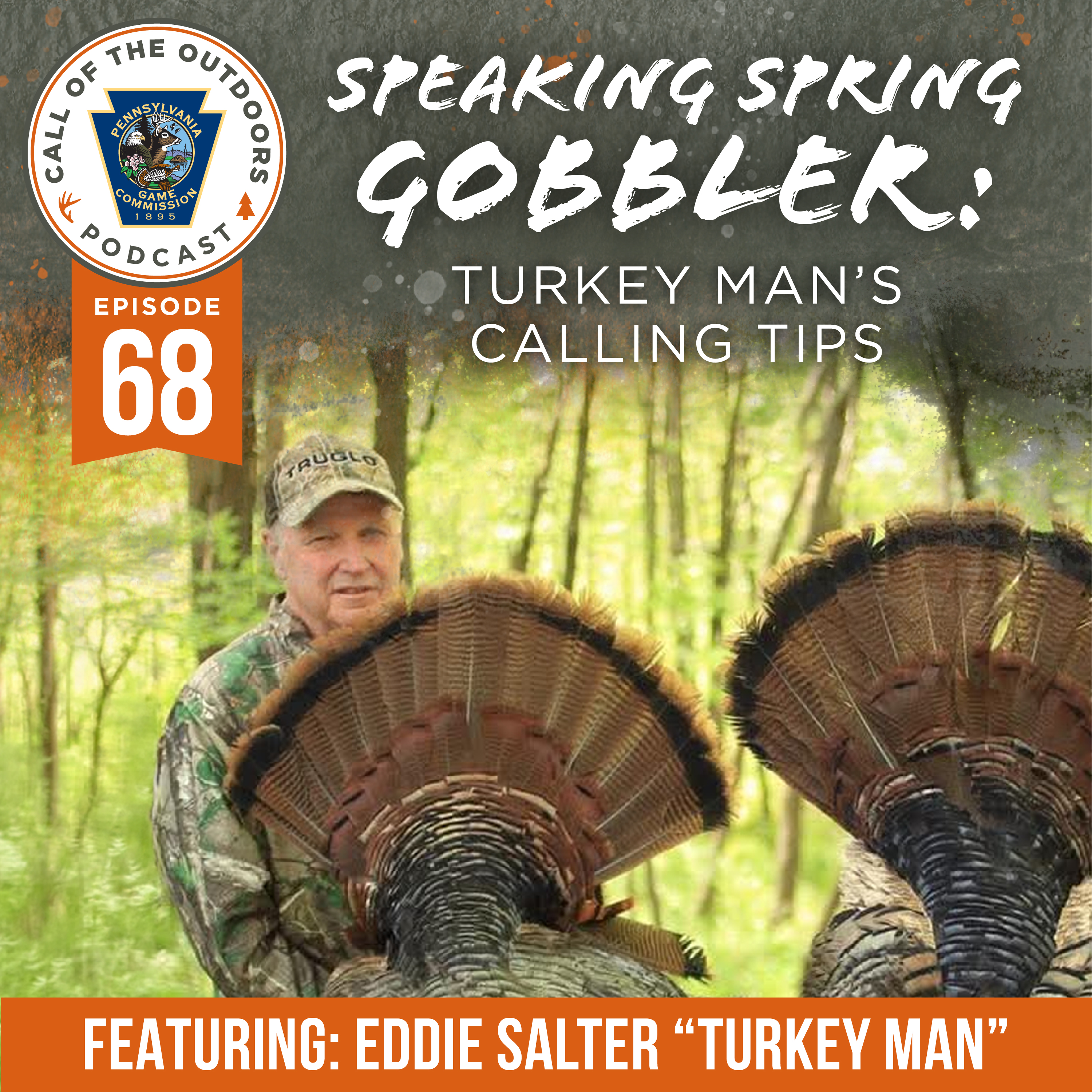
[00:00:30] Speaker B: Hello, and welcome to Call of the Outdoors, the podcast of the Pennsylvania Game Commission. You know, it's crazy to believe that, you know, when you watch seasons go by, the older you get, the faster it comes. But we're on the cusp of turkey season again, and, you know, we had an opportunity to grab a buddy of mine while he was up here doing the NRA Great American Outdoor show, and I thought we'd get him on here and talk about turkey season. Please welcome my good friend From Southern Alabama, Mr. Eddie Salter. You know, we're lucky enough here in Pennsylvania, here in Harrisburg to have the NRA graduate Great American Outdoor Show. And with us this morning, we got him out of a snowstorm. He doesn't see much Snow. Being from LA, we have Mr. Eddie Salter.
[00:01:08] Speaker A: Well, Matt, I appreciate you having me up here, man. You know, it's my pleasure. And, you know, and I'll be glad to leave his snow up here, too.
In Alabama. We not used to it.
[00:01:18] Speaker B: That's right. I said la. That's.
[00:01:20] Speaker A: That's it. Lower Alabama, right.
[00:01:21] Speaker B: A lot of people don't know that. And Eddie and I have traveled the country together. And when you talk about turkey hunting, you know, in the South, I can tell you this if you mention Eddie's name. I mean, it's right there with Bear Bryant and some other folks there in Alabama.
[00:01:35] Speaker A: But.
[00:01:36] Speaker B: But it sure is. And, you know, it's same here in Pennsylvania. You know, a lot of the turkey hunters and you. You've got to hunt here in Pennsylvania. We'll talk about that in a little bit here.
[00:01:45] Speaker A: We will. I mean, you know, hey, I learned, you know, probably, you know, one of the most important lessons about killing a turkey from you up here. And so, you know, you. You think you know a lot about turkeys, but sometimes you realize you don't know nothing.
[00:02:01] Speaker B: They humble you every day. But let's talk about how you got started, because a lot of people that it's. It's a really cool story.
[00:02:07] Speaker A: Well, it is. I mean, I grew up and I was real lucky to grow up in an area that had turkeys right there in the lower part of Alabama.
I grew up a farm boy. You know, I started as a young boy hunting, you know, doves, squirrels, and learned the most important lesson in my life. We had a little old dog that would tree squirrels and. And if we shot a squirrel out, you know, about two years, I didn't even tow the gun in the woods. I was designated the vine shaker. You know, my dad, he shot him and. But he was teaching me about being a woodsman. And, you know, I learned so much from, you know, not stepping on limbs and the different feed that, you know, the white oaks, the red oaks, and you know, the different food that a squirrel would eat. And I lear learn, you know, a lot about the woods. But anyhow, he shot a squirrel a lot. And I run to grab because the little dog would. He would grab that squirrel and run around 30 minutes and it make me so mad and to be able to try to get that squirrel away from that dog. And so anyhow, he. My dad shot one out and I run to grab the squirrel and he was jumping up now, no, son, no, you going to get bit one of these days when you grab that squirrel. And I said, yes, sir, and went on about my business. And about 15 minutes later, he shot a squirrel out and I went and grabbed him and the squirrel grabbed me. And from then on, you know, it was a lesson in life. You know, when somebody told me not to do something, that's the first thing that popped in my head.
It's been with me all my life there not to do things and. But anyhow, I grew up, I could walk out my. You know, we had a little cow pasture right there. I could walk out my door early in the morning, you know, especially really about this time. You hear off in a distance, you hear it old turkey gobble and your
[00:04:01] Speaker B: gobbles getting a lot more long beard nowadays.
[00:04:05] Speaker A: But anyhow, in the back end of that field back there, the turkeys would fly down, they would use that feel a lot. And then you hear them all hands.
Can he call now?
Anyhow, they start calling. I generally can call my natural voice a little bit. But anyhow, they would start calling in the morning and they start flying down, that old gobbler would gobble. And it seemed like he would be the last one that want to hit the ground out there. And so, you know, people ask me, how did you get into Turkey hunting. Well, I got into it by watching them, you know, I wanted to learn from the turkeys herself what, you know, what was that old hen when she was.
And when she was calling, what was she telling that old gobbler? Was she telling him that she loved him, that she would kiss him in the ear if he got close enough? And you know, these are questions that I couldn't get no answer from because you couldn't go to, you know, YouTube, you couldn't go to videos and what, no TV shows out there. You couldn't, you know, you couldn't really, you know, you couldn't ask in. In the old timers too. I mean, you couldn't find out any information.
[00:05:17] Speaker B: They weren't going to tell you nothing.
[00:05:19] Speaker A: We had like five old guys in our county, in our whole county that turkey hunted and they didn't want no competition out there, so they wouldn't dare tell you, you know, how to call a turkey up. So it was a, it was a whole learning process for me. But the thing that I learned the most from was my mother, her daddy was. And my granddaddy was a great turkey hunter and. But I didn't get to spend no time with him and. But she had heard him mention over the years about that he learned so much from turkeys herself, you know. And basically she got me some turkeys and. And I follow them rascals around and watched them lay eggs. You know, a lot of times that will hen when she separates and goes to lay eggs, you know, when she's trying to get back with the, the other turkeys, you know, they living on the farm. They would move around out there and boy, she to go cut.
Where y' all at? I'm looking for you. And more gobblers would gobble and then she'd get right back with them, you know, and you know, that was cutting and you know, back then that, you know, I didn't even know what cutting was. And no, you know, it hadn't been distinguished for me, you know, what cutting was, you know. You know, I knew a little bit about Kikim, but hen. Yep. And his, you know, and a cackle, you know, become famous back then, you know. But a lot of that cutting was getting mixed in with cackling, you know. But anyhow, I learned to do this and so basically, you know, it all started from the turkeys herself. I fell in love with one watching what they were doing and you know, and trying to get all the information I could get out of them and learning from them myself and you know, Matt, we've talked about this a bunch, but I learned to build my own mouth calls back when I was 10 years old. My granddaddy showed me how to. Back then, we would take a piece of lead and we would form it like a roof jack that goes on top of houses or. Matter of fact, I've taken a piece of like old sink lid about big as your thumb that you would fish on the river with swift water and beat it out flat and take it. You want it thin where you could fold it over and cut it out where it fit right between your, you know, teeth right there. And. And I would get tape from the football coach. I don't. Johnson and Johnson white tape. And it was good tape. I liked it right there. It took me a long time to change over to some of this stiffer tape nowadays, but. But anyhow, I remember the first turkey that I ever kicked that I called up myself, Matt, that honestly, I ended up taking a balloon, orange balloon, and I blew it up because it was a little bit thick. I kept blowing it up, trying to make it get thinner and thinner. And I made an old single read out of it, and it would flop. You know, ain't no way I could call a turkey up with one now, Harley. But, you know, I didn't know no better. But anyhow, I kill my first turkey that I call up myself with an orange balloon.
[00:08:15] Speaker B: Nice. Well, you know, a lot of folks don't realize, Eddie, you've. You've talked to hundreds of thousands of people across this country and taught people how to call and got people into hunting, you know, back in the days. I know I met you in the late 80s in Sauk City, Wisconsin. We froze our butts off together up there and.
But turkey hunting was new in that part of the world. You could sell people a truckload of turkey calls. And you did.
[00:08:40] Speaker A: I mean, and it was odd, too. You was up there with hs. Yeah, it was several guys, you know, Dick Kirby and them Quaker Boy, I think Nightingale and Preston Pittman. We were all there. And the guys would come along there would. Would grocery carts and they'd buy a handful for me a hand, and they'd leave there. You know, they'd leave there with $1,000 worth of turkey call. And, you know, I'm. I got to talk about cold weather now. I was up there one time, and the guy said, well, it got down to 35 below zero now. So I said, yeah, I know it's colder. I said, y' all can have every bit of this up Here.
But you know, I just, you know, we come up with and we meet a lot of nice people. It was a lot of nice people up there at Salt City.
[00:09:28] Speaker B: Yeah, but you look across the country, Eddie, and everywhere, I mean, you've hunted turkeys coast to coast.
[00:09:33] Speaker A: I have.
[00:09:33] Speaker B: And, and the people that you touch, you know, in your career and I mean you're still in your 70s coming here to the Harrisburg show and, and not just selling turkey calls. You're trying to help people because you love it so much. And you know, as, as a buddy, I can't tell you how much I appreciate that. And a lot of the folks that, especially the new guys out there in the industry, they don't realize, you know, you ran with Ben Lee and you know, we have Fred Bear here in the back and you actually got to hunt with Fred Bear.
[00:10:00] Speaker A: I did. I actually, I shot a deer out of a tree stand that Fred had hung himself. And I think, you know, that's pretty special right there. And you know, we was in the, you know, that part of Michigan and you know, back then, you know, a non resident couldn't even shoot a turkey in Michigan back then. They've changed up, down, but through the dnr, you know, the DNR across the country, you know, I've watched it grow. You know, a lot of. And I downgrade in. Wtf. A lot of people give NWTF so much. You know, I give them, you know, they pat them on the back for putting turkeys everywhere. But it was a DNR department, so
[00:10:39] Speaker B: we have to work together.
[00:10:40] Speaker A: That's right.
[00:10:41] Speaker B: I mean, that's the bottom line. They're a great partner and. But, but when you look at, I was in the same boat you were, I thought it was all one sided, but. Yeah, but you're exactly right. The state wildlife agencies are crucial in what happened with it.
[00:10:55] Speaker A: You know. You know, it's. I know it has been in our part of the world down there. You know, we've been lucky. You know, I grew up when I first started hunting turkeys, you know, when I was 10 years old, we were lucky enough to shoot. We could shoot three turkeys in Alabama. And then all at once it jumped to five and then all at once it went to six and now it's back down to four. And you know, I didn't shoot a turkey in Alabama last year.
[00:11:21] Speaker B: No kidding.
[00:11:22] Speaker A: Now I mean, I've seen a couple of them bite the dust, but, you know, and that's what I enjoy doing is, you know, I get as much out of it and you do, too. I get as much out of watching, you know, the hunters I get the chance to hunt with. And, you know, I like to. You know, I had. I actually met a guy up here at Harrisburg, Matt. This was close to 30 years ago. And this guy said, look, my dad's never killed a turkey. He's 82 years old. Can I bring him to Alabama, go hunting with you? I said, well, you know, back then, I really wasn't doing much out of, you know, guiding, you know, and I don't do a whole lot now, but. But anyhow, I said, well, yeah, I think we can put him on a turkey. And so he come down there, and sure enough, we. We went around one of my fields, and I looked out there, and it was an old turkey strutting out in the field. And I said, I know exactly how we can get on that turkey. And I went around it kind of. It was a little bowl, and it gives a chance to ease up there, which he wasn't able back then. I could probably crawl up there and get where I wanted to. But anyhow, I got him up there and set him down against a big old pine tree, and old turkey was gobbling.
First time I, you know, he cut me off. You know, when. When a turkey cuts you off before you get through calling him, he's actually telling you he's very killable. And you know that. You know, I tell everybody he's. He's telling me he wants to ride your truck, he wants to go home with you, and that's what we want. Anyhow, he was telling me he wanted to ride. And he. And the old turkey kept coming in. He kept coming in. And he got out there about. I told him.
I told him, I said, look, I was sitting with my shoulder against him, and he was about to die, breathing so hard. And I said, look, it's just a turkey. Settle down now. And this old gun looked like it was doing figure eight, you know. And I said, it's just a turkey now. And he got up there about 35 yards, and I call.
He gobbled in his face. And I told him, I said, you can kill him now. And he killed him. Sure did. And I said, just sit right here, and I'm gonna go get him. And I went, got the turkey and brought him back and spreaded him out. And he was shining, you know, the sun was coming off of him. He was beautiful. And, you know, turkey, they are beautiful. And we lucky enough to have opportunity to be able, you know, for me, to make a career out of chasing turkeys.
But anyhow, I looked up that old man, and he was crying. He had tears coming out of his eyes. And I said, why are you crying? I said, you ought to be happy. He says, son, I am happy.
And he said, boy, that was the. That's the most enjoyable thing I've ever been a part of when it comes to hunting, is watching him strut and all them colors coming off of him. And he said, I'm crying because I'm 82 years old, and. And that's the first turkey I ever killed. He said, why didn't I start doing this 40 years ago?
He said, we had an opportunity to hunt him in Pennsylvania, and I did, you know, and you think about. His life was gone.
[00:14:26] Speaker B: Yeah.
[00:14:26] Speaker A: And so, yeah, it's been great.
[00:14:29] Speaker B: I look at my start, and, you know, my dad picked it up and loved and got to hunt in the first turkey season that we had here in the spring. And my granddad didn't shoot his first turkey till he was 78. And. Same thing, you know, it's. It's the same kind of story, you know, and nowadays, we don't realize how lucky we are to have turkeys everywhere. And, you know, when you look at. There's. To me, there's a lot of similarities between Pennsylvania and Alabama.
[00:14:54] Speaker A: Yes, sir.
[00:14:55] Speaker B: And we both have some really good turkey hunters, great turkey and great turkey callers. One thing Eddie didn't tell you, as he was growing up, he perfected his calling skills to win the world championship two times, Right?
[00:15:10] Speaker A: Yeah. Lucky enough to win it.
[00:15:11] Speaker B: And there's probably not a contest back in those days in the south that Eddie. He didn't go and compete and probably won. I mean, when. When. When I first saw Eddie Salter, I mean, at the world championships, you know, when he came through the door with his fancy jacket on, I mean, he. He demanded respect because you knew he was the guy to beat.
[00:15:30] Speaker A: Well, I tell you what. Thank you on that deal. But I just loved it so much, you know, Matt, I didn't get in a turkey contest for, say, like, some of these other guys to say I won a contest. I got in it because I felt like we. What back then, guys, it was Dick Kirby. You know, he was in Alabama, too. Ben, Lee, Paul. But ski and guys that, you know, if you've been in the turkey world, you know, all them names and old Preston Pittman and just so many more. And I got. I wanted to get in the room with them. I wanted to get in their head, and, you know, I'm I asked. I think I asked Dick Kirby at that time. I called him Mr. Kirby.
Mr. Kirby, how many turkey. You know, as always I get asked to how many turkeys have you killed? And I ain't got a clue. I said, well, look, I. I ain't never been going after numbers anyhow, but you know, we. We've always. We start there any. How many turkeys you kill? And I think, honestly, I think he hadn't killed but about five turkeys at that particular time, you know, and I'd already gone killed a pickup load of turkeys back, you know, when I met him.
And. But boy, I tell you what, for a guy not to had hunted much back then, I guarantee you he got on that calling. And he's very good, right? And him and his son both.
[00:16:46] Speaker B: And it's kind of neat to me. I've been seeing a lot of ads coming up on Quaker Boy that, you know, they're celebrating 50 years in business.
It's pretty awesome, you know, to see a company that's family owned to make it that long. I mean, not that, you know, you're. You're been around that long as well.
[00:17:01] Speaker A: Oh, I have.
I started in 85. Sure did. But now they were ahead of me. You know, they started ahead of me and. But I started in 85. And so, you know, it's been a.
Been a lot of water went under the bridge and, you know, I didn't have a clue what I was doing, but hey, I enjoyed it. And it's been a. It's, you know, hadn't made. I told him I hadn't made a lot of money, but boy, I made a lot of friends.
[00:17:24] Speaker B: You're dang right. Let's talk about. Let's. Let's give the folks out there that are tuned in a little bit of tips from Eddie Salt. I gotta interpret something real quick because Eddie kind of forgot he was up here in the north. But a while ago you were talking about yipping. And just to make sure that our folks know what a yip is, we kind of put an L in it up here in the North. But that's okay. You just stay with it back there.
[00:17:46] Speaker A: That's right.
Yeah.
Now in Missouri is Calkin.
[00:17:53] Speaker B: Yeah, yeah.
[00:17:55] Speaker A: Guys come and say, I heard y' all boys calking over. I didn't know what he was talking about, Calkin, but. But I tell you, I'm gonna tell this story and then we'll get into some stuff what helped me, you know, I can. I would say if you had a. A Wheelbarrow, a bar, rolling in the woods, or had a little boy toting all the calls in the woods. I wouldn't do you any good, Matt, if you didn't have turkeys. A hunt, right? And that's what I tell about it. Turkeys are the most important part. And, you know, I want to tell you, you know, I can talk about a lot of things, but, you know, the good Lord ended up. When I got out of high school, I went to barber school. I started a matter of fact, I've cut maps hair a time or two.
[00:18:35] Speaker B: And last spring, I stopped for a good look. It worked, too.
[00:18:38] Speaker A: And I still got a shop. I still got my shop open. I don't cut a bunch of hair and, you know, because I'm, you know, busy doing other stuff.
[00:18:45] Speaker B: But if I'd have known that, I'd have brought my clippers.
[00:18:47] Speaker A: That's right. We could. We could have fixed you up and. But I tell everybody, you know, I was thinking about the opportunity. I got a great opportunity here, you know, if you'll look at the old farmers around there or landowners or the guys selling real estate. You know, I got to. Got to meet these guys, got to cut their hair. And we'd get to talking about turkeys. And, you know, you know, that was the most.
You know, that was the biggest topic in my shop, was turkeys. And I would ask them, have you been seeing any turkeys lately? And, you know, if I have, you know, man, they tell me, yeah, I've been seeing a bunch of turkeys. Boy, I would start smiling because I know, hey, I got me one right here. Now I'm gonna take advantage of. And when I get through cutting the hair. Back then, we used to. This mike here, we had a little machine that we put soapy water in. Don't use it now. But it would. It would actually make, like, shaving cream. But it was hot. It was hot. We call it hot cream that we'd put around the ears and the neck and. And I'd start shaving that around in their ear and neck, and I'd break that straight razor out and put it on top of that left ear. And I said, well, look, you know, a while ago, we were talking about turkeys, and do you think is any possible way I can come go turkey hunting this spring? You know, I never did get turned down. You know, I had plenty of places to go hunting. And, guys, look, I think that's the biggest thing in the world that we can tell them right here if you want to be successful Hunt where the turkeys are at and get you. And don't just depend on one location. You need to, you know, because how many times if you pulled up to an area and it was other people already there. And that's something that you need to have a lot of respect. If somebody is already there, leave them alone. Go on. Go on down the road and find you another spot. You know, Tom Stuckey, I got. You know, this is all about telling stories up here, but, oh, Tom Stucky, I'm getting scared.
You know, he got his leg cut off. We was talking about Ben Lee back in. He was laying up in the hospital.
[00:20:47] Speaker B: That actually happened here in Pennsylvania.
Tom lived in PA and was in a railroad accident in western PA and got.
[00:20:54] Speaker A: He lost his leg. And he was laying up in a hospital with his leg off, you know, really about to give up on life. He was very upset. And he had met. He had won, I think the Ohio State or something other. And Ben Lee had met him, and Ben fell in love with Tom. I mean, he loved Tom. And so he actually flew from Alabama up here to see Tom Stuckey in the hospital and tell Tom and to try to pick his spirits up. So, look, when you get out of here, I said. He said, I'll tell you what I want to do. I want to put you to work. You come go to work for me. I'm get you billing turkey calls and you can help me promote and all that stuff. So he. He got Tom Stuckey, you know, moved him to Coffeeville. Alabama is where it was at. But anyhow, Tom was talking about hunting up in. Up in Virginia. He moved around Roanoke, and he said that, you know, if you pulled into a location and you parked your car, he said people would pull in if they seen where you had walked down a little muddy road or dirt road there and they could see your tracks. He said they'd follow you into the woods, you know, and Tom had lost his legs. And he said, well, I got this figured out. He said, I turned one boot one way and one boot the other way, and they didn't know which way I was walking.
[00:22:16] Speaker B: He's going to get mad you stole the story.
[00:22:18] Speaker A: He was a mess now. Oh, yeah.
[00:22:20] Speaker B: I guess you got to use everything you can, but you hit the nail on the head about having turkeys, you know, we're lucky here in Pennsylvania, too, to have so much public ground.
[00:22:28] Speaker A: Oh, yeah.
[00:22:28] Speaker B: You know, public ground where you live, I mean. Yeah, there it's few and far between.
[00:22:33] Speaker A: It is, it is. And it gets a lot of Pressure, especially early part of season. It is some. It is some. You know, it's some Talladega National Forest, you know, it's close to 200,000 acres but that's up close to the Birmingham up there and but down around me, you know it's, it gets a lot of pressure. You know, first couple of weeks after that it breaks down but it's, it's a different world.
[00:22:57] Speaker B: It is. I remember my first morning in the 80s in. I was over in the Tom Bigbee river and, and the sounds that come out of the swamps in Alabama. Like I was a little bit scared. I didn't hear some of that stuff, you know. I've never heard some of that stuff.
[00:23:11] Speaker A: Yeah. Oh yeah.
[00:23:12] Speaker B: But when you just to hear a spring morning wake up and, but talking about the public up here and what you said earlier, you know, so many times that pressure, you know, it moves turkeys around.
[00:23:23] Speaker A: Oh yeah.
[00:23:23] Speaker B: And having turkeys doesn't necessarily mean anything more than getting out there and scouting.
[00:23:29] Speaker A: It does, you know and the more use time you can spend in the woods you're going to be way ahead of the ball game and you know, having different locations, you know. And you know, for me, you know, back going back to the barbershop, that's how I got named Turkey man. Was basically guys come in, get a haircut and you know, we'd be talking turkey so much, you know. But anyhow a lot of them would come in. I said I've been hunting a turkey down here, you know, on Murder Creek swamp down there or whatever and they tell you what road. He said I'm free with him. He said I'm. You go hunt him yourself. He said I ain't going hunt him no more. And you know, you go in there, you know, 10, 11 o' clock in the morning, you know, a lot of them guys, they, they get in the head, drilled in the head first hour and a half and then they go home and you know, you know yourself them hands are bust a loose from them, from them gobblers and start laying eggs and that gobbler he gets, he gets a look around sometimes ain't a hand nowhere and you get out there any kind of call and he'll about run over top of you. Oh I think mama's coming back, you know and, and I've. I was lucky enough to kill a lot of turkeys that way. But you know, I'm going to say this right here, you know, we were talking about some, you know, something that may happy I feel like and I didn't bring any calls up here, but I feel like one thing that help you the most is, you know, Matt's a great friction caller anyhow. Learning to run a pot call or box call and a mouth call at the same time and compete. Sound like two hand is. Hands are competing there. You, you know, one cut would, you know, you cut with one call with a slate and then cut with your mouth call back and forth or, you know, if you got a buddy with you. A lot of times you got a buddy that, you know, that works good if both of y' all called.
[00:25:18] Speaker B: And I think only if he's good. I've watched you tell some people to put their calls up.
[00:25:22] Speaker A: That's right. That's right. That's right.
[00:25:24] Speaker B: And he told Mike, my buddy of ours in Ohio one time, he said, you can tell me a lot of things I don't know, but. But you don't have to tell me too much about turkey hunting.
[00:25:33] Speaker A: Yeah. I said, yeah, yeah. I told him I needed a lot of help, but I didn't need no help call for him to be quiet and.
But, well, what. It was a lot. You know, I had. It was three turkeys coming in Mandale Faust. They were coming down the road gobbling, coming ever breath and Rex and them was over to the left a little bit and they went to calling and it sounds so bad. Them turkeys turn and run the other way. And it got me ill that day.
[00:26:02] Speaker B: Let's talk about your something. You know, your first trip to Pennsylvania, and I don't remember what year it was. It was, you know, early 2000s probably, or mid 2000.
[00:26:11] Speaker A: Yeah.
[00:26:13] Speaker B: Trying to get you up in this country.
[00:26:14] Speaker A: Well, I tell you what, you know, you know, back home in Alabama, and Matt, he, you know, of course, turkeys are turkeys, but you can. You can be aggressive with turkeys down home. And it works a lot of times, but it's going to hurt you more, and you know, it's going to hurt you more than it helps you. So many times and, you know, we've been, you know, I've been taught you crank it old turkey up, be aggressive with him, crank him up, and if he starts coming to you and you know for a fact that he's coming, take that call and throw it away. And that means you can't call anymore. And chances are you probably kill more turkeys. And I still say that in the south right now, but I was up here and I was struggling with, you know, you know, trying to call a turkey up.
And Matt Matt told me, you know, I talked to him. I said, man, I'm doing something wrong. He says, you're not calling enough. You need to keep. Keep your attention. And.
And, you know, this is completely a dense against, you know, my grain of thought right there. You know, I wanted to be quiet when I had that turkey coming in, but he taught me a lot that morning.
[00:27:23] Speaker B: Well, I don't know if it still works that way, you know, at that time, it was just working, you know.
But I want to talk about the hunt you were on. I want you to tell that story because it's. I mean, it's just. That's why we have a job here, to keep people like that out of the woods.
[00:27:38] Speaker A: I don't know. You may have to come back to him. I don't even know if I remember.
[00:27:41] Speaker B: You had a turkey coming across the road.
[00:27:43] Speaker A: Oh, yeah, I know you remember. Oh, yeah, that was. Yeah, that was. Yeah. I won't never forget that morning. I went with old boy named old Nate Hosey, and he. We had a. I think it was 1600 acres that nobody turkey hunted. It was if we had permission to be there.
[00:28:00] Speaker B: Now, if there was 1600 acres in Alabama. And they said nobody turkey hunted.
[00:28:04] Speaker A: Oh, you believe it? Oh, no, no. No way. But anyhow, we get there that particular morning and, well, we had rode around the afternoon before, and we seen a gobbler. We knew about where one was at, and so I set up on him. Nate was filming and he. And he flew down and he was. He was coming to us, and about that time he blew up. Boo. Somebody shot him, he said, snuck in there, hadn't said a word, and they killed him. I said, thought you said, nobody hunting this Nate. He said, well, I don't know. And so. And we went. We went on and. And we got on. On another turkey.
Old turkey gobble down there. He. He said, we can't hunt him. He said, but we'll go up in the edge of this cornfield and come down in this woods and. And it was a beautiful field out here. And he said, you know, you can call him across the road or said, we can get him, you know. I said, okay. And sure enough, we went around and set up on him. And. And about the first time I called, it was. It was actually five of them that were strutting there. And they come out and they were almost in the road right there, and they come out and they blew up. And here, here they come. I called again, and they were coming home to us right there, and. And they Kept coming and you know, and I called a little bit more. Kept, you know, I had learned that keep calling from him a little bit. And I called. They gobbled a beautiful footage and they were getting closer, but they still was probably 100 yards from me. 75, something like that. A little bit too far. But here comes this little white truck. Stn truck. I never forget it. It was white, but it had a black fender on one side. And come in there and the boys, they were about. I imagine they were, you know, they were around 100 yards from the road and they run a gun out the window. Boom, boom, boom. Shooting at the turkeys. And the turkeys went everywhere right there. And so Nate jumped up and started running at him. He was fussing us here, take a gun to the fight and. But they drove on off. But, you know, that just goes to show you, one morning here in Pennsylvania, I had, you know, had three different hunts mess up because of, you know, what's supposed to be nobody there either. So, you know, that don't mean that just so actually, please identify your target, especially in this part of the world. Yeah, you got it.
[00:30:28] Speaker B: I mean, you know, we've been in places in Missouri where we had people come in on us and scare us a little bit.
[00:30:34] Speaker A: Oh, yeah. I don't know how I forgot that hunt.
[00:30:36] Speaker B: You got to yelling at them and I mean, we couldn't see him, but we dang sure could hear them. And it's.
It is important to be safe. A turkey is not worth any of that. And you know, when we look at turkey and the resource and you know, what we do here at the game commission, and you know, it's about conservation, it's about leaving it better than you found it. And I was going to ask you, I asked a lot of our folks that come on here when you. When you hear that word conservation, we hear it a lot.
[00:30:59] Speaker A: Oh, yeah?
[00:30:59] Speaker B: What does that mean to you? What does that mean to you, Eddie?
[00:31:01] Speaker A: Well, you know, it used to mean I wanted to. Didn't want nothing to do with it. But right now it means that you, you know, I know that, you know, as a hunter is something that they. They looking for the welfare of you. If you a hunter. Conservation. And the conservation officers, you know, you know, they're caretakers of the property and, and you know, they. They want to, I think, want to kind of leave it to our, you know, our youngsters growing up here. And if you don't have a youngster, you know, that's a good program too, taking a kid turkey Hunting. And I tell everybody, if you don't have a kid, go borrow one from somebody, you know, get them out there, little girl, little boys, and all this right here. And you know, you know, let it. You know, let it. Let it be something to be carried on, you know, for the future.
[00:31:56] Speaker B: I was in a dove field one time with Eddie Alabama. And I'll tell you how much Alabama game wardens trust him.
There was 20 people in this dove field. Michael was with us. Tom Knapp from, you know, name dropping a little bit, but I was the first person they get to and check me for doves and check my gun and check my license, and they keep going down the line. And Eddie was up on the hill. And they get to Eddie and they go, wow, that's Eddie. You're Eddie Salter. Ain't nothing wrong. You're good. And they just kept on walking. And I got mad. I started yelling. I'm like, you better count his doves. I think he's won over.
And, yeah, they just went on by you. They knew you weren't doing anything wrong.
[00:32:33] Speaker A: Well, you know, you know, them boys right there, you know, I try to, you know, you know, you got to kind of leave it better and you got to respect the laws because I tell you what, you know, we got to look out for the future. If you don't. If you don't respect the laws right there here to catch up with you.
[00:32:51] Speaker B: Yeah, right.
[00:32:51] Speaker A: You're right.
[00:32:51] Speaker B: You're right. The future is all we got. You got some grandsons, you know, one graduating high school, and you got a little one that's getting ready. You told me on the way over here to finish his grand slam.
[00:33:01] Speaker A: Yeah, he wants to try to kill a mary him this year. And he. They told me, said, papa, you getting. You getting mighty. Oh, now you better hurry up and carry me where I can kill a slam where you. And so you know, it ain't been many people this killed a slam with me there, so I want to make sure that. That we. We carry it on.
[00:33:17] Speaker B: But I'll tell you one of my proudest moments personally, and I'm going to brag here. We. We got to hunt one morning with our friend Rigby down there. And I think that was when you turned around and told me good, that's the first time anyone's ever called turkey.
[00:33:28] Speaker A: That's right. You're right. You were the first. Yep, that's right. I remember that now. Very good. First turkey that's ever been called up for me, Matt. You know that old guy Well, I had an older guy call one up way back when I was real young, you know, but other than that, since I started turkey hunting and, you know, I. And, you know, hey, I got. I learned a lot from Matt. And, you know, it gets. Let me state this way. When it gets where you can't learn from fellow hunters, it's a sad day. I'm going to tell you that right now.
[00:34:00] Speaker B: What you're not telling folks, is every time I watch you get your hand close to your mouth, I'd start yelping so you couldn't call. That's exactly what happened.
I just wanted to make sure that I was going to call this turkey up for Eddie. And it was one of those turkeys where they told us there's no way we could kill that turkey.
[00:34:16] Speaker A: And.
[00:34:17] Speaker B: And I'm like, yeah, let's get out of here. I don't want any parts of it. Eddie's like, put us in, coach. We got this.
[00:34:22] Speaker A: Yeah, you right.
[00:34:23] Speaker B: And I can tell you right now that, you know, if there was a contest or we had to kill a turkey or a deer to save our lives, I wouldn't want this guy on my side. You know, when you get to deer hunting, I mean, Alabama, you grew up where you could shoot a deer a buck a day.
[00:34:37] Speaker A: No doubt, no doubt.
[00:34:38] Speaker B: You know, and you know, what you're seeing nowadays, though, when, you know, with limits and regulations and a lot of your part of the state faces a lot. What we're facing now and when whitetails is, you know, we. We don't have enough folks that'll manage does. I mean, that's one of the biggest problems we have. And, you know, you have a lot of forestry background, too, and we have a hard time getting oak trees to grow in many places.
[00:35:00] Speaker A: Oh, I know it. I know. You know, we actually. They went back at the dnr, went back and they increased. We can actually go back to shooting two does a day now.
[00:35:09] Speaker B: Oh, no kidding.
[00:35:09] Speaker A: Yeah. So, you know, kill three bucks, but, you know, you shoot two day. Two does a day starting, you know, around November 20th and goes through February 10th. That's a lot of deer.
[00:35:20] Speaker B: It is, it is. And people don't know.
[00:35:23] Speaker A: They don't do that until you got to look at our country down there, where we go in, you know, our forestry and timber company down there, they manage it like farming up here, you know, they go in and 12 to 15 years just about going in and recut new pines and they plan them back and. And they going in and they making paper out of them. And, you know, they're not making, you know, salt timber out of them, but they growing them to make that paper for these paper mills. And, you know, it's.
It's what I'm leading up to them pines, when they plant them and they get about three years old, it's so thick a rabbit can't go through.
[00:36:01] Speaker B: Right, right. And, you know, we get down there and there's. There's those things that have rattles on the end of their tails that a lot of folks from up here don't like. We have rattlesnakes here, but not like y' all got.
[00:36:10] Speaker A: We do, you know, But I tell everybody that comes down and it hunts with me, I said, don't look for snakes. If you look for them, you'll find them.
[00:36:17] Speaker B: That's right.
[00:36:19] Speaker A: But they. I really, you know, I was telling somebody that story this week that I have never really had a problem with a rattlesnake, you know. You know, I'm 72 years old and I never have, you know, stepped on one. And, you know, I'm sure I've been around them and they probably struck at me and. But I wasn't looking for you.
[00:36:37] Speaker B: Had enough people that come down and hunt with you from up in this country, they come down with snake chaps and body armor.
[00:36:42] Speaker A: Oh, no doubt about it now. A water moccasin. You don't want to fool with him. You get around him, he'll get you.
[00:36:48] Speaker B: We don't have them, you know, we're good shape there. We have some copperheads, and we don't
[00:36:51] Speaker A: have that many of them. I mean, you get around in swamps, you start looking for them. I mean, you'll find them down there. And it's a funny thing now, you gonna think I'm crazy, but if I get around one within five foot of them, I can smell him.
They got extinguished.
[00:37:06] Speaker B: Smell like a cucumber.
[00:37:07] Speaker A: They do, they do. They got a funny smell.
[00:37:10] Speaker B: So how about bears? Ever run into any bears?
[00:37:12] Speaker A: No, I hadn't. You know, I've been lucky, you know, they. They. Especially in that lower part around Mobile area there and on the Pensacola on. Around that, you know, they. I think they open the season back up, you know, for kill. So many, I don't know why I forgot how many they would let kill this year. But I think, you know, they were going to do it. I mean, it didn't. You know, it didn't interest me, so I didn't fool with it.
[00:37:35] Speaker B: Yeah, I mean, bears, we obviously the whole state, even where we're sitting right here. You know, there's bears right around here. But I know north Florida and you know, down in some of that stuff, there's, there's. People don't realize there's bears in Florida. You know, it's kind of crazy. But, you know, before we get you back up to the show, Eddie, I want to thank you and you're welcome back in Pennsylvania anytime. You got your welcome card from us and. But thank you for joining us. And if you have something to say to the folks out there for this spring, it's we're not coming. Our spring's not as quick as yours. You're going to be turkey hunting in a little over a month.
[00:38:07] Speaker A: That's right.
[00:38:07] Speaker B: But we have to wait till May. And if you just have one message or a couple messages to leave our
[00:38:12] Speaker A: folks with, well, I think, you know, I think we've probably covered it. You know, get out there and try to cover as much ground as you possibly can and try to locate you a lot of different, you know, areas that, you know, that's got turkeys in. And really, I know it sounds like that I'm selling turkey calls, but, you know, do you go fishing with one plug or do you take a tackle box? So, you know, you going to take a tackle box and because you're going to fish with that worm and not catch anything and go to a spinning bait, start catching bass or whatever if you bass fishing and that's probably what you going to use, but you're going to have that assortment. And I think too, you can sit down and call to a turkey. He may not like that slate call, that pot call, but then you make him go to a box or you make and go to a mouth call and saying, learn to use multiple calls.
[00:39:04] Speaker B: I was told people if it doesn't cost about 750 bucks a pound, it wasn't worth it, you know, when you look at it nowadays. But you know, today we have such great equipment compared to what we had before. But take us out of here on your signature Al Hoot after you shoot a turkey.
[00:39:20] Speaker A: All right, man. Thank you, man. Appreciate y' all having me.